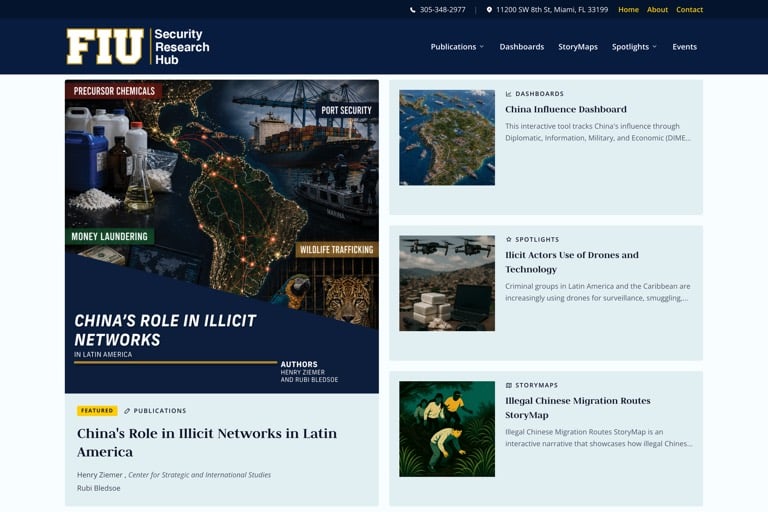

Chinese money laundering networks have become a key financial engine for transnational organized crime in Latin America and the Caribbean. Through informal value transfer systems, underground banking, international trade, and cryptocurrencies, these organizations move billions of dollars in illicit funds. “Chinese organized crime has expanded worldwide and has turned Latin America into one of its principal financial operating hubs,” Leland…
Browsing: News
Strategic Influence
Transnational Crime Ecuador: The New Synthetic Drug Frontier Raising Concerns Across the Americas
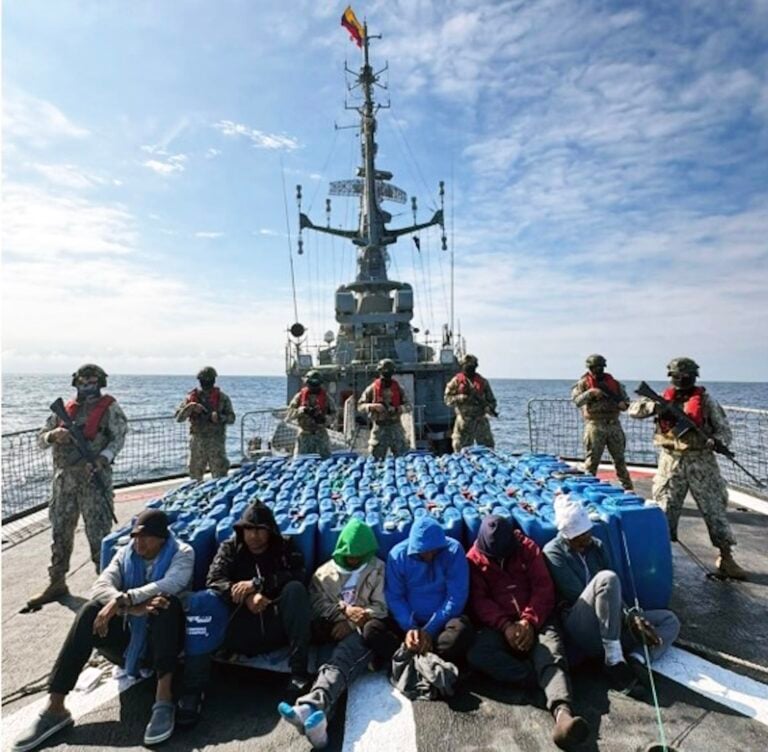
In recent years, transnational criminal organizations have turned Ecuador into one of the region’s principal transit hubs for drug shipments bound for the United States and Europe. Today, however, the country faces an even more complex regional security challenge: the expansion of synthetic drugs. Primarily a transit point for cocaine, Ecuador is increasingly emerging as a hub for the importation…
Strategic Influence Beyond Health Care: The Strategic Role of Cuba’s Overseas Medical Missions
As Cuba’s health care system faces one of the worst crises in its history, marked by increasingly frequent blackouts, chronic medicine shortages, and hospitals in poor condition, its international medical missions continue to represent one of Havana’s main sources of revenue, in some cases surpassing even tourism. Each year, they generate billions of dollars, providing the regime with essential resources…
Security & Cooperation Panama, US Bolster Bilateral Readiness and Humanitarian Response during PANAMAX Alpha
Panama and the United States concluded the annual bilateral exercise PANAMAX Alpha on July 27, strengthening interoperability, humanitarian response capabilities, and operational coordination between the two partners. Conducted with support from U.S. Southern Command (SOUTHCOM), the exercise brought together personnel from Panama’s National Air and Naval Service (SENAN), and Joint Task Force Bravo (JTF-Bravo) for humanitarian assistance missions, technical exchanges,…
Transnational Crime Strengthening Riverine Security in Paraguay Expands Surveillance and Interdiction Capabilities Along the Waterway
Paraguay and the United States strengthened their riverine security cooperation in April 2026 with the addition of eight new interceptor boats to the Paraguayan Navy, as part of a broader program designed to enhance surveillance, interdiction, and control along the Paraguay-Paraná Waterway. At the same time, Paraguay inaugurated a Command and Control Center to improve operational coordination along one of…
Transnational Crime Honduras, Guatemala Strengthen Cross-Border Security with US Support
Recent armed incidents along the Honduras-Guatemala border have reinforced the need for closer coordination between the two countries as transnational criminal organizations increasingly exploit borders to move drugs, weapons, and other illicit goods throughout Central America. Strengthened military coordination, expanded information sharing, reinforced border surveillance, and continued cooperation with the United States aim to improve both countries’ ability to detect…
Security & Cooperation Panama, US Inaugurate First of Several Bridges to Make Rural Communities Safer
More than 300 Panamanians in the rural community of Las Playitas will no longer face decades of isolation and danger following the inauguration of the first bridge built under a cooperation program between Panama and the United States. The initiative will improve connectivity in rural communities and enhance the quality of life for hundreds of families. The bridge, inaugurated in…
Security & Cooperation From Lessons Learned to Operational Capability: How PANAMAX Strengthens Panama Over Time
As PANAMAX 2026 unfolds in Panama, the exercise’s significance extends far beyond the number of participating countries or personnel. Its lasting value lies in what it leaves behind: command procedures, joint protocols, and interagency coordination mechanisms that continue to strengthen Panama’s ability to protect the Canal and other strategic infrastructure and respond to complex security challenges. The multinational hemispheric security…
Security & Cooperation The Security Impact of Renewed Relations Between Caracas and Washington
After years without institutional cooperation, Caracas and Washington have begun building a new security relationship. What started as a diplomatic rapprochement has expanded into increasingly visible coordination among judicial authorities, intelligence agencies, and security forces to confront some of the most significant threats facing Venezuela and the region. Within just a few months, that cooperation has already produced tangible results.…
Security & Cooperation Fuerzas Comando 2026: Building the Partnerships Behind Regional Security
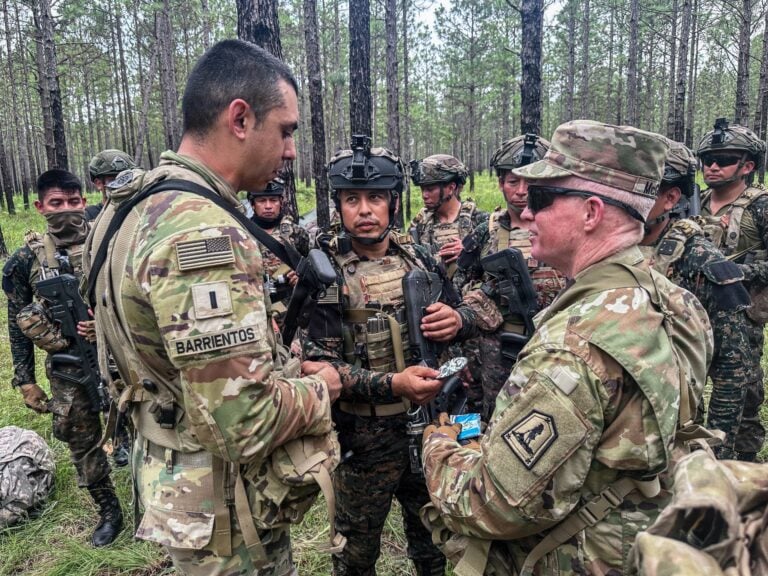
As transnational criminal organizations expand across borders and exploit differences between jurisdictions, countries throughout the hemisphere are increasingly relying on cooperation, interoperability, and trusted partnerships to strengthen their response capabilities. In this environment, Fuerzas Comando has evolved beyond a special operations competition into a platform for building the professional relationships, coordination mechanisms, and operational understanding needed to confront shared security…
Strategic Influence China Expands Its Grip on Latin America’s Strategic Minerals Vital to Defense and Technology
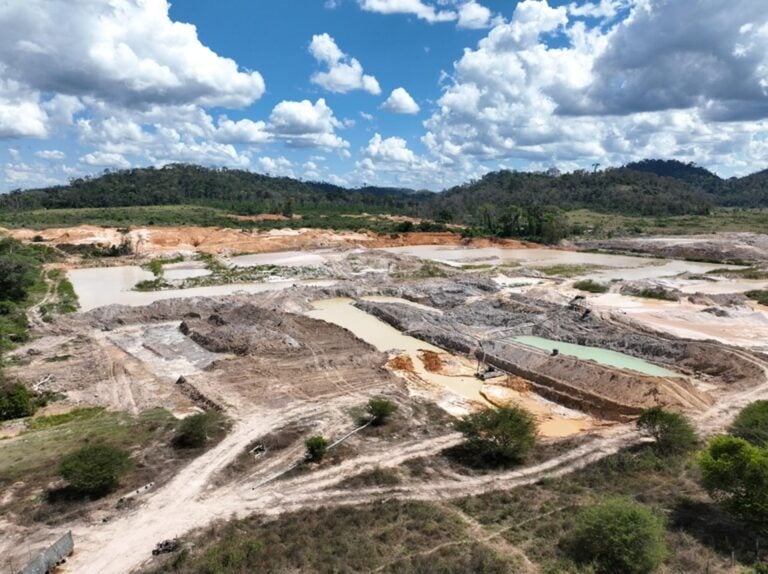
China has steadily expanded its presence in Latin America’s critical minerals sector, investing in lithium, copper, and other resources that underpin advanced technologies, defense systems, semiconductors, and the global energy transition. Accompanied by investments in ports, transportation corridors, and processing facilities, Beijing’s growing footprint in the region has fueled concerns over economic security, strategic dependence, and countries’ ability to retain…
Security & Cooperation Built in Ecuador for Ecuador’s Fight: The Story Behind the Jaguar-1 Armored Vehicle
The Ecuadorian Army has advanced with the first operational unit of the Jaguar-1, a new armored personnel carrier that represents a significant step forward both in the fight against organized crime and in the development of Ecuador’s domestic defense industry. Designed and built in Ecuador, the vehicle was conceived to protect military personnel in increasingly dangerous environments characterized by ambushes,…