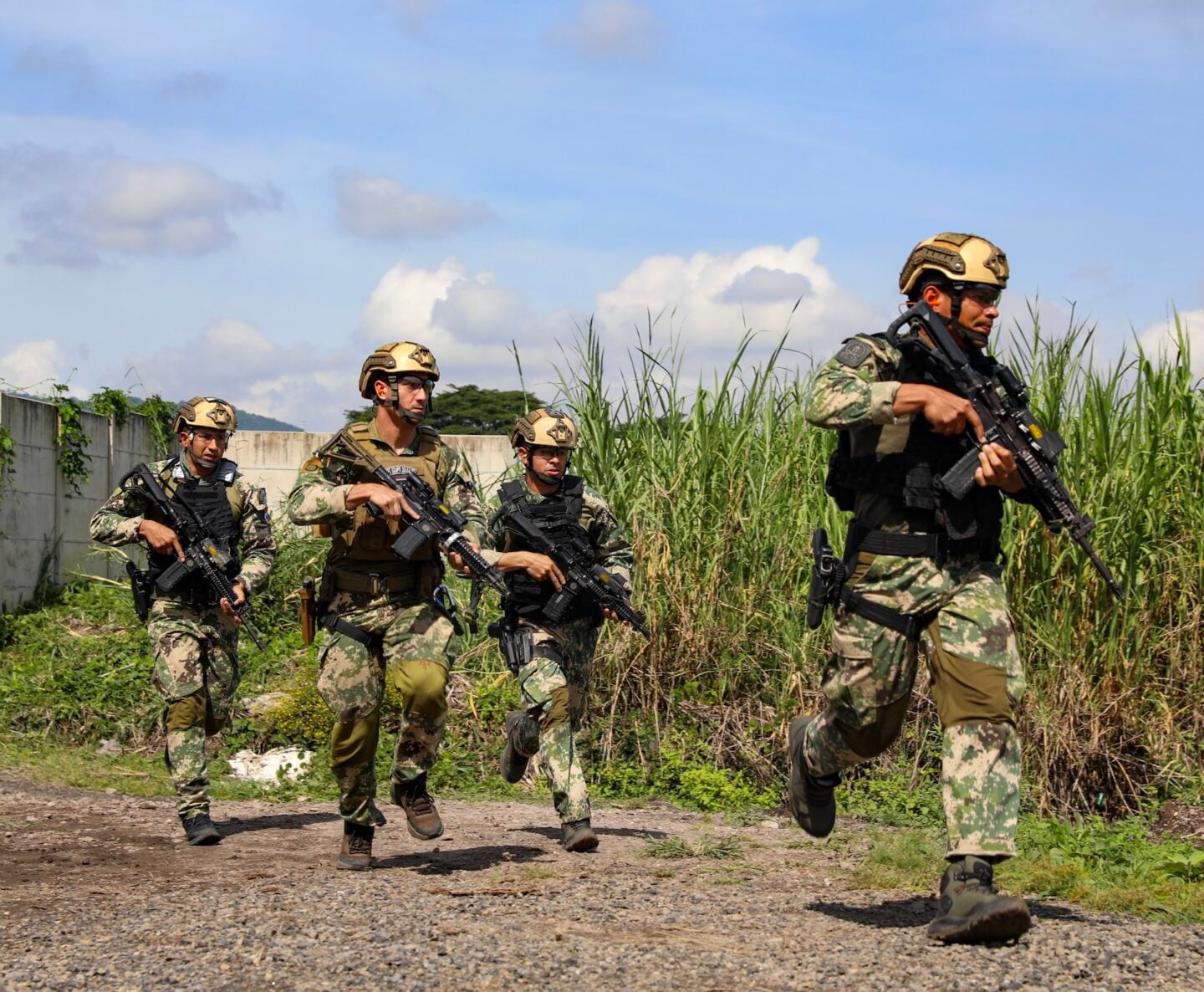

As transnational criminal organizations expand across borders and exploit differences between jurisdictions, countries throughout the hemisphere are increasingly relying on cooperation, interoperability, and trusted partnerships to strengthen their response capabilities. In this environment, Fuerzas Comando has evolved beyond a special operations competition into a platform for building the professional relationships, coordination mechanisms, and operational understanding needed to confront shared security challenges.
Paraguay will host the 2026 edition of the multinational exercise, bringing together special operations forces and senior military leaders from across the Americas and the Caribbean. While the competition is known for its demanding tactical events, security leaders say its lasting value lies in strengthening the networks of trust that enable partner nations to work together when crises arise.
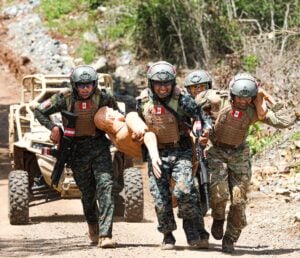
Organized by U.S. Southern Command (SOUTHCOM), Fuerzas Comando tests participants’ capabilities such as precision shooting, physical endurance, land navigation, urban combat, and hostage rescue. The exercise also includes a senior leader seminar where commanders and security officials exchange experiences and discuss challenges that increasingly transcend national borders.
Delegations from Argentina, Belize, Chile, Colombia, Costa Rica, Ecuador, El Salvador, Guatemala, Honduras, Jamaica, Mexico, Panama, Paraguay, Peru, the Dominican Republic, and the United States are expected to participate in the 2026 edition scheduled for mid-August.
Beyond the competition
Although Fuerzas Comando remains widely known for its demanding physical and tactical tests, its evolution reflects broader changes in the regional security environment, Paraguayan Army Brigadier General Fredy Roberto Oviedo Cáceres, Special Forces commander and general coordinator of Fuerzas Comando Paraguay 2026, told Diálogo.
“The evolution of Fuerzas Comando reflects the transformation of hemispheric security. Criminal organizations operate through structures that integrate drug trafficking, money laundering, illicit trafficking, corruption, smuggling, and cross-border logistics, and they adapt quickly to state pressure,” he said.
According to Brig. Gen. Oviedo, these developments have shifted the exercise’s focus beyond competition itself toward strengthening collective response capabilities. Those capabilities rest on interoperability, coordinated planning, and joint training — essential elements for confronting threats that operate as interconnected regional networks.
Trust as a force multiplier
For Brig. Gen. Oviedo, one of the exercise’s most significant contributions is the professional relationships it fosters among participating forces.
“Trust among special forces, military commanders, and security agencies carries as much weight as tactical skill. When that bond exists, information flows faster and the response to a crisis is almost immediate. Any gap in coordination is fertile ground for the adversary,” he said.
Those relationships do not disappear when the exercise ends. “Professional contacts, institutional credibility, and mutual understanding endure and remain as an asset that can be drawn upon for future training or joint emergency responses,” he said.
According to Brig. Gen. Oviedo, the value of these relationships lies in their ability to complement and strengthen operational capabilities. “The advantage stems not only from having highly trained units, but from integrating them into a regional framework that acts in a cohesive manner. There, trust acts as a force multiplier: It amplifies what each country already possesses,” he added.
Paraguay’s role in regional cooperation
Hosting Fuerzas Comando 2026 also represents an opportunity for Paraguay to deepen its participation in the hemisphere’s security architecture.
“Hosting Fuerzas Comando represents an opportunity to project regional leadership, strengthen alliances, and consolidate Paraguay’s role in hemispheric security cooperation,” Brig. Gen. Oviedo said. Hosting the event, he added, positions the country “as a committed actor in cooperative security, in the face of increasingly mobile and evolving threats.”
The general coordinator noted that Paraguay’s location in the heart of South America and its borders with Argentina, Bolivia, and Brazil expose the country to a range of cross-border security challenges that require continuous coordination among national institutions and regional partners.
Brig. Gen. Oviedo emphasized that the interoperability promoted through Fuerzas Comando is built on coordination. “Interoperability does not mean uniformity or operational dependence, but rather the ability to act jointly when circumstances demand it. And it is most effective when supported by solid institutions capable of giving each country the autonomy to address its own security needs,” he said.
Building a more connected security network
For Brig. Gen. Oviedo, exercises such as Fuerzas Comando become increasingly relevant as criminal networks continue to evolve and operate across multiple jurisdictions.
“The goal of exercises like Fuerzas Comando is for the region to cease functioning as a collection of isolated capabilities and instead operate as a network of partners who cooperate effectively. If threats act as interconnected systems, regional resilience will depend on maintaining the bonds of trust, interoperability, and coordination at the same pace as they do,” he concluded.
For participating nations, the value of Fuerzas Comando extends far beyond competition results. The exercise provides an opportunity to strengthen communication channels, improve coordination, and build professional relationships that can support future multinational responses to shared security challenges.