

Paraguay is intensifying its fight against transnational criminal organizations (TCOs) through a strategy that emphasizes cross-border coordination, interagency cooperation, and sustained security operations in key frontier regions.
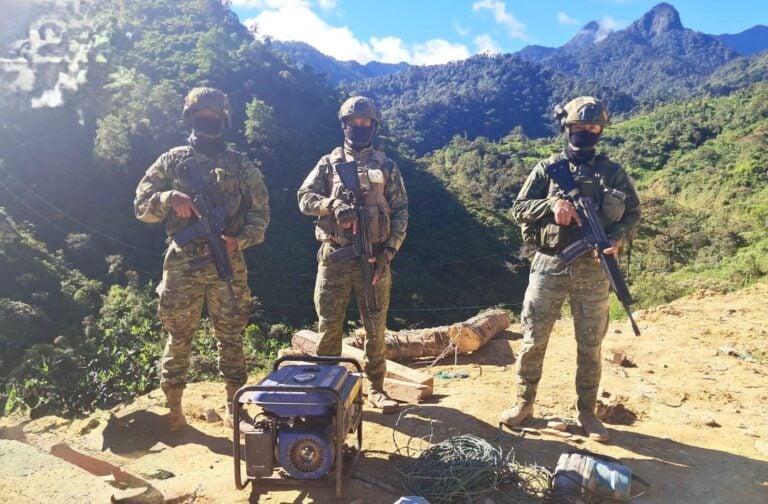
At the center of this effort is Operation Escudo Guaraní, a large-scale, ongoing deployment with no fixed end date, mobilizing thousands of military and law enforcement personnel to disrupt drug trafficking networks, dismantle criminal logistics, and strengthen state presence in vulnerable areas. Led by the Paraguayan Joint Task Force (FTC) and the Internal Defense Operations Command (CODI), the initiative reflects a broader shift toward integrated and sustained security operations, defense outlet Zona Militar reported.
Paraguayan authorities describe Escudo Guaraní, launched in November 2025, as a joint and interagency effort. Security forces have been organized into two strategic regions, North and South, bringing together personnel from the Army, Navy, Air Force, and Logistics Command, alongside the National Police, the Public Prosecutor’s Office, and the National Anti-Drug Secretariat (SENAD).
Minister of National Defense, retired Paraguayan Army General Óscar González, and the Commander of the Armed Forces, Paraguayan Army General César Augusto Moreno, are directly overseeing the operation. Minister González highlighted the results achieved so far. “We are facing a campaign that is yielding record results. Work that is well planned turns out well; and with Escudo Guaraní we are proving it,” he told Paraguayan daily ABC.
Regional cooperation as a strategic pillar
Beyond its domestic scope, Paraguay’s security strategy emphasizes cooperation with neighboring countries, recognizing that TCOs exploit borders.
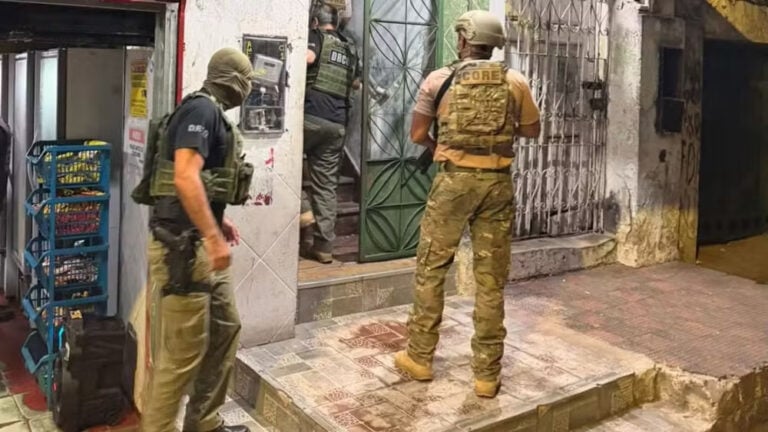
Coordination with Brazil has been particularly significant. In recent years, Brazilian and Paraguayan forces have conducted mirror operations — simultaneous deployments on both sides of the border. On the Brazilian side, Operation Ágata has targeted trafficking routes and illicit logistics, while Paraguay has carried out corresponding operations such as Basalto I and II.
These coordinated efforts frequently include the eradication of large-scale marijuana plantations along the Paraguay–Brazil frontier in areas such as Amambay and the neighboring Brazilian state of Mato Grosso do Sul.
They enable joint and integrated action and are considered crucial to countering cross-border threats, by limiting criminal groups’ ability to evade enforcement by moving between jurisdictions. Within this context, Operation Escudo Guaraní reflects a continuation and expansion of this cooperative approach, combining sustained domestic deployment with cross-border coordination.
Paraguay has also strengthened coordination with Argentina through bilateral and trilateral frameworks in the Triple Frontier, supporting information sharing, joint planning, and responses to threats such as drug trafficking, arms smuggling, and money laundering.
Regional coordination extends to a broader perimeter that includes Bolivia, reflecting the interconnected nature of trafficking routes across South America. According to Zona Militar, Paraguayan authorities have underscored the importance of maintaining operational coordination with security institutions across neighboring countries.
Paraguay’s commitment to regional security was reaffirmed during the Americas Counter-Cartel Conference held in early March at the U.S. Southern Command (SOUTHCOM) headquarters in Doral, Florida. At the event, Minister of Foreign Affairs Rubén Ramírez Lezcano emphasized a collective approach to hemispheric security, highlighting cooperation with Argentina, Brazil, and the United States.
“No nation can face transnational threats alone. Coordination in intelligence sharing, joint operations, and institutional strengthening has been key to achieving effective results,” Ramírez Lezcano said.
One example of this collaboration is the Paraguayan Senate’s approval in early March of a Status of Forces Agreement (SOFA) with the United States, designed to strengthen joint training and operational capabilities.
Strengthening capabilities and operational reach
International support — particularly from the United States — has strengthened Paraguay’s security posture through training, intelligence sharing, and sustained operational cooperation. This includes the provision of equipment for training purposes in early 2026, as well as continued collaboration with specialized units and law enforcement agencies.
In parallel, Paraguay has prioritized improving airspace control and surveillance. A recent case illustrates these efforts: In early February, authorities detected an illicit aircraft flying at low altitude and activated cross-border coordination protocols. Although the aircraft crossed into Brazil, the operation led to the seizure of 450 kilograms of cocaine paste, highlighting the importance of rapid information sharing and coordinated responses.
At the same time, authorities highlight the tangible impact of ongoing operations. “We have carried out large-scale operations, such as Operation Guaraní, disrupting drug trafficking logistics networks, seizing illicit drugs, weapons, and assets, and weakening criminal organizations,” Ramírez Lezcano said during the Counter-Cartel Conference.
Addressing evolving threats
In response to evolving security challenges, the government has expanded the role of the Armed Forces in support of internal security operations, including in border regions and along strategic waterways.
Paraguayan authorities continue to confront multiple criminal actors, including the Paraguayan People’s Army (EPP), as well as transnational organizations such as Brazil-based First Capital Command (PCC) and Red Command (CV,) which Paraguay designated terrorist organizations, and which operate across borders.
Argentine defense and security consultant José Javier Díaz noted in an interview with Diálogo that Paraguay has significantly intensified its fight against TCOs in recent years. According to Díaz, this unprecedented interagency cooperation strengthens internal security and directly addresses emerging threats.
The specialist concluded that the implementation of measures such as Operation Escudo Guaraní represents a significant shift in the region’s security landscape. “Paraguay is demonstrating through its actions its unwavering determination to fight transnational organized crime and become a responsible and reliable partner for the other nations of the Western Hemisphere,” Díaz stated.