
Panama is integrating unmanned systems, cybersecurity tools, and new analytical capabilities into its operations against transnational criminal organizations. The goal is to turn information gathered along borders, coastlines, and at ports into intelligence that can help identify patterns, guide operations, and support action against criminal networks.
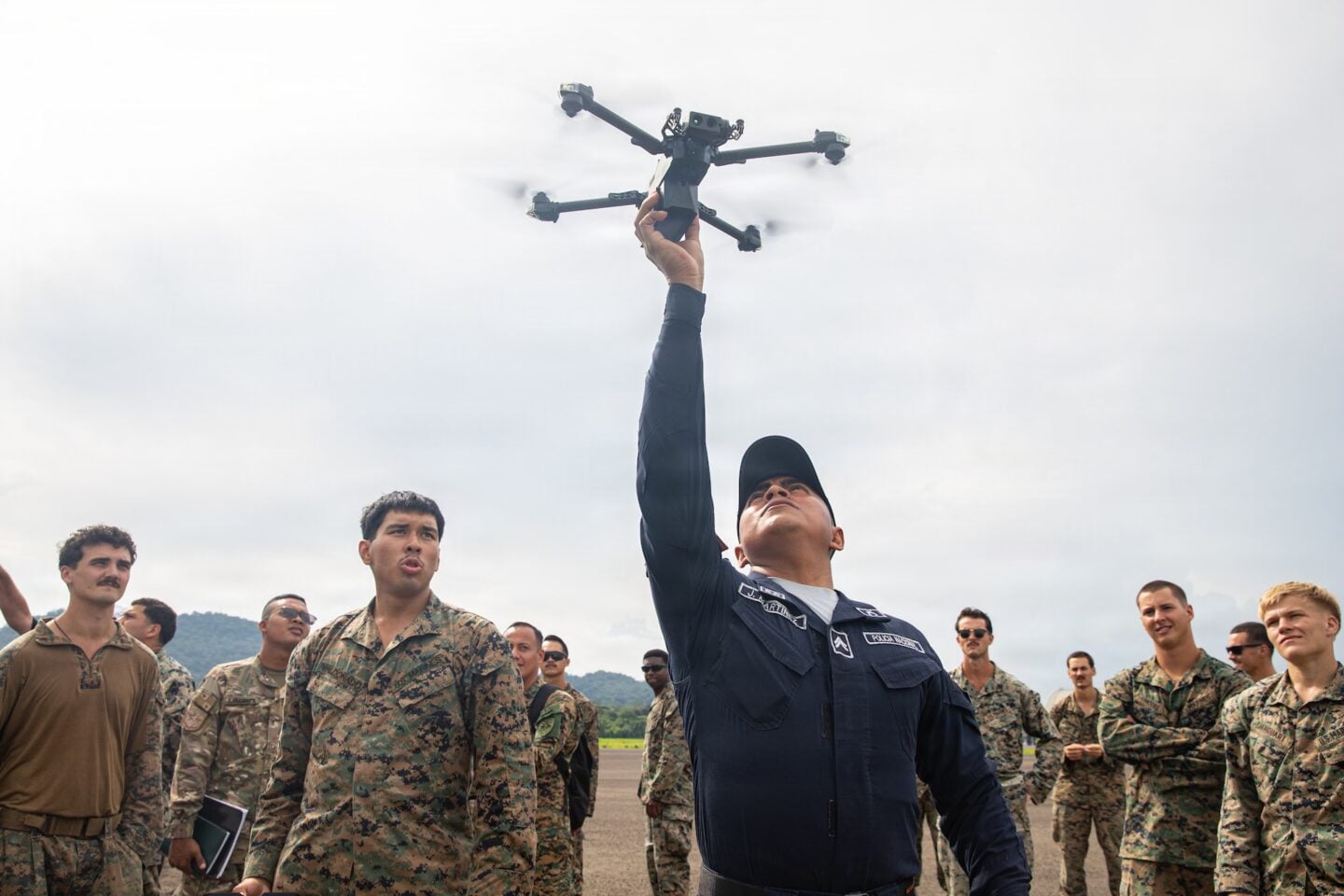
In July 2026, the Ministry of Public Security (MINSEG) announced the creation of the Unmanned Aerial Operations Company, a unit of the National Border Service (SENAFRONT) designed to expand strategic surveillance in border areas. The unmanned systems provide real-time aerial intelligence, strengthen territorial control, and support decision-making during operations.
These capabilities complement other tools incorporated by SENAFRONT and the National Aeronaval Service (SENAN). In June, the United States delivered more than $5 million in equipment to MINSEG, including cybersecurity operations centers for both institutions, communications equipment for special operations, vessels, and a specialized navigation system, according to the U.S. Embassy in Panama.
Armando Rodríguez Luna of Mexican consulting firm Nzaya, which specializes in security, law, and international governance, told Diálogo that the value of these capabilities lies not in the equipment itself, but in the ability to generate and use intelligence. “Because of its geographic position, Panama plays a strategic role in the commercial and security flows that move through the Pacific and the Caribbean. The country can become a hub for generating and sharing information on threats posed by criminal organizations and other extraregional actors,” he said.
Drones expand surveillance in Darién and Bocas del Toro
Deployment began in areas facing greater criminal pressure. On July 7, SENAFRONT put its first 20 systems into operation to monitor trails in Darién and the coasts of Bocas del Toro, while more than 50 personnel received training to operate them. The aircraft were distributed among the institution’s brigades and integrated with special forces and the Narcotics Directorate, Televisora Nacional reported.
SENAFRONT Director Larry Solís told the outlet that the deployment includes preventive and enforcement efforts, including interdiction and counternarcotics operations targeting street-level drug trafficking. The drones are being used by brigades and specialized units as part of ongoing operations.
The integration of technology and intelligence is also reflected in maritime and port operations. In August, SENAN Director General Commander Luis De Gracia said much of the institution’s counternarcotics activity is concentrated in the Pacific and supported by profiling, intelligence, and information sharing. By August 18, SENAN reported the seizure of 48,709 packages of illicit substances in 82 operations during 2026.
At ports, those efforts combine analysis with technological inspection. On July 29, for example, SENAN’s Port Intelligence Section identified a container from Callao, Peru, bound for Antwerp, Belgium, through profiling, verification, and technological inspection. The search uncovered 1,130 packages of suspected drugs concealed in the cargo.
From surveillance to intelligence: The human factor matters
Technology is only one part of the process. In June, MINSEG created SENAN’s Intelligence and Counterintelligence School to professionalize personnel working in those fields. The resolution establishing the school calls for developing skills in information collection, processing, and analysis, as well as the use of new technologies for strategic decision-making, according to Panama’s Official Gazette. The same document identifies cybercrime, hybrid terrorism, and disinformation operations as emerging challenges.
Rodríguez Luna said the new tools expand institutions’ ability to identify patterns in criminal activity. “There is now a greater capacity to identify patterns in how new mechanisms are developing, both in production and trafficking,” he said.
The specialist added that analysis can combine different sources — financial, civilian, and military intelligence — to identify vulnerabilities within criminal structures. “One of the key elements has to do with disrupting the supply chains within criminal groups,” he said.
Processing larger volumes of information can also help anticipate movements. “Pattern identification will be an important change because different types of information can now be processed in much greater volumes and specifically directed toward that purpose. This process can be supported by artificial intelligence platforms and other tools,” he added.
The challenge, Rodríguez Luna said, lies not only in having technology, but also in developing personnel capable of turning information into operational decisions. “Building capabilities among countries means not only providing technical, technological, and operational tools in the police and military spheres, but also developing the human capabilities needed to create their own strategies.” He added: “If Panama, Mexico, or Colombia is going to have these technical and technological capabilities, it also needs the police and military capabilities to deploy and make use of the information they generate.”
Cooperation expands the reach of intelligence
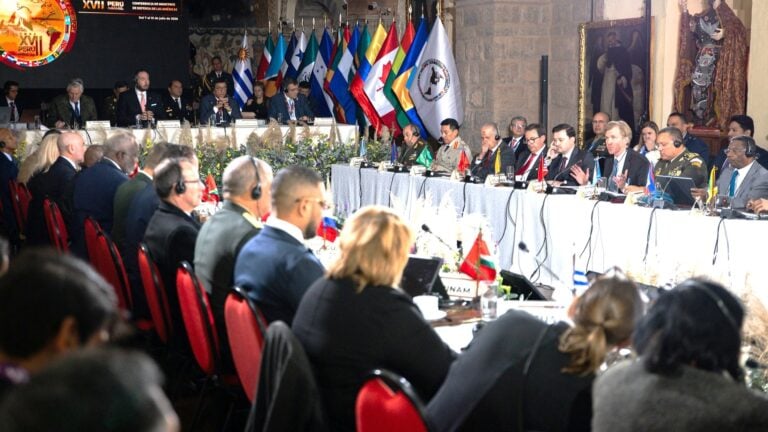
Turning information into operations also requires that it flow between institutions and across borders. In August, Panama hosted the second meeting of the Americas Counter Cartel Coalition, bringing together security and defense officials from 19 countries.
During the meeting, Panama’s Minister of Public Security Frank Alexis Ábrego said the coalition should move toward a “regional architecture of trust, intelligence, and action” capable of turning information sharing into combined operations against transnational criminal organizations. Priorities identified included disrupting criminal finances and combating organizations simultaneously involved in drug trafficking, money laundering, human trafficking, and arms trafficking.
Making effective use of those capabilities requires better information flow among institutions. “Countries in the region need to begin developing broader interagency mechanisms for coordination, cooperation, and information sharing,” Rodríguez Luna said.
Preparation for technological threats is also part of that effort. During PANAMAX 2026, a multinational exercise led by Panama and sponsored by U.S. Southern Command (SOUTHCOM), participating forces trained to detect and counter small unmanned aerial systems. At the same time, the Missouri National Guard shared cyber defense tactics and procedures with professionals from 11 countries, including Panama, with which it has maintained a State Partnership Program since 1996.
For Rodríguez Luna, integrating these capabilities helps turn information into operational decisions and actions. The same logic extends to regional mechanisms such as the Counter Cartel Coalition, which connect intelligence, coordination, and operations against criminal networks that operate across multiple jurisdictions.
In Panama, the integration of unmanned systems, profiling, cybersecurity, and specialized personnel strengthens that operational cycle: expanding surveillance, identifying patterns, sharing information, and directing actions against the criminal networks that exploit the country’s borders, coastlines, and ports.