Weeks after two powerful earthquakes struck Venezuela on June 24, the international response has moved beyond the race to find survivors. The priorities now include sustaining displaced families, restoring essential services, assessing damaged buildings and infrastructure, expanding health care, and maintaining the logistics networks that allow assistance to reach affected communities. As those needs evolve, U.S. assistance is also moving…
Browsing: Security & Cooperation
Capabilities, Coordination, and Preparedness: Lessons from Haiti and Chile for a Stronger Regional Disaster Response
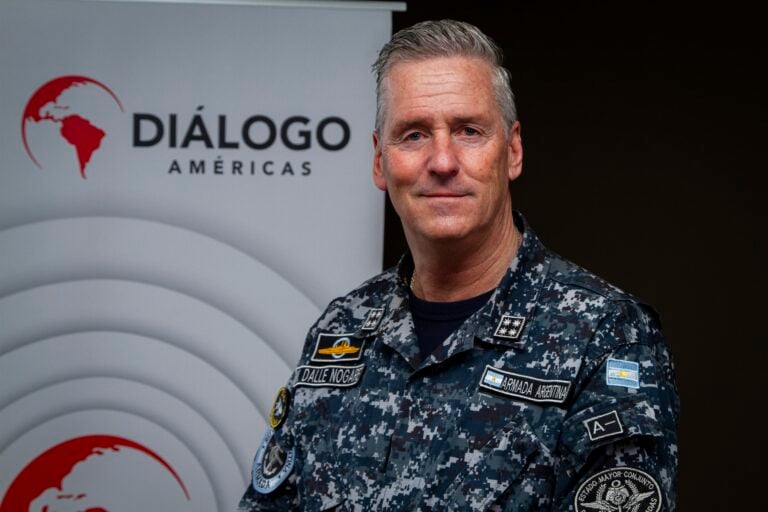
The two powerful earthquakes that struck Venezuela on June 24 once again underscored the enormous challenges countries face when a catastrophe overwhelms national response capabilities. Beyond the scale of the disaster itself, such events also test the speed, coordination, and effectiveness of regional and international cooperation. In an exclusive interview with Diálogo, retired Chilean Army General Ricardo Toro, former director…
Water First: How Panama Balances Essential Services and Canal Security During PANAMAX
As Panama prepares to host PANAMAX 2026, national authorities are approaching the multinational exercise through a principle that has become increasingly central to the country’s long-term planning: water comes first. The exercise, which brings together partner nations to strengthen coordination for the protection of the Panama Canal and other strategic infrastructure, will take place within a system where water management…
SOUTHCOM Commander Meets with Ecuadorian Leaders to Strengthen Security Cooperation
U.S. Marine Corps General Francis L. Donovan, commander of U.S. Southern Command (SOUTHCOM), met with President Daniel Noboa and senior Ecuadorian defense officials on March 2 in Quito, Ecuador, to discuss security cooperation and reaffirm the United States’ strong commitment to supporting the nation’s efforts to confront narco-terrorism and strengthen regional security. The March 1-2 trip to Ecuador was Gen.…
USS San Antonio Supports Sustained Humanitarian Operations in Venezuela
Demonstrating an unwavering commitment to ongoing disaster relief efforts, the amphibious transport dock USS San Antonio (LPD 17) arrived pierside in La Guaira, Venezuela, on July 9. The San Antonio seamlessly relieved the USS Fort Lauderdale (LPD 28) as the primary maritime component center in support of the U.S. Department of State-led humanitarian assistance mission following the devastating June 24…
The Americas’ Four-Legged First Responders: The Critical Role of K9 Units in Venezuela’s Earthquake Response
When ABC News reported the rescue of a dog and her puppies from the rubble of the earthquake that devastated Venezuela, the story seemed like one of many moving accounts to emerge from the tragedy. But the dog did more than lead rescuers to her puppies. Her persistent barking drew their attention to a section of the rubble, where they…
Hemispheric Capabilities Strengthen Earthquake Response in Venezuela
The earthquake that struck northern Venezuela on June 24 triggered a broad mobilization of hemispheric humanitarian assistance and disaster response (HADR) capabilities, with urban search and rescue teams, medical personnel, aircraft, search dogs, emergency supplies, communications specialists, and logistical support deployed from countries across the Americas. More than a collection of bilateral aid efforts, the operation demonstrated how advance preparation,…
Coordinating Reconstruction: Lessons from Colombia’s Earthquake Recovery
Venezuela is facing one of the greatest challenges in its recent history after two earthquakes measuring above magnitude 7 struck just seconds apart. As search-and-rescue operations continue, the disaster is testing not only a nation's ability to respond to a catastrophe of this scale but also how quickly regional and international partners can mobilize specialized teams, resources, and humanitarian assistance.…
How the US Supports International Earthquake Relief Efforts in Venezuela
As Venezuela transitions from the search and rescue phase to the long process of recovery following the devastating June earthquake, one of the greatest challenges is no longer delivering aid but coordinating the reconstruction effort effectively. The scale of the disaster underscores the magnitude of the task. The United Nations Development Programme (UNDP) estimates direct physical damage at approximately $6.7…
Chile Hosts 5th Iteration of Exercise Salitre
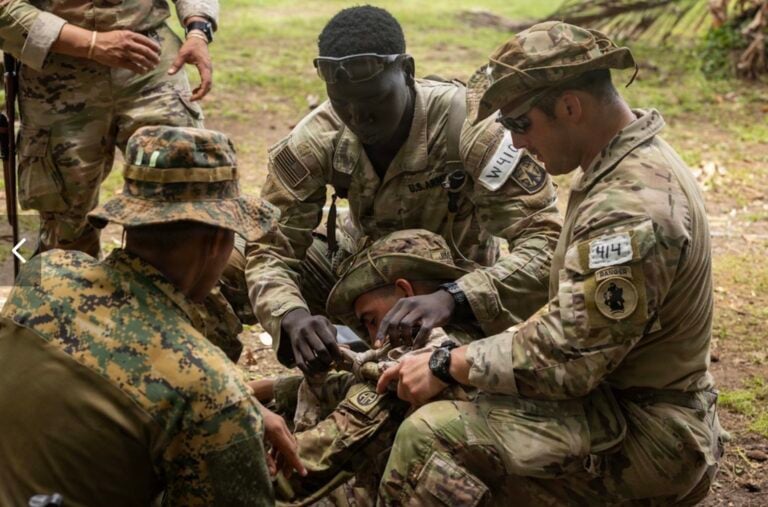
Aircraft, crews, and support personnel from across the Americas are converging in northern Chile as Exercise Resolute Sentinel–Saltire 2026, a premier multinational air combat exercise hosted by the Chilean Air Force, kicked off June 28, 2026, at Cerro Moreno Air Base in Antofagasta, Chile. U.S. participation in the fifth iteration of Salitre is led by U.S. Air Forces Southern/12th Air…
From Search and Rescue to Humanitarian Relief: The US Mobilizes for Venezuela
The U.S. response to the earthquakes that struck Venezuela on June 24 represents one of Washington’s largest humanitarian and disaster relief operations. Led by the State Department’s Bureau of Disaster and Humanitarian Response (DHR) and carried out in close coordination with the Department of War and U.S. Southern Command (SOUTHCOM), the operation has combined search-and-rescue efforts, military logistics, and international…
Inside PANAMAX 2026: Behind the Planning to Protect Critical Infrastructure
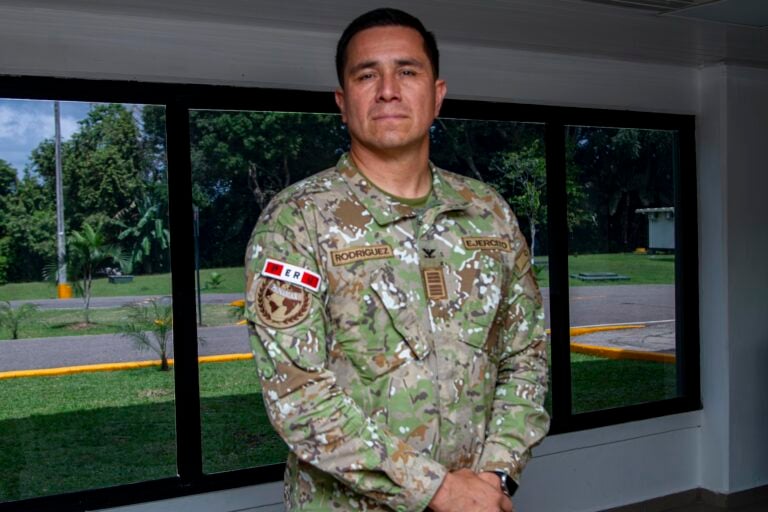
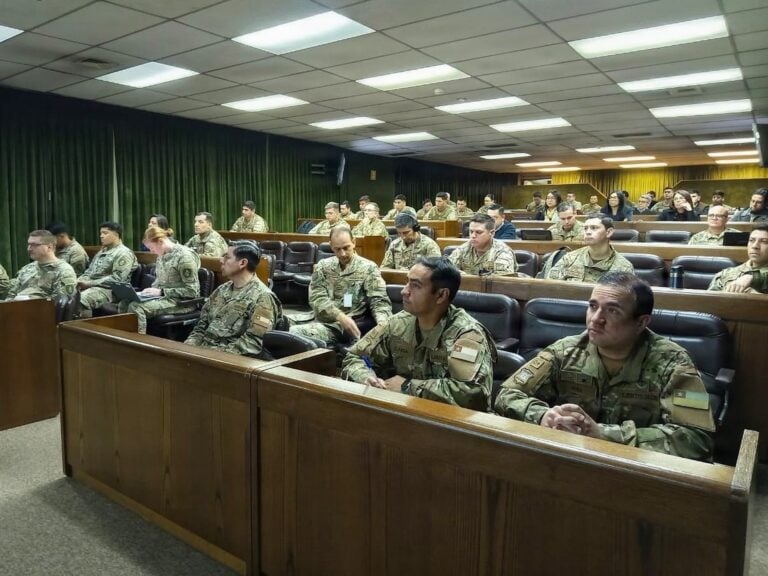
As the officer responsible for the planning and execution of PANAMAX 2026, Panama’s National Air and Naval Service (SENAN) Commissioner Luis Rodríguez plays a key role in coordinating the exercise with Panamanian institutions and participating partner nations. Drawing on extensive experience in operational leadership and security coordination, Commissioner Rodríguez oversees efforts to integrate national and international capabilities in one of…