
Guatemala is transforming its border security model to respond to increasingly dynamic and sophisticated transnational criminal networks. The country is moving from an approach focused primarily on interdiction toward a strategy based on intelligence, risk analysis, and anticipation, with greater coordination among security, customs, and immigration authorities, as well as new technological and analytical capabilities.
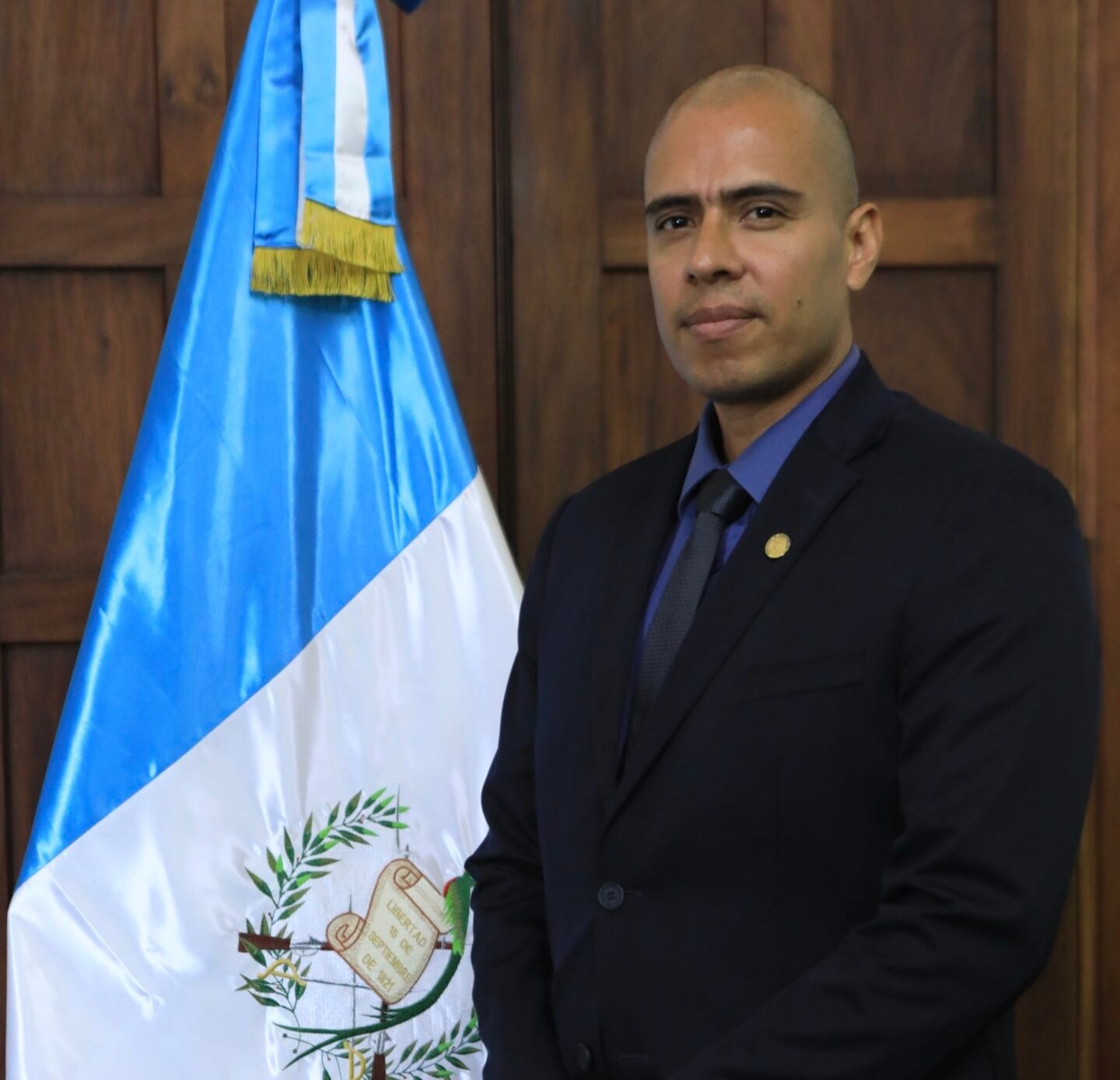
In an exclusive interview with Diálogo, Vice Minister of Counternarcotics and Border Security Víctor Hugo Cruz discusses how Guatemala is consolidating this new model, from fusion centers and regional intelligence sharing to the use of technology and cooperation with neighboring countries and the United States, with the goal of anticipating criminal organizations’ operations and strengthening border security.
Diálogo: Guatemala is moving from a border security model focused primarily on interdiction to one based on intelligence and anticipation. What has changed in the criminal threat that made this shift necessary?
Vice Minister of Counternarcotics and Border Security of Guatemala Víctor Hugo Cruz: Transnational criminal organizations are dynamic. They seek to use our airports, ports, and borders to carry out illicit activities, and they constantly adapt their methods of operation.
Interdiction allows us to act directly against illicit activity that we can detect, for example, during a primary or secondary inspection at a port or official point of entry. But moving toward an intelligence-based model gives us a broader picture. It allows us to better understand importers and exporters, identify the trends affecting us nationally, and focus our efforts where the risk is greatest.
This is also important because we want to conduct effective inspections while facilitating trade. Intelligence allows us to avoid unnecessary controls on trusted partners, importers, and exporters operating within the law, and to focus our efforts on those attempting to use supply chains to introduce or move illicit goods.
Diálogo: This shift is already reflected in new capabilities and a greater operational presence along the borders. What are the main efforts underway to consolidate this new model, and how is interagency coordination strengthening Guatemala’s ability to anticipate and respond to criminal threats?
Cruz: One of these efforts is being carried out through the Trade Facilitation Task Force, which brings together the National Civil Police, the Superintendency of Tax Administration, the Ministry of Agriculture, Livestock, and Food, the Ministry of National Defense and, depending on the point of entry, the Guatemalan Migration Institute.
This allows agencies at air, land, and maritime customs facilities, as well as at other checkpoints, to work together to analyze information and conduct coordinated inspections. Each agency retains its own responsibilities, but at the operational level, we work through communication mechanisms that allow us to act jointly.
Previously, the same container might be inspected two or three times because different agencies needed to conduct inspections for different reasons. Now, when it is determined that a container needs to be inspected, the agencies share that information and can participate in a single inspection. This reduces duplication, improves communication, and facilitates trade without compromising controls.
This joint effort also extends to highway checkpoints and includes the shared analysis of X-ray images. Interagency coordination has allowed us to make inspections more efficient and leverage each agency’s capabilities as part of a unified operational effort.
Diálogo: What new technological and analytical capabilities is Guatemala incorporating to strengthen this border security model?
Cruz: We have two important components. The first is hardware — the equipment we have incorporated. We have portable X-ray equipment and, at maritime customs facilities, equipment that allows us to conduct inspections more quickly, efficiently, and objectively. The images can be analyzed by teams from different agencies to determine whether a physical inspection is necessary.
The second component is software and analytical capacity. We have teams and analysts who centralize information and use tools to strengthen risk analysis in coordination with other agencies. We also have specialized personnel, including chemists and engineers, as well as equipment that allows us to conduct field tests and determine more precisely the nature of certain substances or precursors.
Artificial intelligence is also beginning to play an important role. Some ports are already using these tools to make various logistics processes more efficient. From a counternarcotics and border security perspective, we continue to work with our international partners to learn about best practices and identify technologies that can be incorporated safely and effectively into our operations.
Diálogo: Beyond land borders, ports, airports, and informal routes are all part of the same challenge. How is Guatemala integrating intelligence from these different points to identify patterns and track criminal networks’ operations beyond a specific border crossing?
Cruz: In recent years, we have worked to create fusion centers that allow us to centralize information obtained in coordination with other agencies, including Immigration and Customs. The information collected at the borders functions as different nodes that we can then centralize and analyze.
We continue working to ensure that personnel in the field have access to information about what is happening at other locations. Our goal is to anticipate what smugglers intend to do and increase our ability to detect certain movements before they occur.
This process has developed in stages. First, we strengthened the training of analysts, who receive information and turn it into useful intelligence products. We are now moving forward with the task force and its operational component, which will be responsible for receiving that analyzed information and putting it to use in the field.
Diálogo: What role does regional cooperation play in this new security model, and how is Guatemala working with Mexico, Honduras, and El Salvador to share intelligence and anticipate and neutralize threats from transnational criminal networks?
Cruz: Guatemala cannot view itself as an isolated actor when it comes to regional security. In recent years, we have established bilateral agreements with our neighboring countries that facilitate information sharing among law enforcement agencies.
The United States has been a very important partner, and its presence in different countries across the region also helps facilitate that communication. This allows us to maintain exchanges not only with Mexico, Honduras, and El Salvador, but also with important partners such as Colombia and Panama.
We have working groups and high-level groups on border security, as well as agile communication mechanisms along the borders themselves. With Honduras, for example, we have integrated land border posts where personnel from both countries work together. We also have a close relationship with El Salvador and constantly exchange information about what is happening in border areas.
In addition, we participate in forums of the Central American Integration System (SICA) and in various Latin American and Caribbean forums where we share information, strategies, and best practices. This cooperation allows us to learn from the experiences of other countries while also sharing the practices Guatemala is implementing to confront threats that are regional in nature.
Diálogo: The United States is an important partner for Guatemala in intelligence, training, and technology. What capabilities and technologies are now priorities for strengthening this intelligence- and anticipation-based model?
Cruz: The first priority is communication and, within that, ensuring that the information we receive remains secure. Managing and safeguarding information is fundamental, as is ensuring that it is available in a timely manner to those who need it.
We are working on infrastructure such as secure servers and protected channels for transmitting information. We are also strengthening our analytical tools. There are technologies that allow our analysts to process information much faster. An analysis that might take four hours can be completed in considerably less time with the right tools. That capability is fundamental when we talk about intelligence and anticipation.
There are also programs that allow information to be integrated and collected securely, but we need the appropriate infrastructure and licenses to ensure its protection. This is one of the areas that requires particular attention if we are to achieve true integration among air, maritime, and land customs facilities.
Guatemala has 13 land customs facilities, some of which are a considerable distance from the city where many of these capabilities are currently concentrated. That is why we want to move toward regional operations centers that function as nodes, centralizing information from each region and sending it to a central analytical capability. That information can then be sent back to the regional centers for distribution based on the operational needs of each area.
Diálogo: To what extent must border security evolve toward a regional model of intelligence and information sharing? Can Guatemala’s experience serve as a model for other countries in the hemisphere?
Cruz: We need to be much more agile in sharing information. In our region, flights between countries can take 30 minutes, 45 minutes, or just a few hours. If we know there is a person of interest, we need to be able to communicate that information in a timely manner. The same applies to the growing volume of flights and information we need to analyze. We need mechanisms that allow us to filter and share that information quickly.
Transnational criminal organizations communicate rapidly. They do not have to go through bureaucratic processes or multiple layers of authorization. Governments need to close that gap and take advantage of the official mechanisms that already exist to share information more quickly, at both the strategic and operational levels.
The same applies to ports. If cargo entering or leaving our region has a connection to Europe, we need specific, secure points of contact at other ports, and they need to be able to communicate with us as well. If we know where to centralize information and have secure channels, we can process it much more effectively.
That is why we need to make use of existing agreements and coordination mechanisms to reduce the steps that can delay the operational exchange of information. Criminal networks are dynamic and agile in their communications; governments must be as well.
Guatemala wants to be a reliable partner and is working hard to combat smuggling, drug trafficking, and migrant smuggling. These are challenges we must address as a region. Guatemala and Central America are at the center of the Americas and have the potential to establish themselves as a reliable logistics hub where business can be conducted securely and economic activity and trade flows can continue to grow by air, sea, and land.
To move in that direction, communication must translate into concrete action through dedicated analytical and information-sharing capabilities that allow us to better guide our operational teams and stay ahead of criminal organizations.