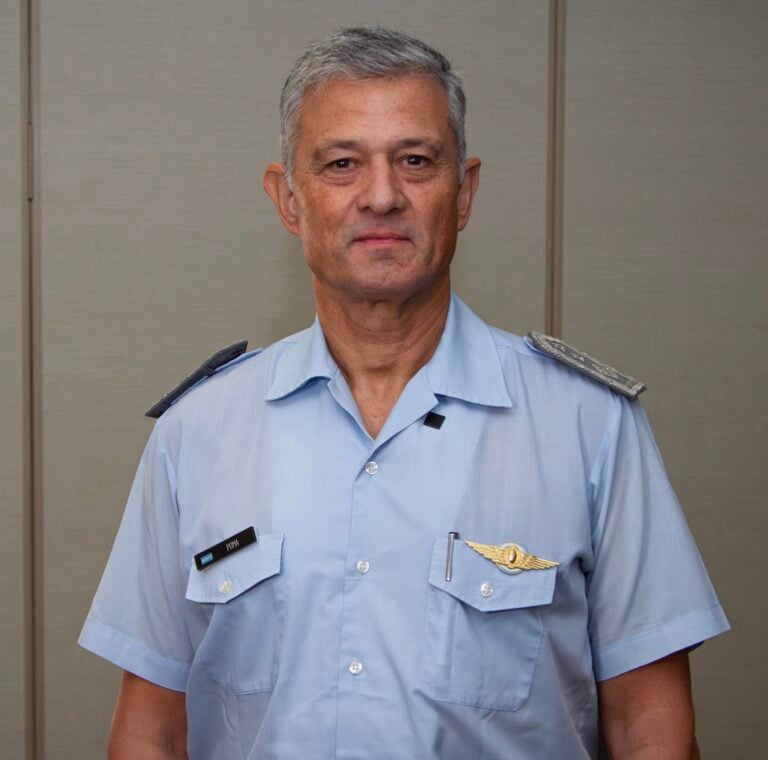

As space becomes increasingly important to security and defense, Argentina is strengthening its aerospace capabilities to enhance surveillance of its territory, integrate satellite-derived information, and expand cooperation with regional and international partners. Leading that effort is Major General Plinio Guillermo Poma, commander of the Argentine Armed Forces Joint Aerospace Command (COCAE). An Argentine Air Force officer and fighter pilot, Maj.…
Browsing: Emerging Threats
Trusted Technology: Taiwan and the United States Strengthen Latin America’s Digital Security
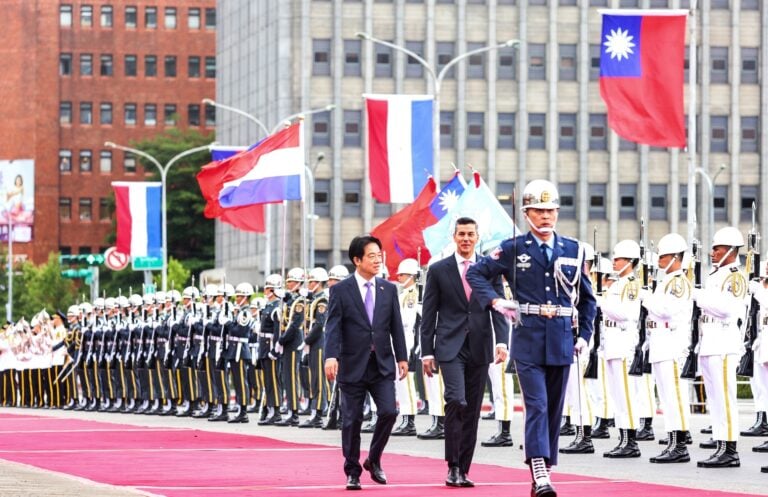
Artificial intelligence (AI), cybersecurity, and digital infrastructure are becoming increasingly important components of national security in Latin America. As government modernize public services and expand digital networks, concerns about cyberattacks, data protection, technological dependence, and the security of critical systems are moving closer to the center of national security planning. In response, several countries are expanding technology partnerships designed to…
Gen. Reynoso: ‘Space is the New Frontier for our Armed Forces’
With nearly three decades of service in the Dominican Air Force and extensive experience in joint operations, intelligence, and international cooperation, Brigadier General Jonás Reynoso Barrera, executive director of the National Antiterrorism Directorate (DNA), has played a key role in strengthening the country’s defense and security capabilities. His career includes serving as liaison officer to Joint Interagency Task Force South…
Drones: Accessible Technology Reshaping Threats and Strategies in Latin America
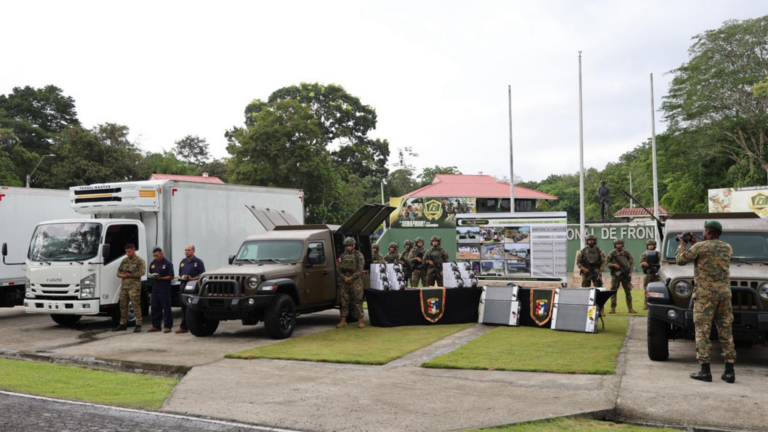
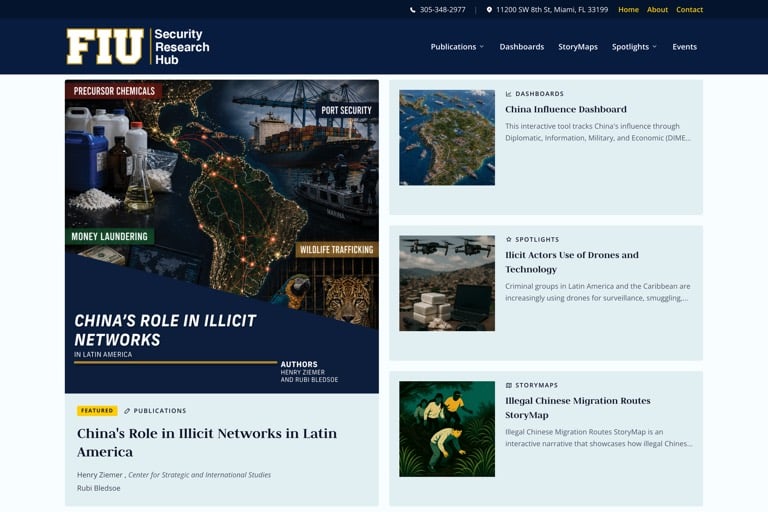
In recent years, commercially available drones have transformed capabilities once largely associated with advanced militaries into accessible tools reshaping security dynamics across Latin America. Lower costs, rapid technological diffusion, and growing weaponization of commercial drones by non-state actors have turned these platforms into an increasingly important factor in regional security and defense. According to the Florida International University (FIU) and…
Chinese EVs in Brazil: Connectivity, Data, and Strategic Risks
The expansion of Chinese electric vehicles (EVs) in Brazil continues to accelerate, fueling growing concerns related to cybersecurity and the possible dual-use — civilian and strategic — nature of the technologies integrated into these vehicles. Unlike traditional automobiles, modern EVs increasingly function as mobile digital platforms capable of collecting, processing, and transmitting vast amounts of sensitive data in real time.…
Peru Bets on Sovereign Capabilities in the Space and Cyber Domains
With more than 30 years of service in the Peruvian Air Force, Major General Mariano Nieves Rodríguez Llerena now leads the country’s efforts in two of the most strategic and emerging domains of modern defense: space and cyberspace. Commander of the Peruvian Air Force Space and Cyberspace Command and a fighter pilot with extensive international cooperation experience, Maj. Gen. Rodríguez…
Chinese Cyber Espionage Puts Latin America’s Critical Infrastructure at Risk
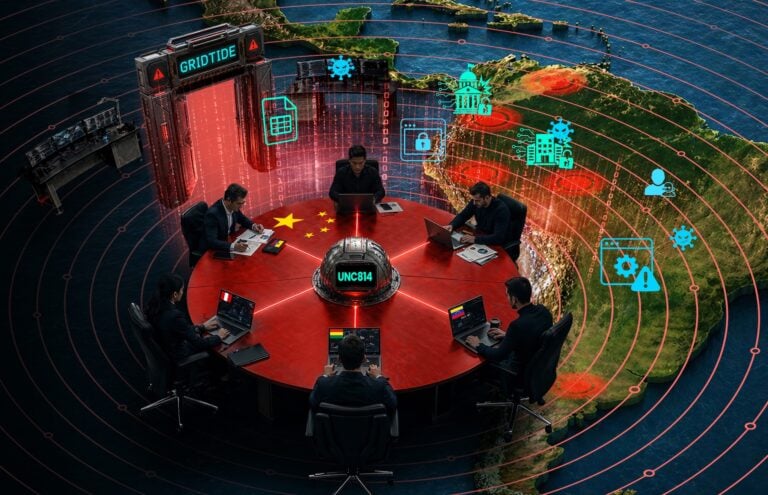
Nearly a decade had passed since they began operating in the shadows. The Gallium group — tracked by Google under the designation UNC2814 — moved silently through government and corporate networks in dozens of countries, gaining access, extracting information, and refining its methods without triggering visible alarms. In February, Reuters reported that UNC2814 had compromised at least 53 organizations in…
Space Conference of the Americas: Space Challenges Know No Borders
As space becomes increasingly important for security, defense, disaster response, and technological development, military leaders and representatives from partner nations from across the hemisphere gathered at U.S. Southern Command (SOUTHCOM) headquarters in Doral, Florida, April 28–30, for the Space Conference of the Americas 2026, hosted by SOUTHCOM in collaboration with U.S. Space Command (SPACECOM). The conference brought together senior military…
Chile Bolsters Space Leadership with First National Space Center
Chile marked a major milestone in late 2025 with the inauguration of its first National Space Center (CEN). The facility is designed to strengthen the country’s satellite and space support capabilities in the coming years and advance the development of its own systems in a field critical to national security and territorial management. This new step positions the country among…
How AI and Advanced Technology Fortified Latin American Criminal Groups
Latin American criminal networks are consolidating power through the strategic application of artificial intelligence (AI), a shift profoundly transforming their activities and increasing their profitability. This evolution represents more than a simple adoption of new tools for illicit purposes; it signifies a structural metamorphosis. Operating within an increasingly automated, fragmented digital ecosystem where direct personal interaction is no longer required,…
Space, Cyber Significant Factors in Operation Epic Fury
This article was originally published on U.S. Space Command magazine Apogee, on March 4, 2026. In the predawn darkness before Operation Epic Fury burst into public view, the first blows against Iran were struck by forces orbiting hundreds of miles above Earth. What unfolded, before the obliteration of hundreds of targets, Pentagon officials say, was the onset of major…
US Space Forces Southern Activates, Launches New Era of Hemispheric Cooperation
The U.S. Space Force and U.S. Southern Command (SOUTCHOM) officially marked the activation of Space Forces Southern (SPACEFOR-SOUTH) during a ceremony at Davis-Monthan Air Force Base, January 21, 2026, formalizing the command’s role in integrating space capabilities across the Western Hemisphere. Although SPACEFOR-SOUTH became operational on December 1, 2025, the ceremony formally recognized the activation with the assumption of command…