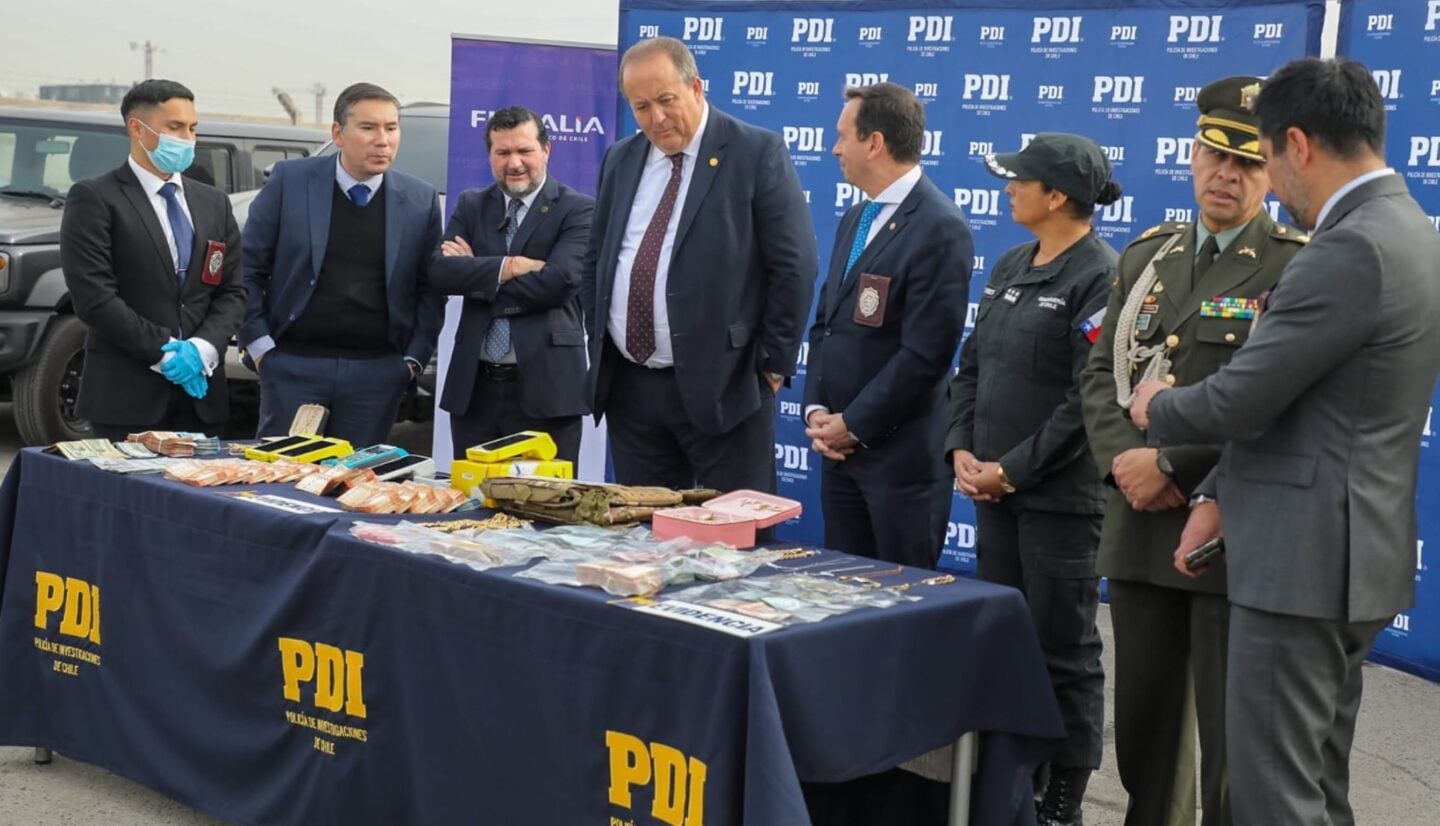

Transnational criminal organizations are increasingly sophisticated in the ways they conceal illicit proceeds, combining cryptocurrencies, digital platforms, and traditional financial systems. In response, authorities across the hemisphere are strengthening their investigative capabilities. One recent case emerged in Chile, where an investigation dismantled a network linked to the Tren de Aragua that allegedly moved millions of dollars through cryptoassets, front companies, and banking transactions.
The investigation, dubbed Operation Tokyo, uncovered the laundering of some $80 million between 2022 and 2025, with proceeds stemming from extortion, drug trafficking, prostitution, telephone scams, and smuggling, La Tercera reported. According to the prosecutor in charge, the money moved through multiple bank accounts to obscure its trail before being converted into cryptocurrencies for transactions abroad. The case illustrates how criminal methods are evolving to make it more difficult to detect proceeds from a range of illicit economies.
Speed of cryptoassets challenges asset freezes
Tracing cryptoasset transactions is possible, and Chilean police and government agencies have the software to do so, although freezing assets is feasible “only sometimes,” Mauricio Fernández, former director of the Chilean Public Prosecutor’s Office Specialized Unit for Economic Crimes, told La Tercera. “These investigations show that there are shortcomings in terms of timing [of prosecution],” Fernández said, pointing to the speed of digital currency transactions.
“When a company or government agency’s computer is compromised, the ransom is demanded in cryptoassets. In large-scale fraud, online fraud, illegal financial operations, or across the various forms of online crime, payments or money transfers are typically made through cryptoassets,” Fernández said. “This is not only associated with violent organized crime, but also with more financially oriented organized crime, which uses digital assets because they are cheap and fast. They are not subject to the controls of the banking system or the high transfer costs associated with international banking transactions.”
Targeting profits strikes at the incentive holding criminal groups together
“If we analyze the phenomenon from a nonpoliticized security perspective, the primary objective of criminal organizations is to generate profits, operating like an illegal business that offers illicit goods or services,” Vanessa Cárdenas, an organized crime researcher at the International Affairs Observatory of Chile’s Finis Terrae University, told Diálogo. “Although it may sometimes appear that their main objective is to perpetrate violence, violence, along with corruption and intimidation, is actually a tool to protect those businesses.”
“Following the money is far more effective than focusing solely on capturing individuals or building mega-prisons,” Cárdenas said. “When assets, bank accounts, front companies, and money laundering mechanisms are targeted, authorities strike directly at the heart of the business and the incentive that holds these organizations together.”
Cooperation, artificial intelligence, and specialized training to close the gap
From late June to early July, Chile hosted Asset Recovery Week, bringing together prosecutors, judges, financial analysts, security forces, and financial intelligence units from Latin American and European countries in Santiago. The initiative, led by the European Union’s EL PACCTO 2.0 program together with Chilean institutions and in collaboration with the Financial Action Task Force of Latin America (GAFILAT) and INTERPOL, addressed the early identification and recovery of illicit assets, secure information sharing, coordination among authorities, and the recovery of cryptoassets.
“We want to prevent criminal organizations from using these illicitly obtained funds to penetrate economies or create parallel structures to launder the proceeds of their activities,” Eduardo Cerna, director general of Chile’s Investigative Police (PDI), told La Tercera. “Collaborative work, mutual trust, streamlined processes, and direct information sharing are essential,” he added. The approach reflects an evolution in the pursuit of organized crime assets: In addition to “following the money,” authorities are increasingly seeking to “follow the data” that can help reconstruct financial flows and the networks behind them.
In October 2025, Colombia’s Financial Superintendency (SFC) incorporated an artificial intelligence-based tool to automate the assessment of anti-money laundering and counterterrorist financing programs at supervised institutions as part of its Digital Supervision strategy. “The initiative seeks to modernize how the financial sector is supervised through advanced analytics and emerging technologies, strengthening the state’s ability to protect market stability and confidence,” Luis Arregocés, head of the SFC’s Center of Excellence and Artificial Intelligence, wrote for Colombian news outlet Portafolio.
In January 2026, the United Nations Office on Drugs and Crime (UNODC) organized a high-level course on blockchain, virtual assets, and the prevention of money laundering and terrorist financing to strengthen national regulatory, supervisory, and operational capabilities. The course brought together 35 representatives from Panamanian institutions, including the ministries of Economy and Finance and Commerce and Industries, the Judicial Branch, the Financial Analysis Unit, the Attorney General’s Office, and the Panamanian Autonomous Cooperative Institute.
“The future of the fight against money laundering will depend on who can adapt more quickly to the digital transformation: criminal organizations or the state,” Cárdenas said. “We need more flexible, agile institutions equipped with tools that make it possible to follow the money, lift bank secrecy when appropriate, and identify those who may be collaborating with organized crime from within political circles, the financial system, or security institutions.”
Recent cases show that weakening organized crime finances no longer depends solely on tracking bank transfers. It requires integrating financial intelligence, police and judicial information, cryptoasset analysis, and data on companies and beneficial owners to identify illicit assets before they move through additional accounts or jurisdictions.
That approach is already beginning to translate into regional capabilities. Cooperation among prosecutors, security forces, and financial intelligence units, combined with tools for secure information sharing and for locating and recovering assets abroad, can turn data into operational action. For transnational criminal organizations, losing access to accounts, companies, and assets represents more than a financial loss: It reduces their ability to finance operations, corrupt institutions, expand, and rebuild after law enforcement operations.