
Through hazy skies, choppy water and jungle terrain, 24 nations worked together to strengthen security and stability in the Western Hemisphere during the 67th iteration of UNITAS in Lima, Peru, September 10-23.
The world’s longest-running annual multinational maritime exercise, UNITAS 2026 featured more than 5,000 personnel working together to increase interoperability through maritime, amphibious, and multinational operations.
“This exercise is the most complex, the most advanced UNITAS that we have ever done,” said U.S. Navy Rear Admiral Carlos Sardiello, commander of U.S. Naval Forces Southern Command/U.S. 4th Fleet.
The exercise integrated not only tactical operations through a series of trainings and a scenario phase, but tied together effects from the seabed through space in real time, while translating commander’s intent into tasks and then into orders.
Being able to demonstrate those capabilities with allies and partners is the “secret sauce” of success against modern adversaries, Rear Adm. Sardiello said.
Twenty-six ships, two submarines, and 21 aircraft took part in the two-week exercise, including the littoral combat ship USS Minneapolis-St. Paul, Patrol Squadron 10, which flies the P-8A Poseidon, and Helicopter Maritime Strike Squadron 50, which flies the MH-60R Sea Hawk.
UNITAS began in port with sporting events, an international cuisine festival, and community relations projects designed to bring participants together.
“[The exercise] means a lot. It means we’re building on the foundation that’s been developed,” said U.S. Navy Commander Arthur Bond, USS Minneapolis-St. Paul commander. “It also allows us to build bonds ashore and friendships ashore that can be strengthened at sea.”
The exercise then transitioned to scenario-driven operations and training taking place off the coast, on the beaches, and in the jungles, rivers, and lakes of Peru.
At sea, U.S. and partner nation assets worked together to counter any possible threats, deploying unmanned aerial systems, unmanned underwater vehicles, helicopters, and patrol aircraft. Multiple shooting exercises took place, as well as a sinking exercise, where AGM-114 Hellfire missiles were launched from the Minneapolis-St. Paul.
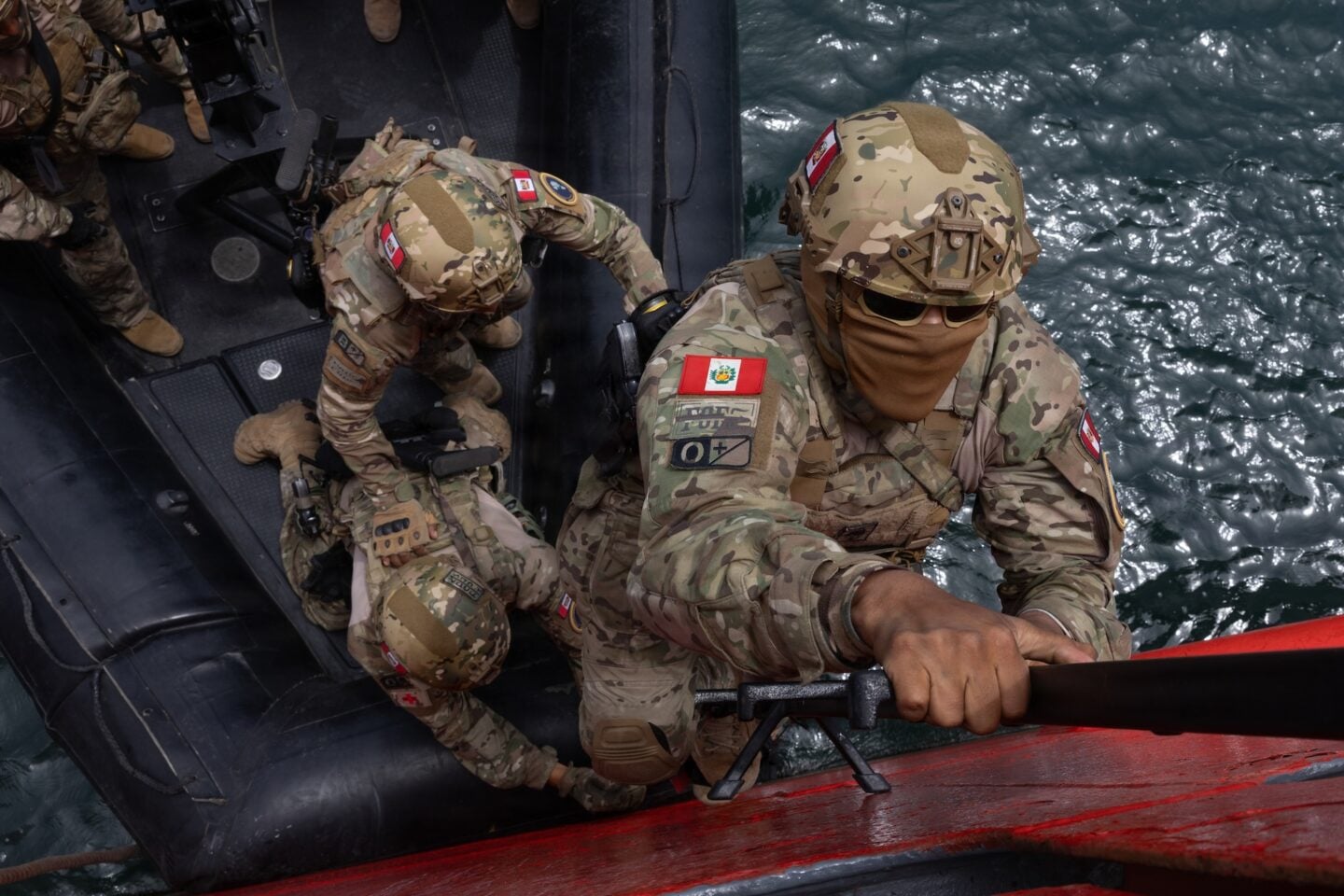
Patrol Squadron 10 flew several sorties gathering intelligence and providing the allied force with antisubmarine warfare operations during the exercise. Meanwhile, U.S. Marines worked with partner nations to conduct multiple visit, board, search and seizure drills to increase readiness.
On shore, service members participated in cyber defense operations, live-fire training, room clearing drills, and humanitarian aid and disaster response exercises. These training evolutions allowed participants to share knowledge and increase skills across the defense spectrum.
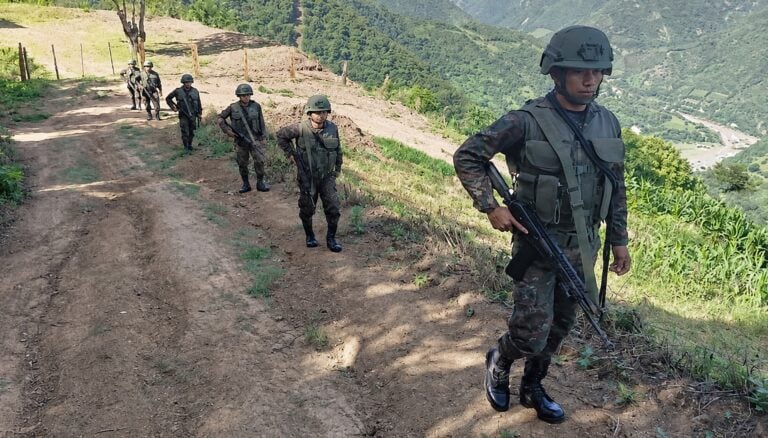
While in the jungle, exercise participants went through survival and assault training, search and rescue operations, and river crossing drills. U.S. Navy divers assigned to Explosive Ordnance Disposal (EOD) Mobile Unit 2 joined partner nations for underwater search, recovery and salvage operations at two different lakes, equaling the highest-altitude dive in Navy EOD history.
The exercise scenario then culminated with an amphibious beach assault incorporating every nation. The massive maneuver integrated airborne operations, amphibious insertion, naval gunfire support, close air support, artillery fire, and logistical sustainment.
The teamwork displayed during the event, and throughout the entire exercise, showed that allies and partners training together can advance unity, security, and stability throughout the Western Hemisphere, Rear Adm. Sardiello said.
“We all have to work together if we are going to get after this problem set,” he said during the exercise’s closing ceremony. “We have a methodology [to do so], we rehearsed it here, and it works. We are thankful we have great partners around the world to go after common security interests.”
Participating nations included Argentina, Bolivia, Brazil, Chile, Colombia, Dominican Republic, Ecuador, Guatemala, Honduras, Indonesia, Italy, Japan, Morocco, Netherlands, Panama, Paraguay, Peru, Poland, Singapore, South Korea, Spain, Sri Lanka, United Kingdom, and the United States.
Argentina is scheduled to host the 68th iteration of UNITAS next year.