
Criminal networks trafficking drugs, weapons, and other illicit goods across the Americas operate without regard for national borders. To confront that threat, countries across the region are strengthening cooperation mechanisms that connect intelligence, capabilities, and operations beyond their territories.
The Cusco Declaration and the Americas Counter Cartel Coalition (ACCC) reflect that trend. Although they are separate initiatives, both seek to strengthen regional coordination against transnational threats. While the former establishes commitments for hemispheric cooperation, the ACCC is moving toward campaign plans, shared responsibilities, and mechanisms to coordinate actions against priority criminal networks.
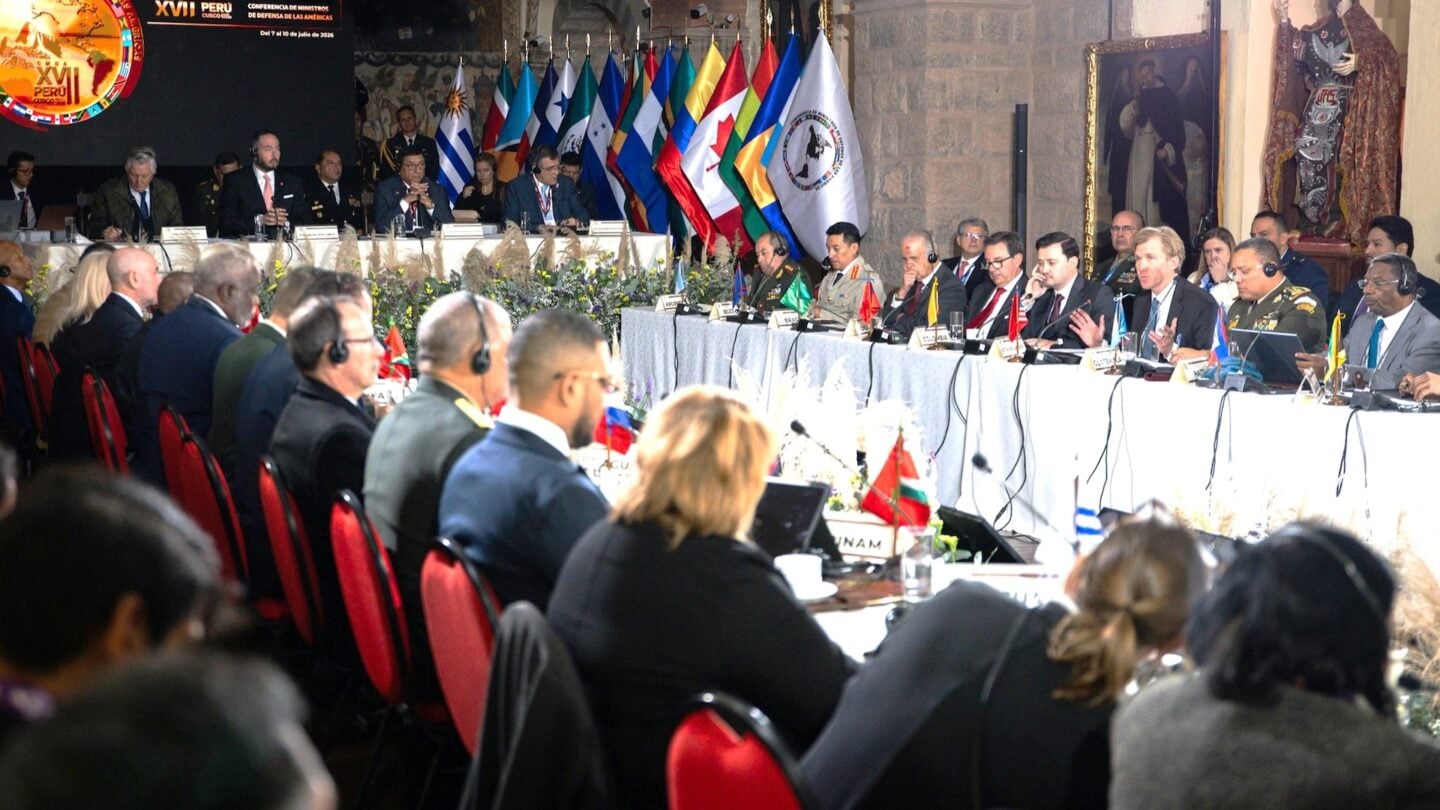
Defense ministers and representatives from 33 countries participated in the 17th Conference of Defense Ministers of the Americas, held July 7-10, 2026, in Cusco, Peru. Delegations discussed transnational organized crime, drug trafficking, illicit arms trafficking, and cyber threats, among other challenges, according to Peru’s Ministry of Defense.
The Cusco Declaration, adopted at the conclusion of the conference, established commitments to strengthen information sharing, institutional capabilities, and coordinated operations. It also included cooperation on border security, cyber defense, cyberspace protection, and interoperability, while respecting each nation’s sovereignty and legal framework.
A month later, defense and security representatives from 19 countries met in Panama as part of the ACCC, which is focused on strengthening the regional response to transnational criminal organizations.
The meeting produced concrete planning outcomes. Participants refined campaign plans against priority criminal networks, assigned responsibilities, designated lead nations, and established working groups with specific objectives and timelines. The coalition also began campaign assessments and expects to complete a plan by November to guide its joint efforts, according to U.S. Southern Command (SOUTHCOM).
For Juan Belikow, a political scientist and security and organized crime specialist at the University of Buenos Aires, strengthening information sharing is essential to confronting organizations that exploit differences among countries and jurisdictions.
“Any level of cooperation is always welcome. Any strengthening of information sharing in this area is absolutely vital, and that is always positive,” Belikow told Diálogo.
ACCC continued to expand regional participation after the Panama meeting. Colombia formally joined in August and emphasized the need to deepen the planning, coordination, and execution of operations while respecting each country’s sovereignty and legal framework.
In September, Peru announced that it would join the Shield of the Americas. Peruvian President Keiko Fujimori said participation would allow the country to gain faster access to information to confront criminal organizations that operate across borders.
Intelligence for action
Information sharing is one of the pillars of the shift toward more operational cooperation. Criminal organizations move drugs, money, weapons, precursors, and logistical support across jurisdictions; confronting them requires connecting information gathered by different countries and turning it into operational decisions.
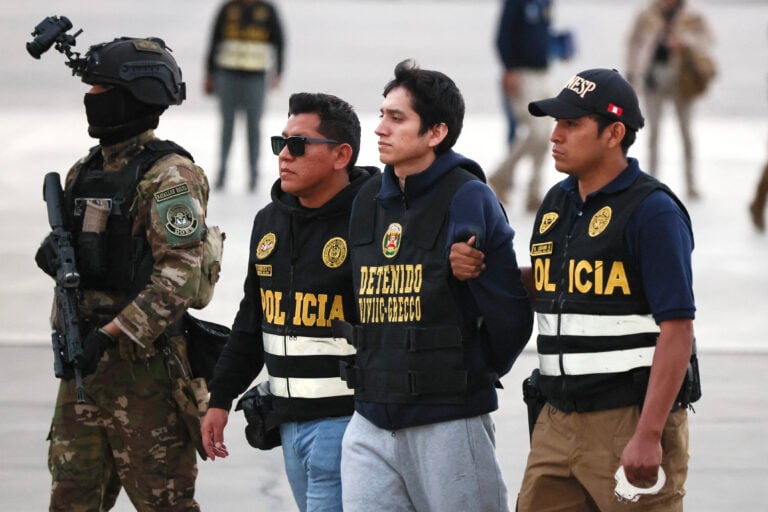
Ecuador offers an example of how that model of cooperation can work in practice. Between late August and September, Ecuadorian and U.S. forces coordinated a series of maritime operations against vessels linked to drug trafficking logistics in the Pacific. The operations combined intelligence, maritime capabilities, and national authorities to put pressure not only on drug shipments but also on the supply networks that enable criminal organizations to operate.
SOUTHCOM linked the operations to ACCC’s goals of maintaining sustained pressure on criminal networks. For participating countries, this type of coordination offers a model for connecting information obtained across different jurisdictions and turning it into action against routes, vessels, logistical structures, and sources of financing.
Complementary capabilities
Regional cooperation does not require every country to have the same capabilities. Its value lies precisely in connecting different resources and expertise against criminal networks that use maritime and land routes, financial systems, communications, and logistical structures spread across multiple countries.
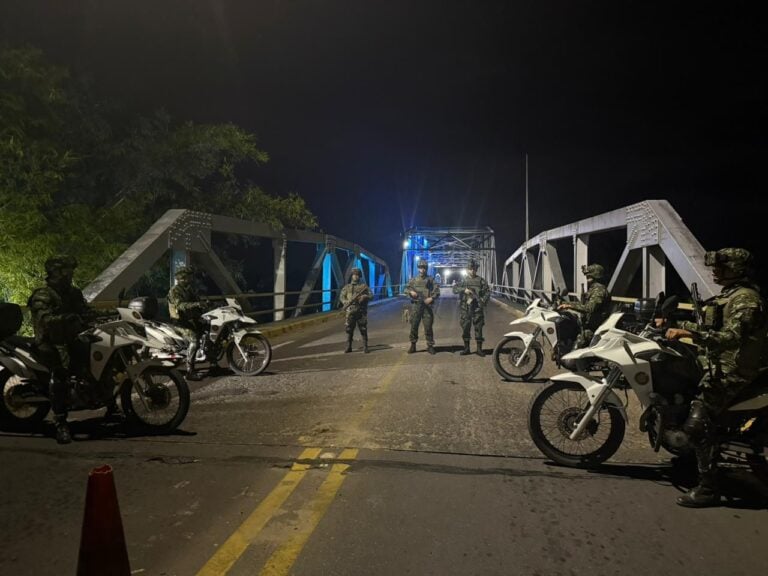
Panama, for example, launched Operation Steel Shield in August, integrating capabilities from the National Border Service (SENAFRONT) and National Air and Naval Service (SENAN) to strengthen surveillance, territorial control, and state presence along the border with Colombia. Those border security capabilities can be complemented by intelligence, maritime surveillance, financial investigations, specialized units, and other resources provided by partner nations.
That complementarity is one of the principles ACCC seeks to translate into coordinated campaigns. Rather than each country independently pursuing the portion of a criminal organization operating within its territory, the objective is to connect national capabilities to apply pressure against different components of the same network.
“Our strength is in our complementary capabilities,” said U.S. Marine Corps General Francis L. Donovan, SOUTHCOM commander, during the August meeting. According to Gen. Donovan, coordinated campaigns seek to generate “systematic pressure” on criminal networks.
Interoperability is also among the commitments established in Cusco. Joint exercises, training, and information sharing allow forces with different structures, equipment, and authorities to communicate, coordinate, and act against a common threat.
Joint training can help reduce those differences while also building the trust needed to share sensitive information.
“Training generates personal contacts, and personal contacts help build trust […]. If you know your counterpart on the other side, it is easier for that cooperation to actually work in practical terms,” Belikow said.
From coordination to campaigns
Regional cooperation is now moving toward a more operational stage: turning agreements and coordination mechanisms into sustained campaigns capable of acting simultaneously against different components of a criminal network.
“We have to move from the political level of these meetings to the operational, technical, concrete level. And I think that is the direction we are heading,” Belikow said.
Differences among national laws remain a factor that countries must manage. Military and police forces, prosecutors, and judicial systems operate under different authorities and legal frameworks, even as the organizations they pursue move across multiple countries. Coordination allows each nation to contribute capabilities and act within its own authorities while connecting its efforts with those of its partners.
The Cusco Declaration and the Americas Counter Cartel Coalition are advancing along separate tracks, but they reflect the same evolution in hemispheric cooperation: moving from recognizing shared threats to developing mechanisms to confront them in a coordinated manner.
With a campaign plan expected in November, the coalition is moving toward greater integration of those efforts. The distribution of responsibilities, identification of priority networks, and combination of capabilities are intended to maintain coordinated pressure on criminal organizations operating simultaneously across multiple countries and jurisdictions.