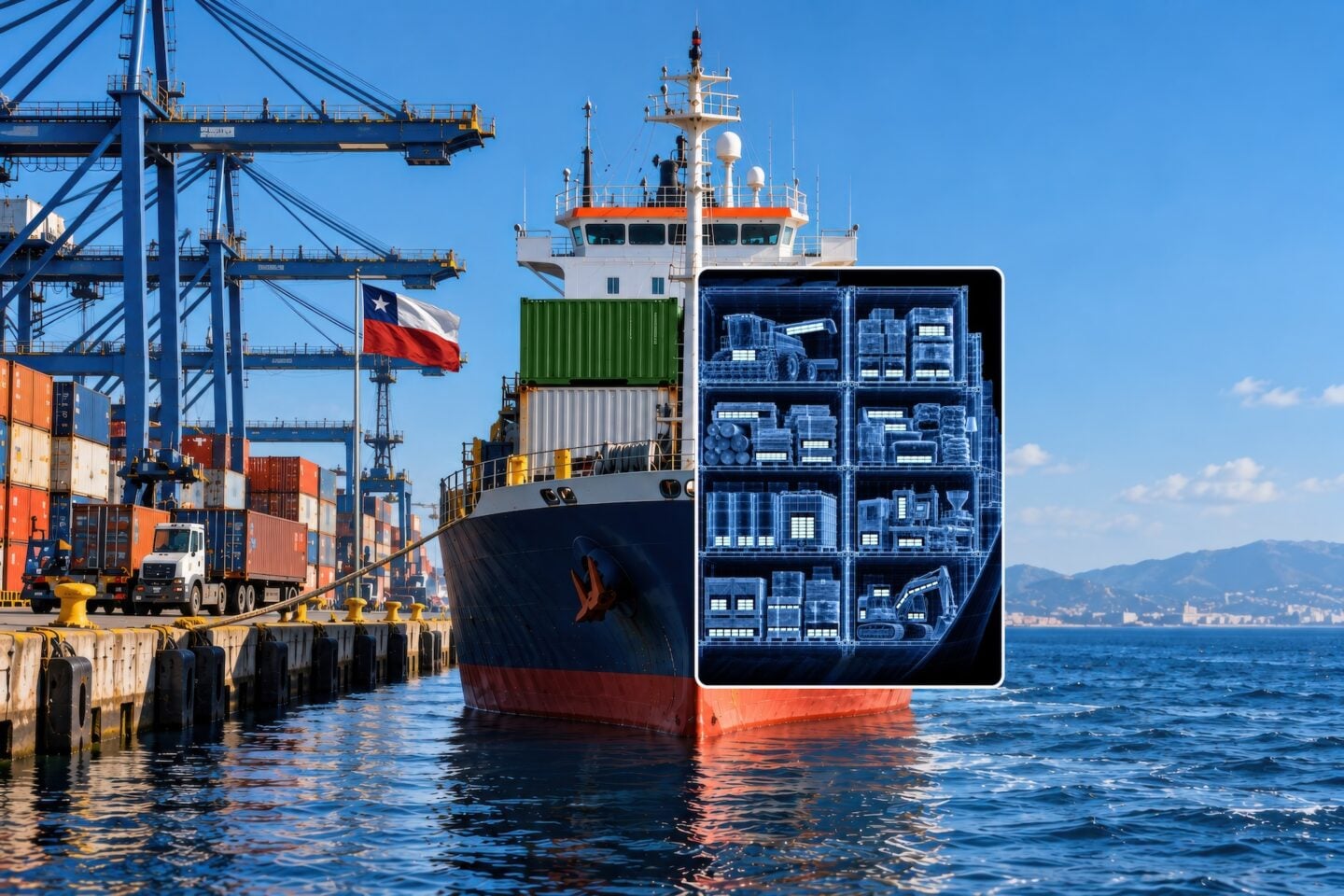

Chile’s ports are playing an increasingly prominent role in international drug trafficking. Transnational criminal organizations are adding them to routes used to move cocaine and other drugs to global markets, exploiting the country’s high volume of maritime trade, extensive port infrastructure, and complex logistics networks.
Arica, Valparaíso, and San Antonio are appearing with increasing frequency in international drug trafficking investigations. But the activity is no longer confined in the country’s major ports. Authorities have also identified emerging routes extending into Chile’s far south.
According to John Griffiths, executive director of AthenaLab, a Chilean think tank specializing in security, defense, and international relations, this expansion reflects a defining characteristic of transnational organized crime: its ability to adapt.
“Transnational organized crime is constantly adapting to its geographic environment and to economic, technological, political, and strategic contexts,” he told Diálogo.
That adaptability extends to the maritime domain. Criminal organizations identify vulnerabilities, shift routes, and exploit different points along the logistics chain to evade enforcement.
“Ports are not isolated destinations, but part of a broader strategy connecting South American supply corridors with international markets,” he said.
Countering these networks, therefore, requires more than intercepting individual shipments. It means identifying and dismantling the criminal networks that use multiple ports, routes, and modes of transportation to sustain international drug trafficking.
In this environment, regional and international cooperation plays a central role in anticipating emerging drug trafficking methods, sharing intelligence, and preventing new routes from taking hold.
From San Antonio to a network of ports
The Organized Crime in Chile 2025 report, produced by the Public Prosecutor’s Office, found that between 2016 and 2023, the port of San Antonio accounted for 58 percent of the cocaine seized in outbound shipments from Chilean ports. The report makes clear, however, that the threat extends beyond any single terminal, identifying the broader port system as strategically vulnerable to organized crime.
According to Chilean Navy Vice Admiral Arturo Oxley Lizana, director general of the Maritime Territory and Merchant Marine (DIRECTEMAR), the level of risk varies from port to port. Criminal organizations can exploit different characteristics depending on their routes, cargo volumes, and connections to international trade.
“Each port has particular characteristics that can make it attractive to these networks, whether because of the high volume of cargo it handles or its proximity and the ease with which exports from other countries can transit through it,” he told Diálogo.
Arica is one example. As the main Pacific outlet for Bolivian cargo, the port has been used to conceal drugs in shipments bound for international markets.
In December 2025, as part of Operation Mercurius, authorities seized more than 700 kilograms of cocaine hydrochloride concealed in some 19.5 metric tons of wood from Bolivia and bound for Barcelona, Spain.
Three months later, in March 2026, the Maritime Police detected three shipments from Bolivia totaling 68.7 metric tons of cargo containing cocaine and ketamine and bound for Germany, Mexico, and Italy.
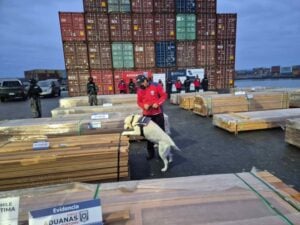
The largest operation came in June 2026. Following a six-month investigation, an interagency operation led by the Arica and Parinacota Regional Prosecutor’s Office, with the participation of the Maritime Police and National Customs Service, identified 45 containers carrying 1,080.8 metric tons of drug-impregnated wood at the ports of Arica, San Antonio, and Valparaíso. Authorities estimated that the cargo contained more than 100 metric tons of illicit substances, primarily cocaine hydrochloride and ketamine.
Taken together, the cases reveal a broader pattern: Criminal organizations are linking different points along the logistics chain and diversifying their routes to keep drugs flowing to international markets.
The threat reaches the far south
Drug trafficking routes are also expanding into Magallanes. In August 2026, Magallanes Regional Prosecutor Cristián Crisosto told the Senate Public Security Committee that investigations had identified drug trafficking and smuggling routes connecting Ushuaia with several points in southern Chile, including Punta Arenas, Puerto Natales, the ferry crossing, Puerto Chacabuco, and Puerto Montt.
According to Crisosto, some investigations point to a longer route originating in Bolivia and crossing Argentina from north to south before reaching the southernmost part of the region. Prosecutors have identified between four and five transnational organized crime groups operating in the area.
For Griffiths, the presence of criminal organizations in the area is no coincidence. Their expansion into the far south reflects a search for locations that have traditionally drawn less scrutiny from authorities combating drug trafficking.
“Areas with low population density, such as the far south, offer advantages to criminal organizations because of a more limited state and law enforcement presence, which can facilitate illicit activities,” he explained.
Growing maritime traffic presents an additional challenge. According to DIRECTEMAR data, large-vessel traffic through the Strait of Magellan increased 47 percent between 2024 and 2025, while traffic through the Beagle Channel rose 84 percent.
The volume of traffic complicates surveillance across vast maritime spaces and international shipping routes. There is also a legal constraint: The rules governing neutral transit through the Strait of Magellan can limit authorities’ ability to board vessels without prior intelligence or a formal complaint that would justify intervention.
Targeting logistics chains
The evolving criminal landscape extends beyond maritime routes. Criminal organizations also seek to infiltrate legitimate commercial supply chains, concealing illicit shipments among legal cargo.
“Drug trafficking must be understood not simply as the movement of drugs by sea, but as a transnational phenomenon that can exploit the entire logistics chain: ports, vessels, trade routes, companies, and seemingly legitimate cargo,” Vice Adm. Oxley said.
Maritime transportation is central to this dynamic. According to the United Nations Office on Drugs and Crime (UNODC), 89 percent of cocaine seized globally in 2021 was linked to maritime trafficking.
The June 2026 operation in Arica demonstrated how extensively traffickers can exploit legitimate trade. Drugs were impregnated into wood intended for export, concealing the substances within otherwise legitimate commercial cargo.
Other methods include hiding drugs in industrial and agricultural machinery and disguising illicit activity as legitimate commercial transactions. The objective is the same: to exploit legitimate supply chain to facilitate criminal operations.
Local organizations and international connections
The presence of organized crime in Chilean ports is part of an evolving criminal landscape. In 2025, the National Prosecutor’s Office identified 16 international organized crime groups or structures operating in Chile. According to a report prepared by the Specialized Organized Crime and Drug Unit (UCOD), these groups have adapted their operations to Chilean territory and, in several cases, are active along key logistics and port corridors.
Los Caleños are present in Arica, Iquique, and Antofagasta. Los Shottas and Los Espartanos operate in several northern regions and the Santiago Metropolitan Region, while Los Costeños are concentrated in Arica and La Empresa has a presence in Valparaíso. Tren de Aragua maintains cells in different regions of the country, according to the report.
“Today, we can say that the regional South American criminal structure, to varying degrees, has become embedded throughout the country,” Griffiths said.
The criminal landscape also includes actors from outside the region. In 2020, a police investigation linked members of the Chinese Bang de Fujian organization to drug trafficking operations in the San Antonio area.
In 2023, a joint investigation by the Chilean Navy and the Public Prosecutor’s Office dismantled a plan to ship nearly 100 kilograms of cocaine from San Antonio or Valparaíso to Rotterdam, Netherlands. The operation involved Albanian, Chinese, and Peruvian nationals and revealed financial and logistics connections extending beyond Chile’s borders.
At the same time, local criminal groups are forging new alliances. An investigation by the Southern Metropolitan Prosecutor’s Office and Carabineros’ OS-7 anti-drug unit identified an alliance known as Los 4 Fantásticos, originally formed by Los Cojos, Los Risas, Los Macaco, and Los Hormigas. Prosecutors have described the structure as a possible “Chilean-style cartel.”
“We are facing a qualitatively more complex threat in which local organizations, by developing these connections, can gain access to greater resources, international contacts, logistics capabilities, expertise, and new methods for carrying out their criminal activities,” Vice Adm. Oxley said.
Staying ahead of crime
Chile’s response is increasingly focused on anticipation, intelligence, and interagency coordination.
DIRECTEMAR plays a central role through the Maritime Police and its Maritime Police Intelligence and Investigations Department (DIPOLMAR), working in coordination with prosecutors, Customs, the Investigative Police, and Carabineros.
The goal is to identify risk patterns and detect suspicious cargo before it leaves the country.
“We are moving from cooperation that is activated in response to a specific incident toward a capability that allows us to share information, identify patterns, and generate alerts before the threat materializes,” Vice Adm. Oxley said.
This strategy aims to strengthen security at the earliest stages of the logistics chain by combining intelligence, surveillance, specialized detection capabilities, and the protection of ships and port facilities under the standards of the International Ship and Port Facility Security (ISPS) Code. At the same time, authorities seek to maintain targeted controls without unnecessarily disrupting the flow of foreign trade, one of the main engines of Chile’s economy.
For Vice Adm. Oxley, achieving that balance requires response capabilities to evolve as quickly as criminal organizations do. “The main challenge is to develop an anticipatory capability that exceeds the adaptability of criminal organizations. The greater our analytical and anticipatory capabilities, the more targeted our controls can be,” he said.
International cooperation
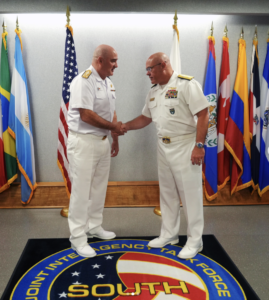
International cooperation is another key component of this strategy. Since 2010, the Chilean Navy has participated in Joint Interagency Task Force South (JIATF-S) through a permanent liaison officer, facilitating information sharing and maritime domain awareness.
Chilean frigates, aircraft, and submarines have also supported detection and monitoring efforts while operating outside waters under national jurisdiction.
“Cooperation with JIATF-S must be understood as part of an international architecture designed to confront transnational threats that no state can fully address on its own,” Vice Adm. Oxley explained.
Bilateral cooperation has also expanded. In April 2026, Chile and the United States signed an amendment to the Letter of Agreement on counternarcotics and law enforcement cooperation to strengthen Chile’s capabilities against transnational organized crime. The agreement included FBI support and $1 million in U.S. funding for equipment and investigative capabilities.
Toward a regional security architecture
Chile’s response is also moving toward greater regional security cooperation. In March 2026, Chile, Argentina, and Bolivia agreed to lay the groundwork for a trilateral agreement to establish a joint task force against transnational crime.
Cooperation also extends to the technical level. DIRECTEMAR has expanded the exchange of information and experience with maritime authorities from other countries, including through the Operational Network for Regional Cooperation among Maritime Authorities of the Americas (ROCRAM), which brings together 13 countries from across the hemisphere to advance maritime safety.
Chile further strengthened its regional cooperation in September by joining Shield of the Americas, a hemispheric framework that integrates initiatives in security, economic affairs, and multilateral coordination to address shared regional challenges, including transnational organized crime.
Chile has also participated as an observer in the Americas Counter-Cartel Coalition, an initiative aimed at strengthening multinational coordination against narcoterrorism and transnational criminal organizations. Although Chile has not formally joined the Coalition, its participation in regional discussions reflects the growing importance of intelligence sharing and coordinated security efforts against criminal networks operating across national borders.
“Transnational organized crime does not recognize borders, and for that reason, the response cannot be limited exclusively to national territory,” Vice Adm. Oxley said, underscoring the importance of a regional architecture that enables countries to anticipate threats. “From a maritime security perspective, our ability to anticipate must begin long before a threat reaches Chilean shores,” he added.
As transnational threats continue to evolve, hemispheric cooperation and complementary capabilities are becoming increasingly important to anticipating and reducing the risk they pose.
“The scourge of transnational organized crime cannot be defeated without joint efforts by states,” Griffiths concluded.