
Panama continues to strengthen its security forces’ ability to monitor its land borders, maritime domain, and digital networks in a more coordinated manner to counter threats posed by transnational organized crime.
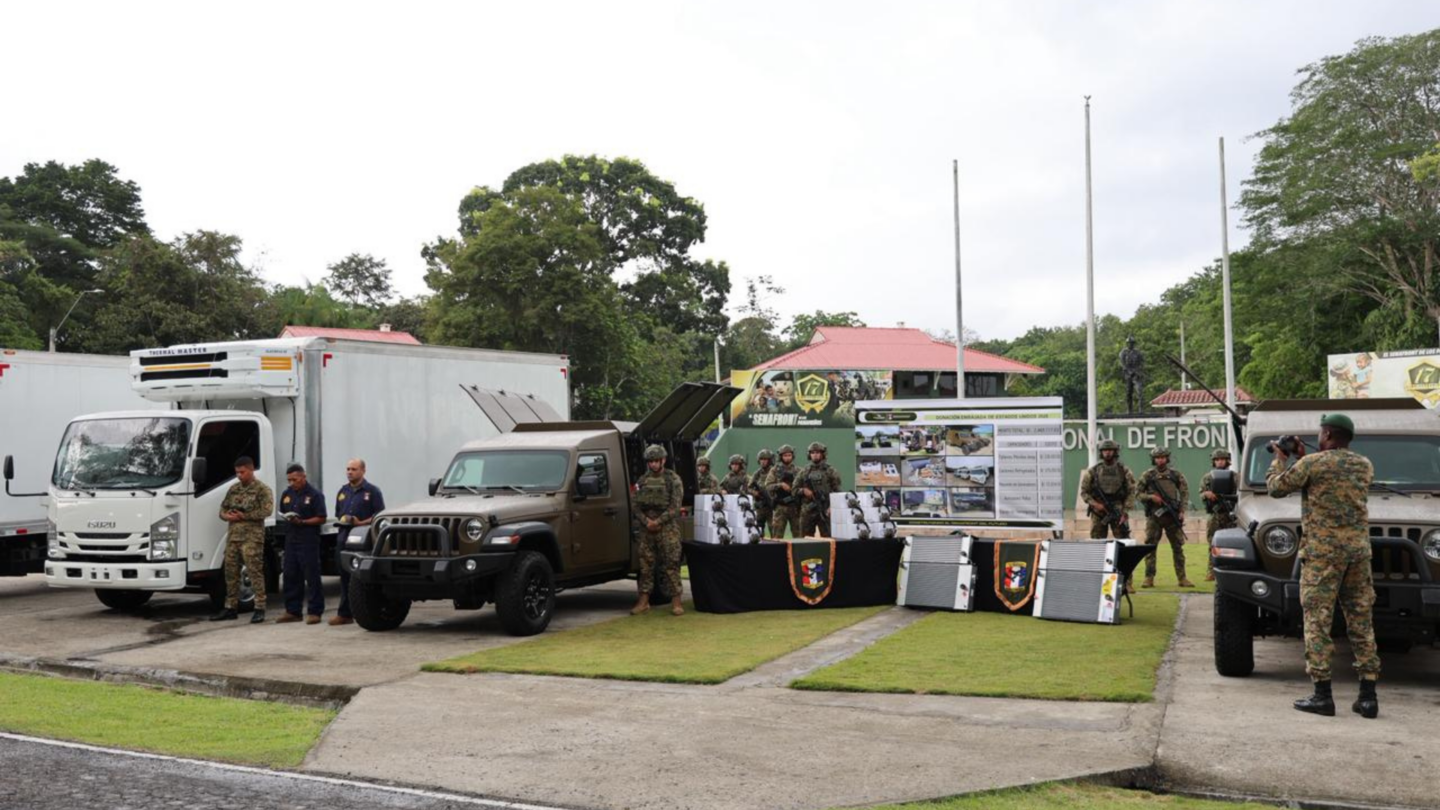
As part of that effort, the United States delivered more than $5 million in maritime, border, and cybersecurity equipment in June to Panama’s National Border Service (SENAFRONT) and National Air and Naval Service (SENAN), the U.S. Embassy indicated.
The delivery included five refrigerated trucks, two mobile maintenance vehicles, two rigid-hull inflatable boats, a specialized navigation system, generator spare parts, 400 communications sets for special operations, and Cybersecurity Operations Centers for both SENAFRONT and SENAN, local media outlet Telemetro reported.
“Under President Trump’s leadership and in partnership with President Mulino, the United States is delivering critical support to defeat criminal cartels and strengthen security,” said U.S. Ambassador to Panama Kevin Marino Cabrera. “Every dollar invested here prevents cartels from profiting by invading our partner nations.”
The equipment enhances capabilities to combat the illicit trafficking of drugs, weapons, and people while improving mobility, communications, and logistical support for units deployed in remote areas, where geography poses persistent operational challenges.
COANT expands border surveillance with unmanned systems
On July 3, Panama’s Ministry of Public Security established SENAFRONT’s Unmanned Aerial Operations Company (COANT), a specialized unit that will expand strategic surveillance, provide real-time aerial intelligence, and strengthen border security through unmanned aircraft systems. Minister of Public Security Frank Alexis Ábrego presented the unit as part of Plan Firmeza, the government’s strategy to strengthen security in hard-to-reach border areas and more effectively confront transnational criminal networks.
U.S. cooperation also included unmanned aerial capabilities for SENAN. In July, Minister Ábrego announced that four unmanned aircraft systems donated by the U.S. government were already in Panama and that operators were undergoing specialized training.
Maritime interdiction and protection of the interoceanic waterway
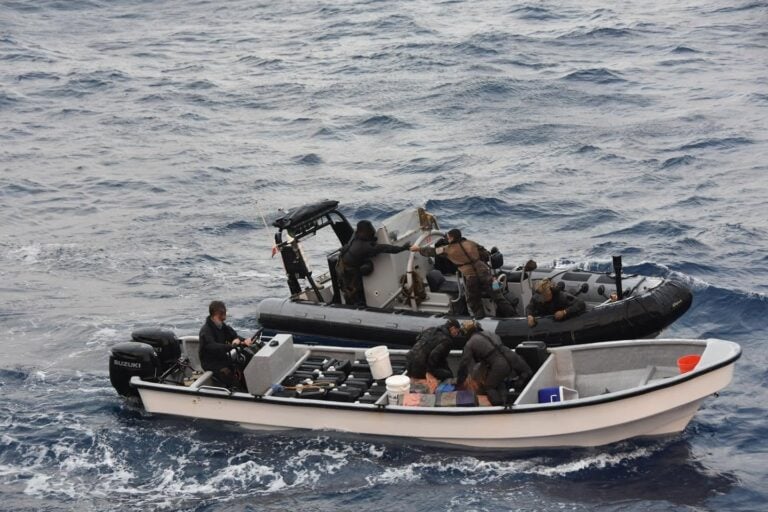
For SENAN, the boats and navigation system strengthen maritime surveillance and interdiction capabilities, as well as the protection of strategic areas and counternarcotics operations along Panama’s coasts, which criminal organizations use to move illicit shipments.
Earlier, in January 2026, SENAN received four semi-rigid inflatable boats valued at $1.5 million from the United States. The donation strengthened its patrol, interdiction, and rapid response capabilities against drug trafficking while also supporting the security of the Panama Canal.
According to Luis Carlos Trejos, former deputy director of SENAFRONT, the integration of border, maritime, aerial, and cyber capabilities is essential to countering hybrid transnational organized crime because it brings intelligence together for early warning and maximizes the efficient use of resources in the field.
“Integrating tactical and intelligence resources to disrupt the cartels’ economic activities demonstrates that cooperative security works when efforts are directed toward peace and development,” Trejos told Diálogo. “Cooperation with the United States is a strategic pillar for transforming Panama’s maritime security.”
Bilateral cooperation strengthens capabilities
The security memorandum of understanding signed by Panama and the United States in 2025 expanded bilateral cooperation through training, exercises, and capability exchanges to address shared threats and strengthen national security.
“National security creates the peace necessary for progress and democracy to thrive,” Trejos said. “It is therefore essential to continually strengthen these capabilities, because Panama occupies a geostrategic position of enormous importance to regional and global economic development. Criminal organizations recognize that reality as well and seek to exploit it for their own benefit.”
The equipment transfer forms part of the expanded cooperation between Panama and the United States. According to the U.S. Embassy, that cooperation is expected to reach an estimated value of $100 million during 2026 and includes security equipment and other support programs.
Beyond the delivery of new equipment, strengthening maritime, border, aerial, and cyber capabilities reflects Panama’s broader effort to respond more effectively to threats that operate across multiple domains. For other countries facing similar challenges, Panama’s experience underscores the importance of combining technology, training, and international cooperation to enhance the state’s ability to monitor, deter, and respond to transnational threats.