
Transnational criminal organizations exploit borders, spreading their leadership, finances, and operations across multiple countries. For the security forces pursuing them, the challenge is to connect intelligence, investigations, and judicial mechanisms across those same borders.
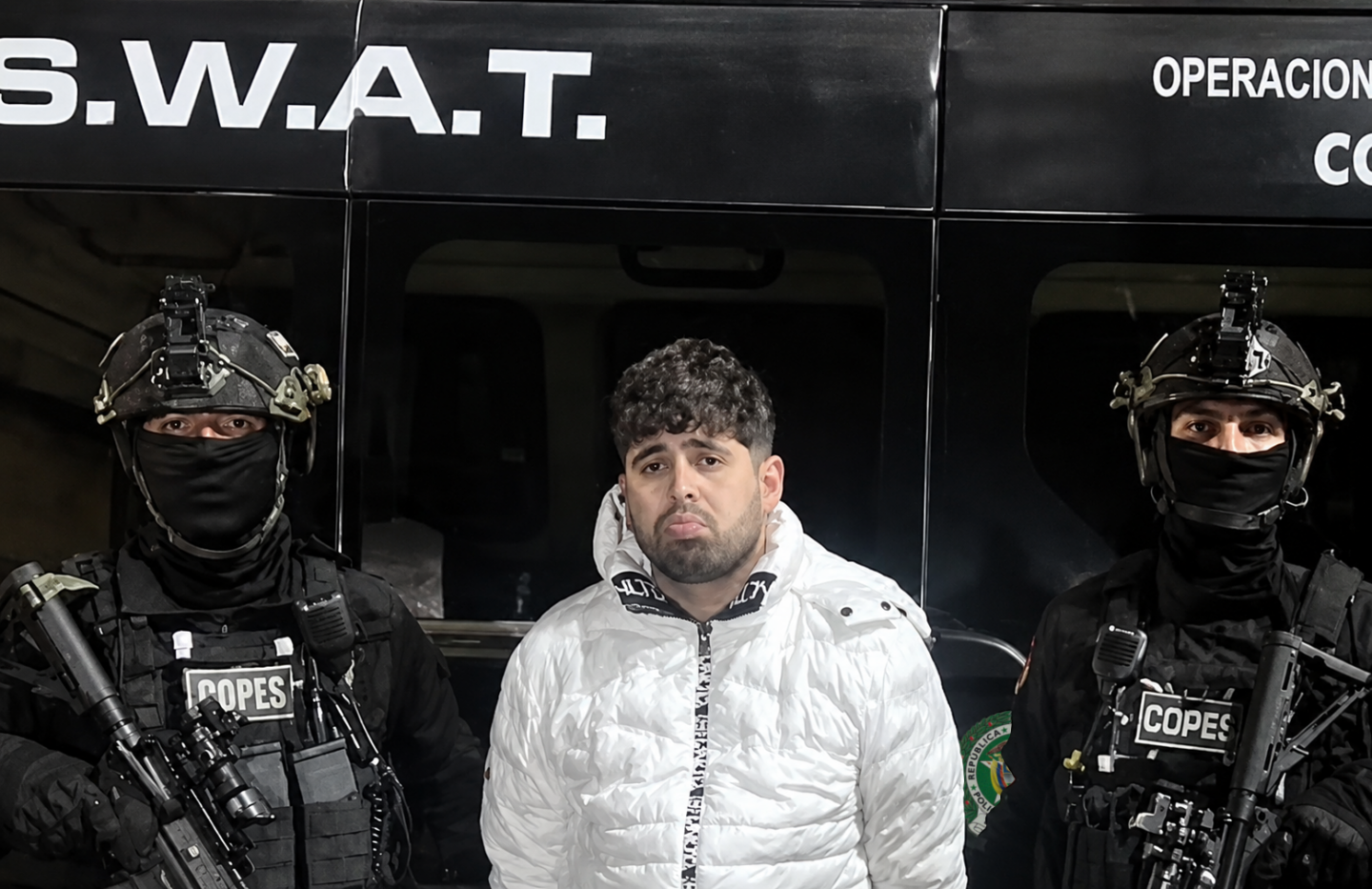
The capture in Bogotá of Luis Saúl Pérez Nieto, alias Nairobi or Páez, identified as one of the top leaders of Tren de Aragua (TdA) in Peru, illustrates how such international cooperation can help authorities track and apprehend criminal leaders operating outside countries where they direct their activities.
The Peruvian National Police said the capture resulted from information sharing, international coordination, and special investigative techniques involving its Sensitive Investigative Unit against Transnational Organized Crime, the Colombian National Police, and the DEA. The operation concluded a seven-month joint investigation.
Nairobi was arrested August 27 in Fontibón, Bogotá. Authorities identified him as a trusted associate of deceased TdA leader Héctor Guerrero Flores, alias Niño Guerrero, and linked him to extortion, international arms trafficking, targeted killings, and drug trafficking along routes spanning South and Central America. He was wanted in the United States on charges related to terrorism, money laundering, drug trafficking, and criminal conspiracy.
Beyond the capture of a leader, the case illustrates the chain of cooperation needed to pursue organizations whose members and operations span multiple jurisdictions: sharing information to identify and locate targets, coordinating investigations, turning intelligence into judicial action, and sustaining cooperation until suspects are brought to justice.
From information to judicial action
For Colombian strategic intelligence analyst and security, defense, and geospatial analysis specialist Mario Andrés Sánchez Cubillos, international cooperation operates through different, complementary channels.
“There are informal communications between police agencies, which share preliminary information on names and profiles when there is a search underway; and there is mutual legal assistance, which is a much more formal form of state-to-state communication,” he told Diálogo.
The first type of exchange allows authorities to quickly alert counterparts in another country about a target or movement of interest. Formal mechanisms allow that information to be used to support judicial orders, extraditions, and other actions between states.
Lorena Erazo, an international relations researcher at La Salle University in Bogotá, also pointed to different levels of regional cooperation. One involves established mechanisms such as INTERPOL and the Police Community of the Americas (AMERIPOL), which connect law enforcement institutions across the region in efforts to combat criminal networks operating in multiple countries.
AMERIPOL made sustained action against TdA one of its priorities for 2026, along with new mechanisms to strengthen cooperation among the region’s police forces. For Erazo, deepening that coordination means going beyond locating and arresting members of criminal organizations.
“Efforts are also needed to cooperate on money laundering, biometric collaboration, and other types of information to maximize the impact of these strategies,” she told Diálogo.
Following the money, verifying identities, and reconstructing contacts can expand an investigation from an individual to the network supporting that person. According to Sánchez Cubillos, capturing a leader can also open new lines of investigation.
“Neutralizing a target may provide an indicator but capturing that person alive is much more useful for subsequent investigations,” he said. A detainee can provide information that, once corroborated through the appropriate investigations, can help identify financial networks, routes, international contacts, and command structures, he explained.
Cooperation beyond the capture
The pursuit of a transnational organization does not end when a suspect is located. Extradition and international transfer processes allow defendants to face justice in the jurisdictions seeking them.
One day after Nairobi’s capture, Colombia transferred Alfredo Camilo Carrillo Ortiz, alias Gocho, to Chile. The alleged TdA member was wanted for his suspected involvement in the 2024 kidnapping and killing in Santiago of former Venezuelan Lieutenant Ronald Ojeda. The Colombian National Police’s Criminal Investigation and INTERPOL Directorate (DIJIN) carried out the transfer to Chilean authorities.
That same day, another defendant in the case, Rafael Gámez Salas, alias El Turko, arrived in Chile from the United States. Chilean authorities identify him as one of the leaders of Los Piratas de Aragua, a TdA faction.
Another case followed a similar path months earlier. In July 2026, Colombia extradited Dayonis Junior Orozco Castillo, alias Botija, to Chile, where he was wanted for his alleged involvement in the killing of a police officer. Orozco had been arrested in Colombia in 2024 following a coordinated operation involving authorities from Colombia, Chile, and Peru.
The cases illustrate different stages of the same cooperation architecture: A target can be investigated in one country, located in another, and wanted by judicial authorities in a third.
This network of cooperation is particularly relevant in confronting TdA. Erazo said the organization adapts its activities to the criminal opportunities available in each territory. Depending on the country, its networks have been linked to extortion, drug trafficking, human trafficking, sexual exploitation, kidnapping, and other illicit economies.
“Choking off organizations that are structured as nodes or networks that mutate according to their environment becomes more complex,” she said.
Connecting capabilities against a regional threat
The cases involving TdA show how cooperation between countries allows authorities to pursue a target across multiple jurisdictions. But the same networks that move their leaders between countries also spread their finances, routes, logistics, and other illicit activities across the region. Confronting them requires connecting national capabilities beyond any single operation or investigation.
That same logic underpins the Americas Counter-Cartel Coalition, which seeks to strengthen coordination among participating countries against cartels and other transnational criminal networks. The coalition expands that effort toward sustained operational cooperation, connecting countries’ capabilities to exert pressure on different components of criminal networks.
The Coalition complements the police and judicial mechanisms that enable operations such as Nairobi’s capture and the extradition of other TdA members. While those mechanisms allow countries to share information, locate targets, and bring them to justice, broader regional coordination can connect those actions with efforts targeting the routes, finances, logistics, and infrastructure that sustain criminal organizations.
That cooperation already extends across multiple domains. In August, authorities from Colombia, Ecuador, and the United States met along the Colombia-Ecuador border to advance a joint strategy against transnational criminal networks exploiting the corridor. In the Eastern Pacific, coordinated operations between Ecuador and the United States against vessels linked to drug trafficking networks were also identified by U.S. Southern Command (SOUTHCOM) as actions advancing the Coalition’s objectives.
For security forces, the value of these mechanisms lies in reducing the gaps criminal organizations can exploit between jurisdictions. A police alert can help locate a target; a joint investigation can reconstruct the target’s contacts; judicial cooperation can support an arrest or extradition; and financial and biometric information sharing can extend the investigation into the broader network.
“Strengthening each state’s intelligence capabilities and international intelligence cooperation seems vital to me in countering these threats,” Sánchez Cubillos said.
Erazo added that institutional efforts must also extend to communities where criminal organizations seek to establish control and influence, through an approach that is “not only operational and tactical on the part of security forces, but also focused on engagement with communities.”
The capture of Nairobi and the transfers of other alleged TdA members illustrate how different components of regional cooperation can converge against the same criminal network: intelligence to locate targets, police coordination to apprehend them, and judicial mechanisms to bring them before the jurisdictions seeking them. By connecting these capabilities across countries, security forces expand their ability to pursue organizations that use borders to disperse their leadership and operations.