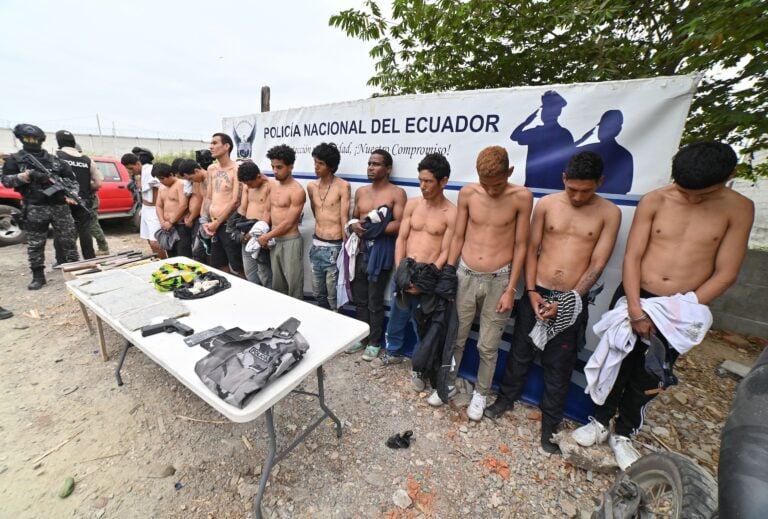
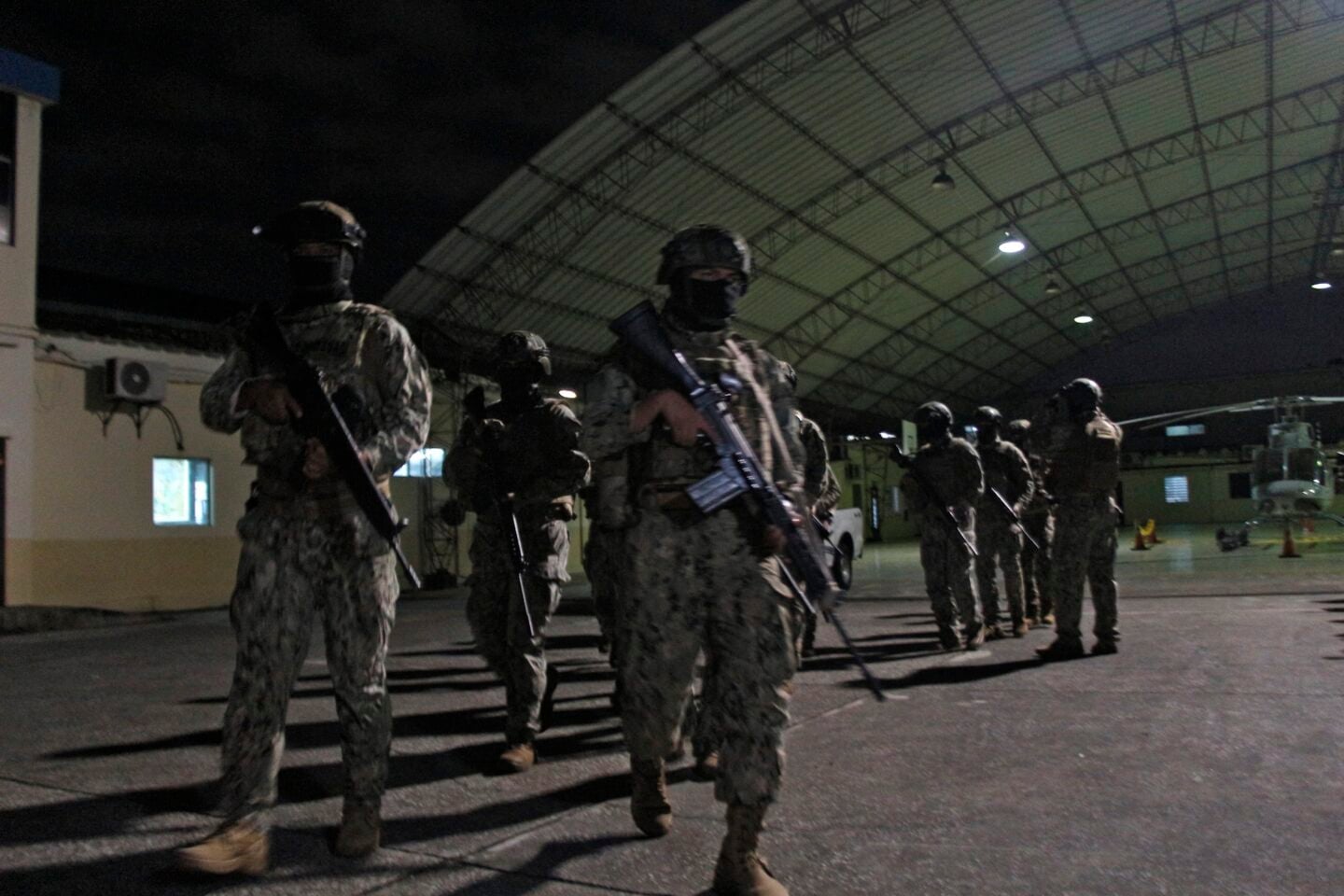

The capture in Colombia of Ronald Javier Macías Villamar, alias Javi, an alleged leader of the Los Choneros terrorist organization, demonstrated the operational reach of Ecuador’s cooperation with its regional partners against transnational organized crime. The intelligence sharing that led authorities to locate him in Bogotá is part of a series of bilateral and regional mechanisms through which Ecuador seeks to deny cross-border criminal organizations room to operate.
Intelligence sharing
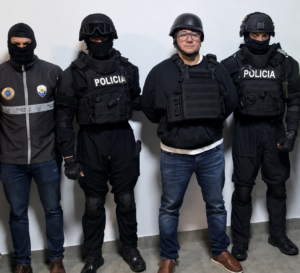
On June 16, Colombian and Ecuadorian authorities captured alias Javi in Bogotá. He is the brother of José Adolfo Macías Villamar, alias Fito, leader of Los Choneros, who was extradited to the United States in July 2026. The operation culminated an investigation lasting nearly a year and a half that tracked down the fugitive, who had been hiding under a false identity, Spanish daily El País reported.
According to the daily, alias Javi drove the expansion of Los Choneros into drug trafficking, extortion, and homicide. The group is among the main transnational criminal organizations operating out of Ecuador and represents one of the greatest challenges for authorities because of the regional reach of its criminal activities.
“This case demonstrates the importance of international collaboration. Information sharing with Colombia is essential to identifying and locating the main leaders of organized crime,” Javier Oliva Posadas, a professor at the Faculty of Political and Social Sciences of the National Autonomous University of Mexico, told Diálogo.
Regional cooperation
The expansion of organizations such as Los Choneros has led Ecuador to strengthen international cooperation to prevent their leaders from continuing to operate from abroad. The Santiago Regional Commitment against Transnational Organized Crime, signed in May by Argentina, Bolivia, Chile, Ecuador, and Peru, recognizes that these organizations exploit borders, logistics networks, financial systems, and technology to expand their operations, Ecuador’s Ministry of Foreign Affairs said.
In addition to facilitating cooperation among the participating countries, the agreement establishes a technical group to coordinate actions among states and strengthen cooperation on financial and tax intelligence, migration and border controls, traceability, and corruption prevention. The aim is to make it more difficult for criminal organizations to conceal their members, move resources, or rebuild their networks in other countries.
The effort also extended to the Andean region. As pro tempore president of the Andean Community, Ecuador led a July meeting of the High-Level Group on Combating Transnational Organized Crime, during which Bolivia, Colombia, Ecuador, and Peru addressed regional coordination against increasingly flexible and diversified criminal organizations.
Cooperation has also translated into multinational operations. From July 15 to 31, Ecuador joined Bolivia, Brazil, Colombia, and Peru in Operation Green Shield 2026, a coordinated operation targeting environmental crimes and associated illicit economies in the Amazon. The operation mobilized more than 3,600 personnel from the five countries and included more than 1,000 actions on the ground against activities such as illegal mining and logging, wildlife trafficking, and fuel smuggling.
Ecuador also participates in the Americas Counter Cartel Coalition, a regional initiative launched in March to strengthen cooperation against transnational criminal organizations.
According to Oliva Posadas, such cooperation must be consolidated as a state policy. “Security cooperation should not depend on affinities between governments. It is a matter of state policy. Current conditions have fostered a greater capacity for coordination and collaboration among the Andean countries,” he said.
Alliance with the United States
In March, Ecuador and the United States announced coordinated military operations against designated terrorist organizations as part of efforts to increase pressure on networks operating in Ecuador, the Associated Press reported.
“We commend the men and women of the Ecuadorian Armed Forces for their unwavering commitment to this fight, demonstrating courage and determination through continuous actions against narcoterrorists in their country,” said U.S. Marine Corps General Francis L. Donovan, commander of U.S. Southern Command (SOUTHCOM).
The relationship with the United States has become another pillar of Ecuador’s strategy. In April, Ecuador’s Ministry of the Interior and U.S. Homeland Security Investigations (HSI), part of the Department of Homeland Security, signed an agreement to strengthen information sharing, technical assistance, and training for the National Police in transnational crime investigations, Ecuadorian newspaper El Universo reported.
That cooperation strengthened the country’s operational capabilities, Oliva Posadas said. “Intelligence cooperation against organized crime, particularly drug trafficking, has become more agile. Coordination between U.S. civilian intelligence and security agencies and Ecuadorian institutions is a strategic element,” he said.
Cooperation expanded further on June 22 with the signing of the Secure Border Implementation Letter by representatives of the U.S. Bureau of International Narcotics and Law Enforcement Affairs (INL) and Ecuadorian authorities. The initiative includes risk analysis, information sharing, and operational alerts to strengthen coordinated inspections and patrols against transnational crime, drug trafficking, and other border threats, Ecuador’s Ministry of Defense said.
Sustained pressure
Although the capture of alias Javi represents progress, maintaining pressure on these organizations will require stronger domestic controls and continued regional cooperation, Oliva Posadas said. “The first challenge is to strengthen control of the land border with Colombia. It is also necessary to reinforce immigration controls at airports to prevent the entry of high-risk criminals,” he said, adding that these efforts should extend to the prison system and to maintaining — and even strengthening — Ecuador’s cooperation mechanisms with other South American countries.
The capture of alias Javi, multinational operations, and new regional coordination mechanisms demonstrate how intelligence sharing and cooperation among countries can translate into concrete action against organizations that exploit borders to move their members, resources, and illicit activities.
The mechanisms advanced in 2026 expanded Ecuador’s channels of cooperation with its neighbors and the United States in areas ranging from locating criminal leaders and sharing intelligence to border control and coordinated operations. According to Oliva Posadas, maintaining these as a matter of state policy will help sustain coordination against criminal organizations whose activities transcend national borders.