
Brazil’s two largest criminal organizations, the First Capital Command (PCC) and the Red Command (CV), have expanded their transnational reach by building relationships with local criminal groups and gaining access to different stages of the cocaine supply chain. In the tri-border region connecting the Colombian, Peruvian, and Brazilian Amazons, the most visible expansion has been that of CV, which has consolidated alliances along trafficking routes linking the criminal economies of the three countries. At the same time, the CV’s presence in Madre de Dios, Peru’s illegal gold mining hub, has deepened.
Following the gradual disintegration of the once dominant Brazilian gang Família do Norte (FDN), many of its members joined CV’s Amazonas branch, known as CV-AM. Others formed Os Crías, a group based in the Brazilian border city of Tabatinga and reportedly backed by PCC financing and weapons. The death of Os Crías leader Brendo in 2023 further consolidated CV-AM’s dominance in the tri-border region. FDN and its successors had developed long-standing relationships with Peruvian cocaine producers and Colombian armed groups to move drugs into Brazil.
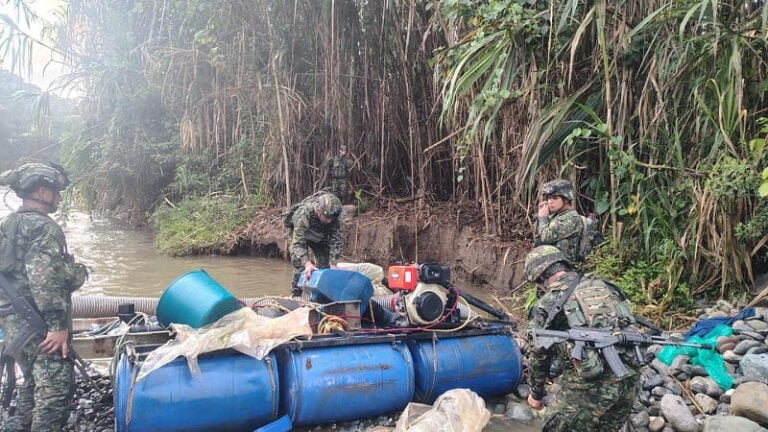
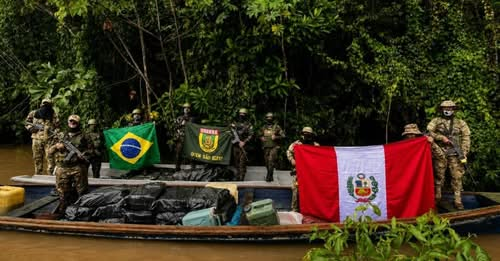
In May 2026, Peruvian and Brazilian forces seized nearly 9 tons of narcotics during Operation Mirror May 2026 (Operación Espejo Mayo 2026), a joint operation targeting CV along the Yavarí River on the Peruvian side of the tri-border region. The operation also uncovered weapons, ammunition, tactical equipment, camps, and drug-processing laboratories, highlighting the scale of the criminal infrastructure supporting CV’s operations along the border.
CV generally exerts influence in Peru through alliances and trusted intermediaries rather than through large contingents of Brazilian members. Local partners operating within its network provide knowledge of the territory and coordinate the storage, protection, and transportation of illicit shipments.
Vertical integration of cocaine supply chains
In Colombia, Brazilian and Colombian authorities have reported cooperation between CV and the Carolina Ramírez Front, a dissident faction of the Revolutionary Armed Forces of Colombia (FARC), operating along the Caquetá and Putumayo river systems. The Colombian group supplies cocaine and marijuana to Brazilian buyers while expanding its control over border territory and trafficking corridors. It has also reportedly extorted park officials and threatened communities in areas under its influence.
According to International Crisis Group, the Carolina Ramírez Front established a cross-border cell known as Frente Amazonas, reportedly composed partly of Brazilians and active around the municipality of Japurá in Brazil.
International Crisis Group reported that CV seeks to consolidate its dominance in the tri-border region and use it as a platform for expanding into Colombia and Peru. By gaining direct access to coca-growing areas, laboratories, transportation routes, and local distributors, the criminal organization can control more stages of the cocaine supply chain.
According to Carlos Eduardo da Silva, Former São Paulo Civil Police investigator and Criminal Governance expert, “The main motivation [for expansion] is economic. Peru, Bolivia, and Colombia are the principal suppliers of cocaine for the PCC and the Red Command. Buying directly in the production areas reduces dependence on intermediaries and increases profit margins.”
Within the Peruvian Amazon, Ucayali and Loreto have become increasingly important coca-growing and cocaine-processing areas, particularly along river corridors leading toward Brazil. A Peruvian official told International Crisis Group that CV and Colombian criminal groups have provided financing to plantation and laboratory owners to establish production in Peru.
Brazilian gangs in Madre de Dios
CV has also built relationships with criminal groups in Madre de Dios, a region of the Peruvian Amazon bordering Brazil and Bolivia and Peru’s principal hub for illegal gold mining. Alongside the local group Los Guardianes de la Trocha, CV reportedly profits from extortion and provides illicit “security” within mining settlements.
A heavy machinery operator in the La Pampa mining settlement, between Puerto Maldonado in Peru and the Brazilian border, told InfoAmazonia that operators paid some $150 per month to a security structure imposed by CV and Los Guardianes de la Trocha. The source also alleged that about $300 was paid weekly to members of the Environmental Police to prevent the destruction of mining engines and machinery.
Police operations have also demonstrated CV’s presence in the region. In March 2025, a Peruvian interagency operation recaptured Geilson Ferreira de Oliveira, alias Negón, who Peruvian authorities identified as one of CV’s principal leaders in Peru. He had been released from police custody in September 2024 after exceeding the permitted period of pretrial detention.
In March 2026, a court in Madre de Dios sentence alias Negón and eight other defendants to life imprisonment for involvement in a criminal organization responsible for contract killings, aggravated robbery, drug trafficking, and illegal weapons possession.
While important, the capture of leaders alone is not sufficient to counter the presence of Brazilian criminal organizations in Peru. In the words of da Silva, “believing that the arrest of leaders or the isolated seizure of drug shipments is enough to dismantle them ignores the fact that these organizations are adapted to function with leaders who are imprisoned, dead, or replaced.”
Integrated networks require integrated solutions
The presence of CV and other Brazilian criminal networks in Peru is evidence of the increasingly important role these organizations play in the transnational networks that move narcotics through the Amazon. Brazilian river corridors and Atlantic ports have become important routes for Andean cocaine destined for Europe, West Africa, and other international markets, alongside established Pacific and Caribbean routes.
Manaus, in the Brazilian Amazon, serves as a major transit point for cocaine arriving through the Solimões River and continuing along the Amazon River system toward domestic distribution centers and Atlantic departure points, according to Amazon Underworld. Both CV and PCC maintain a significant presence in Manaus and Belém and use Brazil’s port infrastructure to move illicit shipments toward international markets. Brazil was the departure point for 70 percent of cocaine seized in Africa and 46 percent of cocaine seized in Asia between 2015 and 2021, according to figures cited by Amazon Underworld.
Both organizations are also moving further upstream into the supply chain and expanding their involvement in illicit economies beyond drug transportation. CV has entered coca production and processing areas in Loreto, Ucayali, and Madre de Dios, while its relationships in Madre de Dios connect the organization to illegal gold mining, extortion, and other criminal activities. PCC has diversified into illegal mining elsewhere in the Amazon and has developed extensive transportation, financial, and logistical networks reaching Brazilian ports.
The nature of criminal expansion is also changing. Rather than deploying large numbers of members to neighboring countries, Brazilian organizations frequently operate through alliances with local criminals. This decentralized model has enabled groups such as CV and PCC — designated by the United States as Foreign Terrorist Organizations in May 2026 — to expand their influence while maintaining a relatively limited physical presence outside Brazil.
“There is no evidence that the PCC and the Red Command maintain large contingents of members in these countries,” da Silva said. “That, however, does not make their presence irrelevant. Both organizations usually use a small number of trusted operators to coordinate suppliers, business, transportation, and relationships with local groups.”
In his words, “expansion occurs mainly through alliances with criminals who are already established, who know the territory, and who carry out most of the operations.”
The expansion of Brazilian criminal networks into the Peruvian Amazon illustrates how transnational organized crime is evolving across the region. Increasingly these organizations operate through flexible cross-border alliances that connect cocaine production, trafficking, illegal mining, and other illicit economies. As these networks become more integrated and adaptive, sustained intelligence sharing, coordinated law enforcement and military operations, financial investigations, and judicial cooperation among partner nations will remain essential to disrupting their activities and limiting their ability to exploit remote border regions.