
In response to the growing reach and sophistication of transnational criminal organizations (TCOs) across Latin America, governments in the region are strengthening cooperation to better disrupt these networks and their illicit activities. As criminal groups operate across borders and diversify their portfolio — from drug to environmental crimes — isolated national responses have proven insufficient, driving a shift toward more coordinated, intelligence-led approaches.
One example of this trend is the partnership between Interpol and Brazil, formalized earlier in 2026, which has led to the creation of a regional task force, headquartered in Buenos Aires. The initiative brings together South American police forces and security agencies to improve intelligence sharing, coordinate operations, and target the logistical and financial structures that sustain criminal networks.
Several operations carried out under this cooperative framework demonstrate the value of shared intelligence and coordinated action. In December 2025, Interpol-led Operation Guyana Shield resulted in the arrest of nearly 200 individuals involved in illegal gold trafficking across Brazil, French Guiana, Guyana, and Suriname. Joint checks and searches conducted by agents from participating countries were decisive, particularly along the Oyapock and Maroni border rivers, where coordinated mirror operations on both sides of the border helped disrupt cross-border flows.
This model is based on integrating data sharing — allowing authorities to cross-reference information on financial flows and cross-border movements — with a multi-crime approach that links drug trafficking, environmental crimes, and other illicit activities.
“This new paradigm shifts the focus from isolated seizures to the strategic dismantling of the logistical structures and economic power of criminal networks,” Roberto Uchôa, an advisor to the Brazilian Forum on Public Security and a researcher at the Center for Social Studies at the University of Coimbra, told Diálogo.
The Amazon: A convergence of criminal economies
The Amazon has become a critical space where these dynamics converge. According to a study published in April 2026 by the Amazonia 2030 initiative, titled, From the Illegal Exploitation of Natural Resources to International Cocaine Trafficking: Patterns of Violence in the Brazilian Amazon, violence in the region is increasingly linked to the expansion of criminal networks operating across multiple illicit economies.
The report highlights a shift in how violence is generated and sustained. Until 2017, criminal factions accounted for 29 percent of deaths associated with the study’s identified risk factors in small municipalities across Brazil’s legal Amazon. Between 2018 and 2023, that figure rose to 56 percent, reflecting the growing influence of organized crime in shaping patterns of violence in the region.
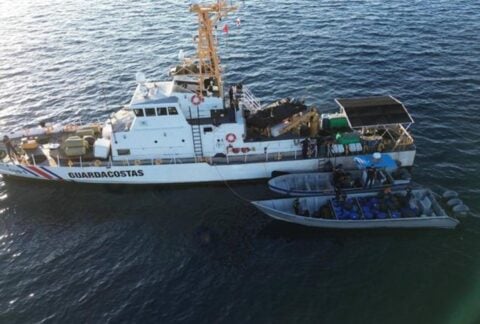
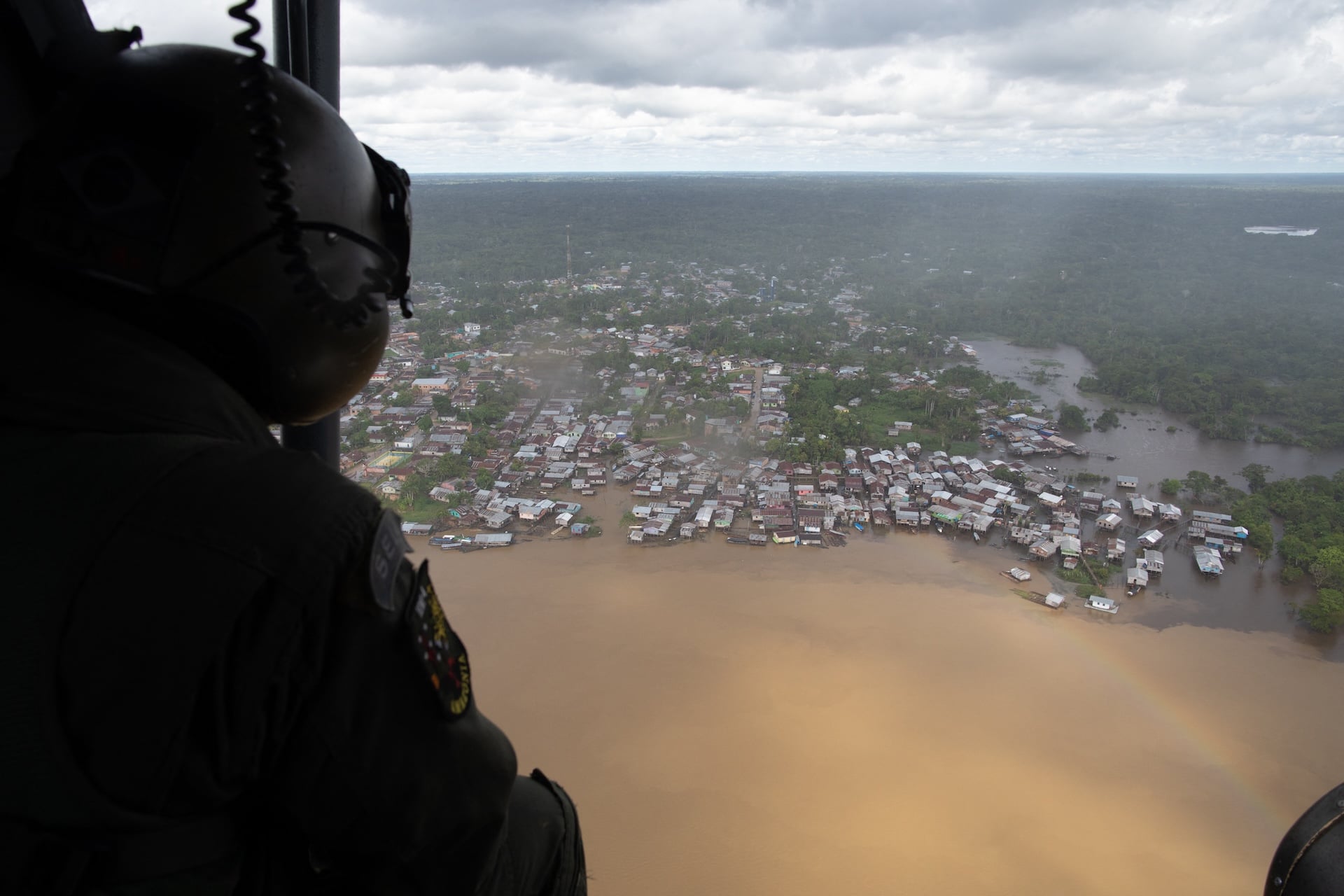
This evolution is closely tied to the transformation of the Amazon’s waterways into key trafficking corridors. Following Brazil’s aerial interdiction policy introduced in the mid-2000s, trafficking routes increasingly moved toward rivers, reinforcing the strategic importance of remote areas where state presence is limited. These routes now support not only drug trafficking but also illegal mining, logging, and other forms of environmental crime, creating overlapping illicit economies that are harder to dismantle.
Among the criminal organizations most active in controlling Amazonian river routes is the Red Command (CV). “The CV has established direct alliances with coca producers and arms suppliers, seeking to secure control of river and land routes to supply the Brazilian domestic market and international routes, particularly along the Solimões River in the Amazon region,” Uchôa explains.
Border regions remain particularly vulnerable, serving both as corridors for illicit flows and as areas where criminal groups exploit jurisdictional gaps. In this context, mechanisms such as the Amazon International Police Cooperation Center (CCPI-Amazonia), based in Manaus, have become increasingly relevant. The center supports joint operations and facilitates intelligence exchange among countries in the region.
“The evolution of these mechanisms marks the shift from purely reactive cooperation to integrated strategic intelligence,” Uchôa said. “The CCPI-Amazonia, headquartered in Manaus, is emblematic because it institutionalizes real-time data exchange among the countries of the Amazon basin.”
At the same time, countries of the Amazon Cooperation Treaty Organization (ACTO) are increasingly combining police and military efforts to address these challenges. For example, in January 2026, a coordinated operation in the tri-border region between Peru, Colombia, and Brazil, in the Peruvian department of Loreto, led to the seizure of more than 2.6 tons of cocaine sulfate and 6 tons of chemical precursors used in drug production. Such operations highlight the role of armed forces in supporting interdiction, surveillance, and territorial control alongside law enforcement agencies.
The evolving challenge of organized crime
The continued expansion of transnational criminal groups, such as the First Capital Command (PCC) and the Tren de Aragua, add further complexity to the regional landscape. “Originally Brazilian, the PCC has established itself as the largest transnational organization in Latin America,” Uchôa said. Its expansion into countries such as Paraguay and Bolivia has enabled it to exert influence across key segment of the cocaine supply chain, from production to distribution toward markets in Europe and Africa, often through major ports such as Santos.
The Tren de Aragua, designated as a terrorist organization by several countries in the hemisphere in 2025, has expanded into multiple countries, including beyond Latin America, often following migration flows. Initially focused on human trafficking and extorsion, the group has diversified its activities and strengthened its transnational reach.
A recent example is the arrest in Colombia of Jorge Luis Páez Cordero, alias Cucaracho, a close associate of the group’s leader, Niño Guerrero. He is accused of trafficking cocaine to the United States and Europe and of coordinating financial operations across the region, illustrating how these networks combine logistical coordination with financial integration.
“These are groups that have evolved from rigidly hierarchical structures to fluid, decentralized network models,” says Uchôa. According to the expert, this expansion is driven by the exploitation of “gray areas” of sovereignty, particularly in border regions where state presence is limited. “Organized crime does not respect borders; on the contrary, it uses them as a protective mechanism against limited national jurisdictions.”
Uchôa also highlights these groups’ ability to launder money by integrating illicit proceeds into legal markets, further complicating enforcement efforts. In this scenario, strengthening regional cooperation remains essential. More integrated responses — combining intelligence sharing, coordinated operations, and financial disruption — are increasingly seen necessary to effectively counter the expansion of transnational organized crime.