From August 15–28, 2026, the Dominican Republic and the United States combined intelligence, surveillance, maritime patrol aircraft, surface vessels, and partner-nation interdiction capabilities during Operation Ultramar, a coordinated counternarcotics effort in the Central Caribbean.
The operation demonstrated how the Dominican Republic and the United States, supported by regional and international partners, can apply persistent systemic friction to transnational criminal organizations (TCOs) that depend on maritime routes to move illicit drugs from South America through the Caribbean and toward consumer markets. Colombia and the Netherlands contributed additional maritime surveillance capabilities, broadening the multinational effort across the Central Caribbean. By detecting suspicious vessels, tracking their movements, rapidly sharing information, and positioning interceptors, participating forces reduced traffickers’ ability to move undetected across the maritime domain.
Joint Interagency Task Force South (JIATF-S) coordinated the effort through intelligence fusion, information sharing, planning, detection and monitoring, and operational support through its U.S. Ship Special Mission (SSM) capability. The SSM provides an offshore platform for partner-nation teams and their high-speed interceptor boats, extending their ability to conduct maritime interdiction operations.
The operation brought together U.S. maritime patrol aircraft, U.S. Customs and Border Protection support, the U.S. Coast Guard, the Colombian Aerospace Force, Dutch maritime patrol aircraft, and Dominican security forces. Dominican authorities — including the National Drug Control Directorate (DNCD), Dominican Navy, Dominican Air Force, Public Ministry, and state intelligence organizations — used their national authorities and capabilities to pursue and board suspected trafficking vessels, seize contraband and detain suspected traffickers.
Operation Ultramar produced two significant interdictions on August 19 and 20, removing a combined 4,687 kilograms of cocaine and more than 22.5 kg of marijuana from maritime trafficking routes. Eight suspected traffickers were detained.
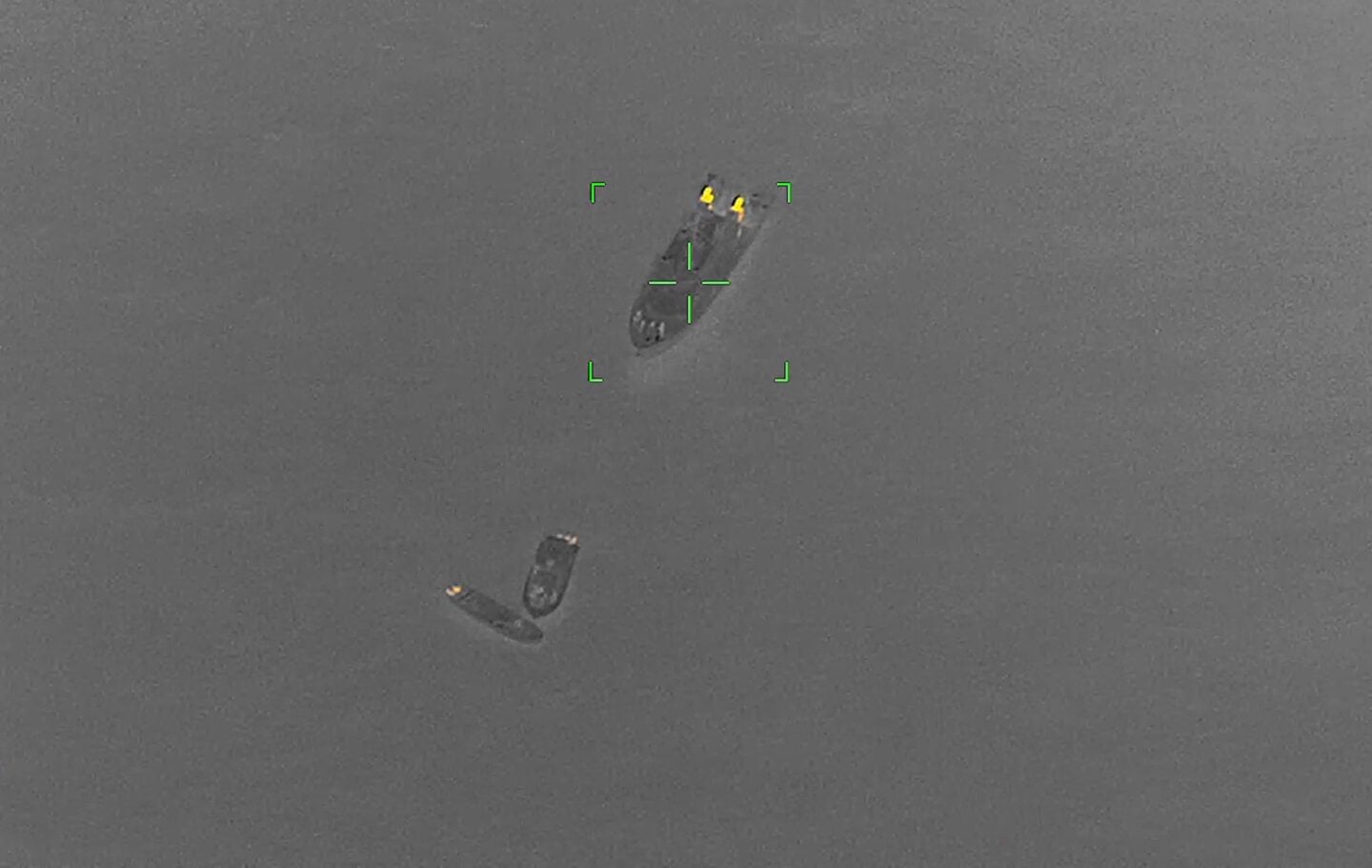
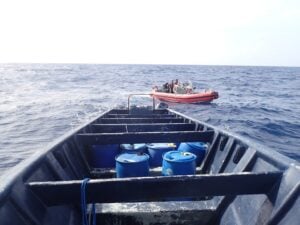
On August 19, U.S. maritime patrol aircraft detected a suspected go-fast vessel more than 100 nautical miles south of the Dominican Republic. JIATF-S coordinated the information flow and alerted available assets based on the vessel’s location, speed, and probable destination. Dominican interceptor teams deployed from the SSM, while additional Dominican interceptors launched from the Dominican Republic. Dominican forces ultimately intercepted and boarded the go-fast vessel, seized the contraband, and detained three suspected traffickers.
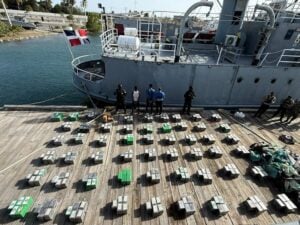
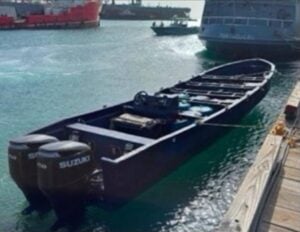
The interdiction resulted in the seizure of 1,399 kg of cocaine and more than 22.5 kg of marijuana. Dominican authorities reported that the vessel was a 32-foot, unregistered Eduardoño-type boat equipped with two 250-horsepower outboard engines, a type of fast craft frequently used by traffickers to transport illicit cargo over long distances.
Authorities also seized communications equipment, fuel containers, tarps, food, water, and other material relevant to the investigation.
On August 20, U.S. maritime patrol aircraft detected another suspected go-fast vessel more than 150 nautical miles southwest of Puerto Rico. Colombian Aerospace Force and Dominican maritime patrol aircraft launched to support tracking, while the U.S. Coast Guard was notified and became the first surface vessel to intercept the suspected smuggling craft. The combined response led to the detention of five suspected traffickers and the seizure of 3,288 kg of cocaine.
Following the transfer of the five detained suspects and the seized narcotics, authorities determined the smuggling vessel was unseaworthy and posed a severe navigation risk to commercial shipping. In accordance with standard operating procedures and environmental protocols, the vessel was safely sunk to eliminate the active maritime hazard.
These events illustrate the operational advantage created when multiple nations contribute complementary capabilities. Maritime patrol aircraft provided the airborne surveillance needed to locate and track fast-moving vessels across a broad operating area. JIATF-S fused and shared information in real time, helping direct surface assets toward the suspected vessels. The SSM extended the reach of Dominican interceptor teams, while Dominican authorities provided the operational leadership and legal authorities necessary to complete the interdictions.
“[This] decisive blow to transnational organized crime networks is the result of real-time information synchronization and the shielding of Caribbean maritime corridors,” the DNCD stated following the operation. “It consolidates the country as an efficient and strategic operational partner in the fight against drug trafficking and related crimes.”
The impact of the interdictions extends beyond the quantity of narcotics seized. Successful interdictions force TCOs to replace drugs, vessels, fuel, communications equipment, personnel, and routes, increasing the cost and uncertainty of maritime trafficking operations and disrupting the resources that sustain broader criminal activity.
Operation Ultramar supports the objectives of Campaign MARTILLO, the JIATF-S-coordinated multinational campaign designed to disrupt illicit trafficking networks throughout the region. The campaign combines maritime and aerial detection, intelligence sharing, partner-nation capabilities, and coordinated interdiction operations to target not only individual drug shipments but also the broader networks that enable trafficking.
The operation also reinforced the Dominican Republic’s role as a regional counternarcotics partner. Dominican forces combined their own interceptors, operational capabilities, and national authorities with intelligence, airborne surveillance, and ship-based support from international partners. That interoperability expands the ability of partner nations to conduct both independent and combined interdiction and apprehension operations against TCO networks.
Operation Ultramar demonstrated the value of sustained multinational cooperation against maritime trafficking. By combining Dominican operational leadership, U.S. coordination and capabilities, and support from Colombian and Dutch forces, the operation brought together partners from across the region and beyond around a common security challenge. Through shared awareness and coordinated action, participating nations removed tons of illicit drugs from Caribbean trafficking routes while increasing the operational costs and risks faced by the criminal networks attempting to move them.