

In a powerful display of international cooperation, the United States, Guatemala, and Mexico recently joined forces to execute interdiction operations as part of Operation Neptuno, a targeted effort against maritime smuggling routes in the Eastern Pacific. The operation sends a clear message to narcotrafficking networks: The international community is united and relentless in its efforts to dismantle illicit operations.
Coordinated by U.S. Southern Command’s (SOUTHCOM) Joint Interagency Task Force South (JIATF-S), which brings together 21 allies and partner nations and multiple U.S. agencies, the operation underscored the value of integrated, multinational efforts in successfully disrupting narcotrafficking networks operating across the region.
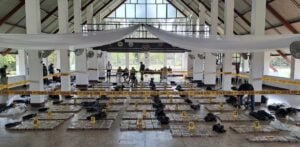
The Eastern Pacific remains one of the primary corridors for trafficking cocaine north from South America. Profits from the drug trade finance a wide range of criminal activities that undermine regional security. To evade law enforcement, traffickers continually adapt their methods, using go-fast boats, low-profile vessels, commercial fishing boats, and semi-submersibles to exploit the vastness of the ocean. Operation Neptuno leveraged JIATF-S intelligence to disrupt these trafficking networks and their financial lifelines.
A key element of this success is the JIATF-S U.S. Ship Special Mission (SSM) capability. Operating as a forward-deployed “mothership,” the SSM extends the operational reach of partner nation forces by allowing them to stage and launch interdiction missions deep in the maritime domain. During this massive operation, the SSM embarked teams from Guatemala’s Special Forces (COFEN) and other observer nations creating an integrated multinational force.
The effectiveness of this model was demonstrated on May 14. Following the detection of a suspicious vessel by a maritime patrol aircraft (MPA) of the Mexican Navy, a Guatemalan Special Forces team launched a high-speed interceptor from the SSM. The team successfully interdicted a go-fast vessel, seizing an impressive 1,780 kilograms of cocaine and apprehending six individuals from Ecuador, Mexico, and Guatemala. The operation reflected the seamless exchange of intelligence and the combined operational capabilities of the partner nations.
An officer involved in the operation highlighted the importance of this collaborative approach. “The daily syncs between our [multinational] teams kept our decision-making fast and effective. Having Spanish-proficient U.S. personnel removed any friction and was key to our successful information flow.”
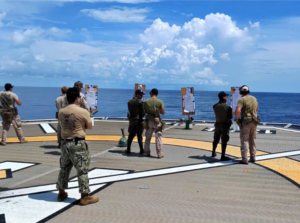
The success of Operation Neptuno was built on constant readiness and mutual trust. Throughout the deployment, the U.S. and Guatemalan forces conducted sustained drills and reciprocal close-quarters battle (CQB) training, helping ensure successful interdiction operations without casualties.
“The SSM concept is a game-changer for the counternarcotics mission,” said a spokesperson for SOUTHCOM’s JIATF-S. “We are no longer just patrolling; we are actively hunting these networks. The SSM platform pairs the deep-water endurance of U.S. assets with the specialized tactical expertise of our Guatemalan partners. By integrating our international intelligence and maritime capabilities, we create an inescapable net. Operation Neptuno demonstrates that through collaboration, there is nowhere for these traffickers to hide.”
Operation Neptuno is part of a broader, sustained campaign led by JIATF-S, SOUTHCOM, and partner nations to dismantle illicit trafficking networks throughout the hemisphere. The operation reinforces a clear message to narcoterrorist organizations: There are no safe maritime routes, no sanctuary at sea, and the multinational coalition remains united in its commitment to disrupting transnational criminal networks.