Operation Neptuno Delivers Decisive Blow to Narcotraffickers in Eastern Pacific

Operation Neptuno Delivers Decisive Blow to Narcotraffickers in Eastern Pacific

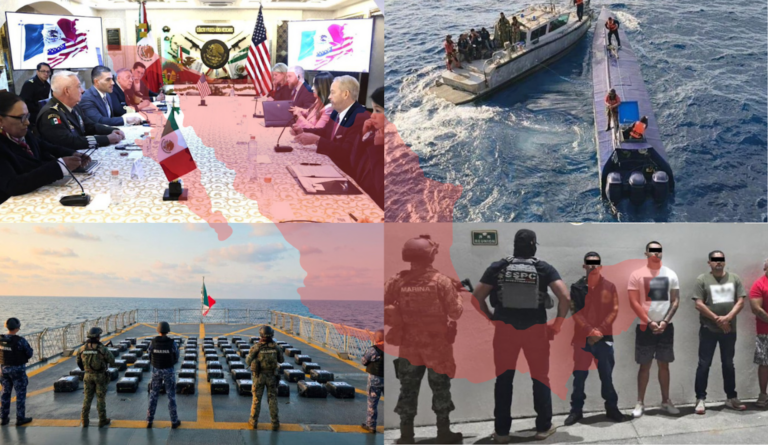
In a powerful display of international cooperation, the United States, Guatemala, and Mexico recently joined forces to execute interdiction operations as part of Operation Neptuno, a targeted effort against maritime smuggling routes in the Eastern Pacific. The operation sends a clear message to narcotrafficking networks: The international community is united and relentless in its efforts to dismantle illicit operations. Coordinated…

Expansion of Chinese Smart Cars in Mexico Creates Data and Logistics Vulnerabilities

Expansion of Chinese Smart Cars in Mexico Creates Data and Logistics Vulnerabilities

The entry of Chinese automaker Xpeng Motors into Mexico is reinforcing the country’s role as a gateway for highly connected vehicles in Latin America. At the same time, the growing presence of these digital platforms is raising concerns related to data management, connectivity, and their potential impact on critical infrastructure and regional supply chains. In March, the manufacturer announced its…

The Reconfiguration of Organized Crime Under Security Pressure in Latin America

The Reconfiguration of Organized Crime Under Security Pressure in Latin America

In recent years, organized crime in Latin America has undergone significant transformations driven in part by sustained pressure from security forces. Criminal organizations across the region have adapted by fragmenting their structures, incorporating advanced technologies, diversifying illicit operations, and strengthening transnational connections. These evolving dynamics are reshaping the regional security environment and complicating efforts to combat organized crime. Evolution of…

Mexican Cartels’ Regional Networks Challenge Security Across Latin America

Mexican Cartels’ Regional Networks Challenge Security Across Latin America

The expansion of Mexican cartels across Latin America is no longer defined solely by the movement of drugs. Increasingly, organizations such as the Sinaloa Cartel and Jalisco New Generation Cartel (CJNG) are embedding themselves into regional criminal ecosystems through alliances, logistics networks, corruption, and control of strategic infrastructure, creating security challenges that extend far beyond narcotics trafficking. As such, the…

Coordinated Operations and Regional Cooperation Drive Mexico’s Security Gains

Coordinated Operations and Regional Cooperation Drive Mexico’s Security Gains

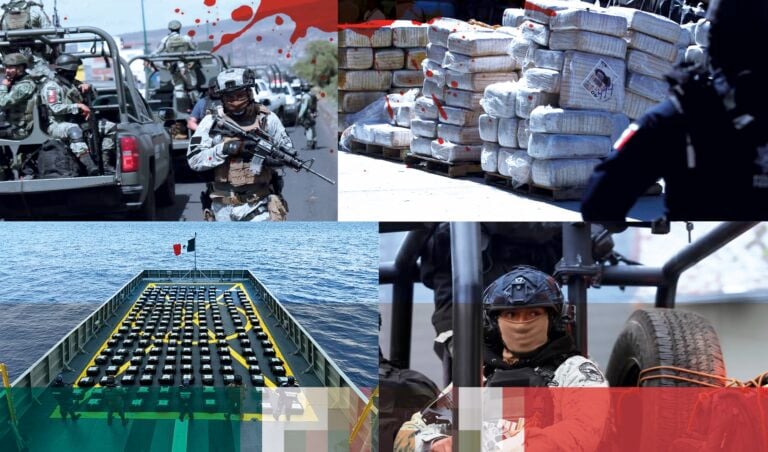
The Mexican government has intensified efforts against transnational criminal organizations (TCOs) operating across the hemisphere. These actions include drug seizures along maritime routes, arrests of members of these groups, and expanded coordination with international partners. “This shift reflects an adjustment in security strategy observed since late 2025, focused on dismantling criminal structures through narcotics interdiction and the capture of leaders…

Mexico, US Strengthen Fight Against Transnational Organized Crime

Mexico, US Strengthen Fight Against Transnational Organized Crime

Recent operations against transnational criminal organizations (TCOs) — including maritime drug seizures in the Pacific Ocean and the arrests of alleged members of the Tren de Aragua (TdA) and the Jalisco New Generation Cartel (CJNG) — highlight growing operational coordination between Mexico and the United States in confronting organized crime networks operating across the hemisphere. These actions underscore the bilateral…

Influencers and Organized Crime: The Digital Frontier of a Regional Security Threat

Influencers and Organized Crime: The Digital Frontier of a Regional Security Threat

The proliferation of social media across Latin America has forged a volatile nexus between young content creators and transnational criminal organizations (TCOs). Evidence documented across Argentina, Brazil, Colombia, Mexico, and Peru illustrates a strategic evolution: Drug trafficking networks are adapting to the digital landscape, leveraging the visibility of influencers and social media to consolidate operations and broaden their reach. This…

Transnational Crime and Malign State Actors in Latin America: AI, Biometrics, and Neurodata Redefine the Threat

Transnational Crime and Malign State Actors in Latin America: AI, Biometrics, and Neurodata Redefine the Threat

In the heart of Latin America, transnational criminal organizations (TCOs) are undergoing an unprecedented transformation, one complicated by the presence of foreign state actors. The incorporation of artificial intelligence (AI), biometrics, and neurodata into TCOs operations, coupled with strategic data harvesting by global rivals, is rewriting the criminal landscape. This dual-pronged threat forces security institutions to rapidly advance cybersecurity, international…

China’s Deepening Influence in Mexico: The Nexus of Technology, Economy, and Transnational Crime

China’s Deepening Influence in Mexico: The Nexus of Technology, Economy, and Transnational Crime

China’s expanding presence in Mexico is altering the country’s economic, technological, and security landscape. This presents a complex mix of legitimate investment and illicit networks, raising urgent questions about Mexico’s sovereignty and vulnerability. The deepening relationship between China and Mexico is a study in contrasts: a boom in economic cooperation and technological exchange, overshadowed by the emergence of illicit networks…

Satellite Vulnerabilities: The New Arsenal of Advanced Criminal Networks

Satellite Vulnerabilities: The New Arsenal of Advanced Criminal Networks

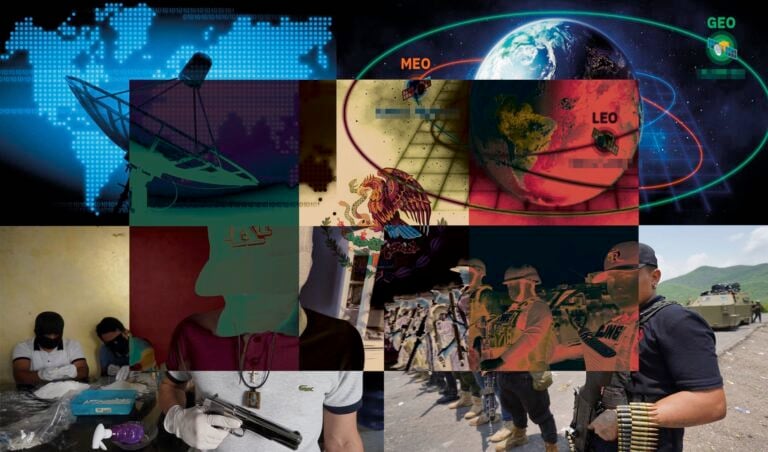
Exploiting vulnerabilities in satellite communications has opened a critical new front in the transnational conflict. Highly militarized and technologically organized groups, such as Mexico’s Jalisco New Generation (CJNG) and Sinaloa cartels, are positioned to take advantage of the lack of encryption in Geostationary (GEO) satellite links. That vulnerability could allow them to obtain operational information from security forces, potentially allowing…

Drug Cartel Drones: The Technological Revolution Transforming Violence in Mexico

Drug Cartel Drones: The Technological Revolution Transforming Violence in Mexico

Drug-related violence in Mexico has reached an unprecedented turning point. On October 15, 2025, a coordinated drone attack struck the Baja California Attorney General’s Office in Tijuana. These drones, loaded with improvised explosives — shrapnel, metal fragments, and ball bearings — signaled a paradigm shift in the conflict between the state and organized crime. The use of sophisticated, remote-operated devices…

Guatemala Fortifies Border with Mexico: A New Era of Security and Cooperation

Guatemala Fortifies Border with Mexico: A New Era of Security and Cooperation

Guatemala has intensified its border security strategy with Mexico, marking a pivotal moment in its fight against transnational crime. The strategy centers on building a new military base in Petén, creating the Strategic Command Against Transnational Threats (CECAT), and engaging in unprecedented cooperation with Mexico and the United States. These decisive actions aim to curb the advance of transnational criminal…