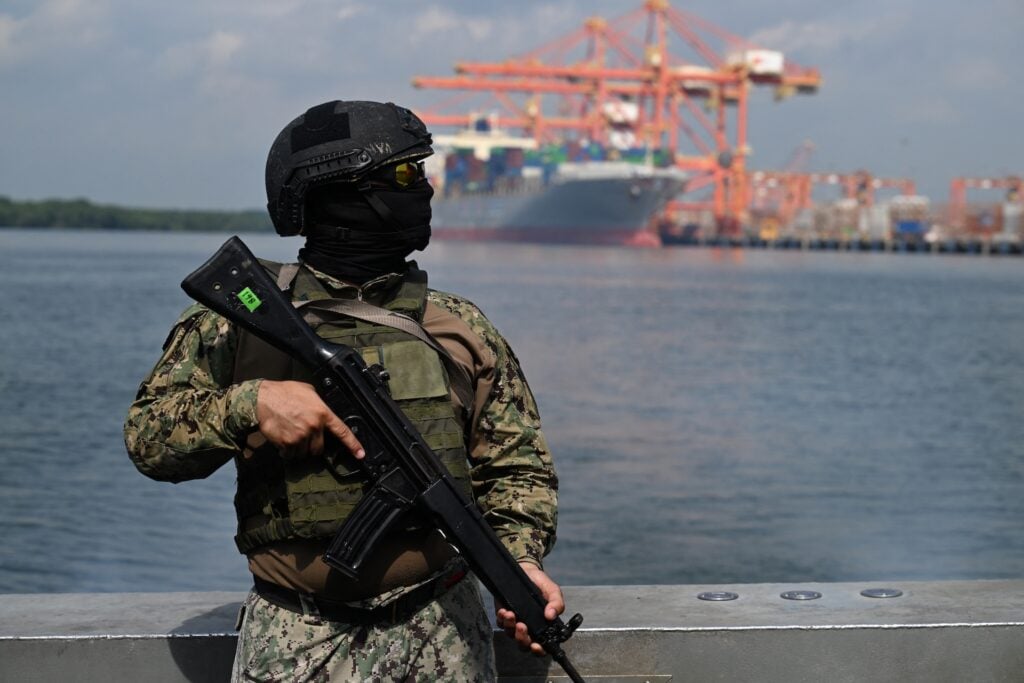

The expansion of Mexican cartels across Latin America is no longer defined solely by the movement of drugs. Increasingly, organizations such as the Sinaloa Cartel and Jalisco New Generation Cartel (CJNG) are embedding themselves into regional criminal ecosystems through alliances, logistics networks, corruption, and control of strategic infrastructure, creating security challenges that extend far beyond narcotics trafficking.
As such, the challenge is no longer limited to intercepting shipments or dismantling isolated cells. Authorities now face adaptive transnational networks capable of integrating into local criminal structures, exploiting commercial infrastructure, and sustaining operations even when leadership figures are removed.
From trafficking routes to operational networks
What once centered on competition over drug trafficking corridors has evolved into more durable and decentralized criminal structures. Throughout Central and South America, the Sinaloa Cartel and the CJNG have expanded their reach through operational alliances with local organizations, allowing them to secure cocaine supply chains, coordinate logistics, and reduce exposure to law enforcement.
According to Mexican media outlet La Silla Rota, these networks maintain operational agreements with regional actors, including dissident factions of the Revolutionary Armed Forces of Colombia (FARC), helping ensure the uninterrupted flow of cocaine toward international markets through routes designed to bypass state controls.
In strategic areas of Colombia and Ecuador, the presence of Mexican emissaries has reinforced this coordination. According to InSight Crime, these relationships have evolved beyond transactional arrangements into mechanisms of long-term operational collaboration, producing fragmented and highly adaptive criminal structures capable of exerting growing influence over territory and illicit economies.
The result is a criminal landscape in which organizations increasingly rely on interconnected operational hubs rather than rigid hierarchical chains — a model that complicates traditional counter-crime approaches focused primarily on leadership decapitation.
Criminal diversification and institutional pressure
The influence of Mexican cartels now extends across the region, including Argentina, Brazil, Chile, Colombia, Ecuador, Paraguay, and Peru, according to Infobae. Alongside cocaine and fentanyl trafficking, these organizations have diversified into arms trafficking, human trafficking, money laundering, and illicit financial operations, creating parallel criminal economies that strengthen their resilience and regional reach.
Yadira Gálvez, a security specialist and scholar at the National Autonomous University of Mexico, told Diálogo that this expansion depends not only on violence, but also on the ability of criminal organizations to penetrate local systems and sustain long-term operational conditions. “They seek to guarantee the continuity of their activities through state inaction, ensure margins of impunity, and even build a social base in the areas where they operate, which constitutes criminal governance schemes.”
The scholar also warned of another growing concern. “We are seeing a convergence between legal and illegal economies, with access to state resources through public contracting, which makes it difficult to detect these networks.”
In contested environments such as Colombia and Ecuador, the impact of these alliances is increasingly visible. Colombia in particular, illustrates how cooperation between Mexican cartels and local armed groups is reshaping territorial dynamics. According to La Silla Rota, coordination between emissaries linked to the Sinaloa Cartel and the CJNG and FARC dissident factions has strengthened cocaine trafficking while reinforcing the operational capabilities of these armed groups.
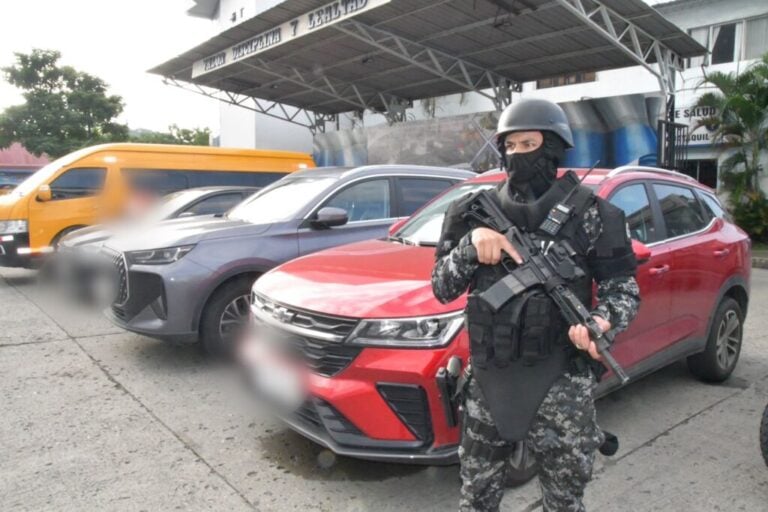
Ecuador faces a similar challenge. According to Mexican daily El Financiero, representatives associated with both cartels have contributed to escalating violence in urban centers such as Guayaquil, where designated terrorist groups including Los Lobos and Los Choneros rely on port infrastructure to move illicit cargo toward international markets.
Panama faces a different but equally strategic pressure. A report by the Pontifical Catholic University of Peru (PUCP) notes that Mexican cartels’ control over Pacific trafficking routes has increased the importance of the isthmus as a transshipment hub for illicit cargo, placing additional strain on port security, customs oversight, and border control systems.
Critical infrastructure and the challenge of adaptation
The convergence of illicit economies is becoming one of the defining security challenges confronting the region. According to a report by the Peruvian Army’s Center for Strategic Studies (CEEEP), transnational criminal organizations increasingly share logistics, routes, and operational resources, challenging the state’s ability to maintain control over critical infrastructure and strategic corridors.
The Global Initiative Against Transnational Organized Crime (GI-TOC) similarly warns that criminal convergence is placing growing pressure on governments’ response capabilities, particularly regarding the protection of critical infrastructure. Meanwhile, the CEEP compendium Security Challenges in Latin America notes that these networks target strategic nodes within commercial and transportation systems to guarantee operational continuity.
“Organizations no longer operate solely under hierarchical structures, but through operational centers linked to logistics, supply of materials, and transportation, which increases their adaptability,” Gálvez said.
Gálvez emphasized this evolution requires a broader operational focus: “It is not enough to identify leaders; it is necessary to locate the operational and financial hubs that sustain the network, without losing sight of the local dimension where violence manifests itself.”
Ports, customs facilities, and logistics corridors remain particularly vulnerable because legitimate and illicit trade increasingly move through the same systems.
“The main challenge is scale. The volume of cargo moving through ports and borders exceeds the inspection capacities of governments, which limits effective monitoring of containers and goods,” explained Gálvez. Added to this operational constraint is infiltration into logistics chains. “There are mechanisms that facilitate illicit trafficking from within operations through corruption, document forgery, or modifications to containers, which demonstrates penetration into key areas of the system,” she added.
According to Gálvez, addressing these vulnerabilities requires not only stronger enforcement, but also greater institutional oversight and technological modernization.
At the same time, criminal organizations continue incorporating new technologies to reduce their exposure to authorities. According to the PUCP report, these networks increasingly rely on drones, encrypted communications systems, and digital financial mechanisms such as cryptocurrencies to coordinate operations, move resources, and complicate financial tracking efforts by authorities.
Regional cooperation and the operational challenge ahead
Faced with increasingly adaptive criminal structures, governments across the region have sought to strengthen cooperation, intelligence sharing, and resilience strategies aimed at reducing operational gaps.
According to the PUCP report, partner nations are prioritizing legal harmonization, intelligence coordination, and technical cooperation to improve collective responses to hybrid threats and strengthen regional security architecture. Yet authorities continue facing significant challenges keeping pace with the flexibility and operational reach of transnational criminal networks.
“Criminal intelligence must focus on identifying transnational links, financial flows, and political enablers. Without this multidimensional approach, containment capabilities are insufficient,” Gálvez said.
The expert stressed that trust between institutions remains essential for effective regional coordination. “Without trust between agencies and between countries, the exchange of information and the execution of joint operations are limited. In this scenario, coordination with the United States is key to strengthening intelligence capabilities, financial tracking, and coordinated operations against transnational criminal networks.”
As criminal organizations continue evolving beyond traditional trafficking structures, regional security forces increasingly face a broader operational challenge: protecting strategic infrastructure, identifying financial and logistics networks, and preventing transnational criminal organizations from consolidating long-term influence across the hemisphere.