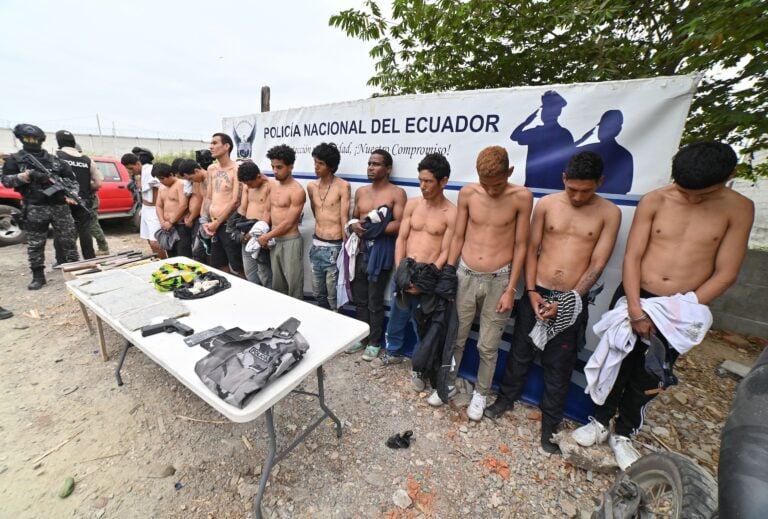


In recent years, organized crime in Latin America has undergone significant transformations driven in part by sustained pressure from security forces. Criminal organizations across the region have adapted by fragmenting their structures, incorporating advanced technologies, diversifying illicit operations, and strengthening transnational connections. These evolving dynamics are reshaping the regional security environment and complicating efforts to combat organized crime.
Evolution of the Northeast Cartel and its transnational reach
A notable example of these transformations is the Northeast Cartel (CDN), a criminal organization that emerged from Los Zetas and continues to operate in the Mexican states of Coahuila, Nuevo León, and Tamaulipas. According to Mexican outlet La Silla Rota, the CDN remains involved in activities including drug, arms, and human trafficking; extortion; kidnapping; and fuel theft.
Mexican media outlets have also reported on the organization’s efforts to strengthen trafficking and logistical connections beyond Mexico, including expanding into Guatemala and Colombia. At the same time, confrontations between the CDN, rival groups, and security forces continue to fuel violence in several regions.
In this environment of sustained security pressure, criminal organizations have increasingly adapted their operational capabilities. Spanish newspaper El País reported that Mexican cartels are expanding their use of technologies such as kamikaze drones and signal jamming systems in both clashes with rival groups and confrontations with security forces. According to security analysts, these technologies reflect a broader trend toward more sophisticated and militarized operational tactics.
Fragmentation and adaptation: The new survival strategy
Across Latin America, organized crime groups have increasingly shifted toward more decentralized structures to reduce vulnerabilities under pressure from security forces. According to the BBC, criminal organizations have fragmented into smaller autonomous cells capable of operating independently across different territories.
Guadalupe Correa Cabrera, a scholar at George Mason University in Virginia, told Diálogo that this strategy reduces the exposure of senior leaders while allowing organizations to adapt more rapidly to operational changes and law enforcement actions.
This fragmentation has also encouraged the subcontracting of local groups to manage specific illicit economies. According to Diálogo Político, criminal organizations such as the First Capital Command (PCC) and the Tren de Aragua have adopted franchise-style models that provide operational autonomy to local cells involved in activities ranging from drug trafficking to extortion and kidnapping.
Correa Cabrera added that these criminal networks have evolved toward functional specialization, outsourcing activities such as transportation, communications, logistics, and contract killings.
The influence of external actors, including Albanian and Italian mafias, has further accelerated these dynamics in countries such as Colombia, Ecuador, Honduras, and Mexico, according to international media and regional analysts. Correa Cabrera noted that “operational militarization, initiated by Los Zetas, has been adopted by other organizations in the region, increasing their capacity to respond to security forces.”
Technological and chemical innovation: Tools of modern drug trafficking
Criminal organizations in Latin America have also incorporated technological and chemical innovations to evade detection and sustain illicit trafficking routes.
According to InSight Crime, traffickers are increasingly using unmanned vessels, drones, and other autonomous technologies to transport narcotics, particularly along maritime routes where monitoring remains limited. These methods are often combined with traditional trafficking tactics involving speedboats, fishing vessels, and semi-submersibles.
At the same time, criminal networks have adopted sophisticated chemical concealment techniques to avoid detection at ports and border checkpoints. According to InSight Crime, traffickers have modified cocaine and other narcotics by transforming them into liquid forms or mixing them with products such as oils, coal, minerals, and even fruit shipments, requiring complex chemical extraction processes once they reach their destination markets.
Correa Cabrera explained that many criminal organizations are increasingly incorporating surveillance systems, encrypted communications, and social media tools to enhance their operational capabilities.
Facing the challenge: Comprehensive strategies against organized crime
As organized crime continues to evolve, analysts emphasize the need for comprehensive and coordinated responses that go beyond targeting individual leaders.
Correa Cabrera stressed the importance of combining police and military capabilities with anti-corruption efforts, institutional strengthening, intelligence-sharing, and long-term strategies focused on dismantling entire criminal networks rather than isolated actors.
The increasing fragmentation, technological adaptation, and transnational reach of criminal organizations continue to challenge governments across Latin America, reinforcing the need for regional cooperation, intelligence-sharing, and more adaptive security strategies capable of responding to rapidly evolving threats.