
Since May, Cuba has seen several protests over the country’s deepening energy crisis and the rolling blackouts that continue to disrupt daily life. Independent journalists have also reported repeated internet outages, even after electricity service has been restored. “The regime cuts communications,” journalist Mag Jorge Castro wrote on X, describing a “massive internet outage in Havana.”
These incidents point to a broader issue: China’s growing technological footprint in Cuba and its implications for regional security. The concern extends beyond domestic censorship or economic cooperation. Experts warn that Chinese-backed digital, port, logistics, and energy infrastructure is helping create a dual-use ecosystem — one that strengthens the Cuban regime’s surveillance and social control capabilities while providing Beijing with new strategic, military, and intelligence opportunities in the Caribbean.
“Cuba’s proximity to the southeastern United States offers a highly valuable platform for Signals Intelligence (SIGINT) collection,” Iria Puyosa, senior researcher with the Democracy+Tech Initiative at the Washington-based Atlantic Council, told Diálogo.
For Cubans, the result is an increasingly monitored and less free digital environment, where surveillance and political control reinforce one another. For the region, concern is growing over the expansion of China’s technological footprint and its potential impact on communications, critical infrastructure, maritime security, logistics, and intelligence capabilities across the Caribbean.
Digital authoritarianism
In recent months, the Cuban regime has tightened its authoritarian control over the country’s digital space, raising concerns among dissidents and international observers. Alarm bells had already begun ringing in 2025, when young Cubans took to the streets to protest the sharp increase in mobile internet rates imposed by ETECSA, the country’s state telecommunications monopoly. Although the government justified the price hike on economic grounds, analysts viewed it as another step toward tighter control over communications.
According to Puyosa, this trend is closely linked to China’s expanding technological presence on the island.
“ETECSA uses Chinese technologies: Huawei for mobile networks and access points, and ZTE for nationwide data traffic routing and management of the ALBA-1 submarine cable connection,” she said.
Since 2017, the Open Observatory of Network Interference (OONI), a global organization that monitors internet censorship, has identified evidence of Huawei-related infrastructure and code in tests involving website blocking in Cuba.
“Censorship is carried out through the blocking of domains and URLs, primarily targeting independent media outlets and civil society organizations,” Puyosa said.
The result is an infrastructure that not only provides connectivity but also enables extensive monitoring of data traffic through advanced systems such as Deep Packet Inspection (DPI), which can analyze communications, identify usage patterns, and block information in real time. These capabilities are complemented by metadata collection systems, urban video surveillance, and technologies that can facilitate monitoring of dissidents, journalists, and activists.
The effectiveness of this model became evident during the historic July 11, 2021 protests, when the Cuban regime selectively shut down internet and telephone services in areas affected by demonstrations, preventing protesters from coordinating and sharing images of the regime’s crackdown.
According to Puyosa, “Cuba has also been implementing localized internet shutdowns for more than a decade by disabling data transmission in specific neighborhoods or blocking applications commonly used by Cuban activists, such as Facebook, WhatsApp, Signal, and Instagram.”
Meanwhile, the University of Informatics Sciences in Havana has developed cybersecurity training and exchange programs with Chinese institutions and companies, helping train technical personnel in areas with potential civilian, internal security, and state security applications.
Intelligence facilities
While digital control represents the most visible aspect of China-Cuba cooperation, intelligence activities may be its most sensitive dimension.
According to a study by the Center for Strategic and International Studies (CSIS), four Cuban facilities—Bejucal, Wajay, Calabazar, and El Salao—are suspected of supporting SIGINT activities.
According to the report, “China’s interests in Cuba are not merely political or ideological, but also strategic and military.” These facilities could enable the collection of communications, radar emissions, satellite transmissions, and other sensitive information originating from nearby Florida, throughout the Caribbean, and from areas where military forces, government agencies, aerospace companies, logistics hubs, and critical infrastructure operate.
The threat extends beyond the content of communications. Even when modern military systems use encryption, metadata — including the frequency, origin, destination, volume, and timing of transmissions — can reveal valuable information about military exercises, naval movements, space launches, missile testing, air operations, and patterns of military or commercial activity.
In recent years, U.S. officials have also reported the presence of Huawei and ZTE technicians at facilities suspected of supporting intelligence activities in Cuba.
For analysts, the primary concern lies in the convergence of civilian infrastructure and strategic capabilities. Telecommunications networks, submarine cables, data centers, surveillance systems, and digital management platforms may serve civilian purposes while also generating data, providing access, and enhancing resilience for intelligence collection, internal security, and military support activities.
Ports
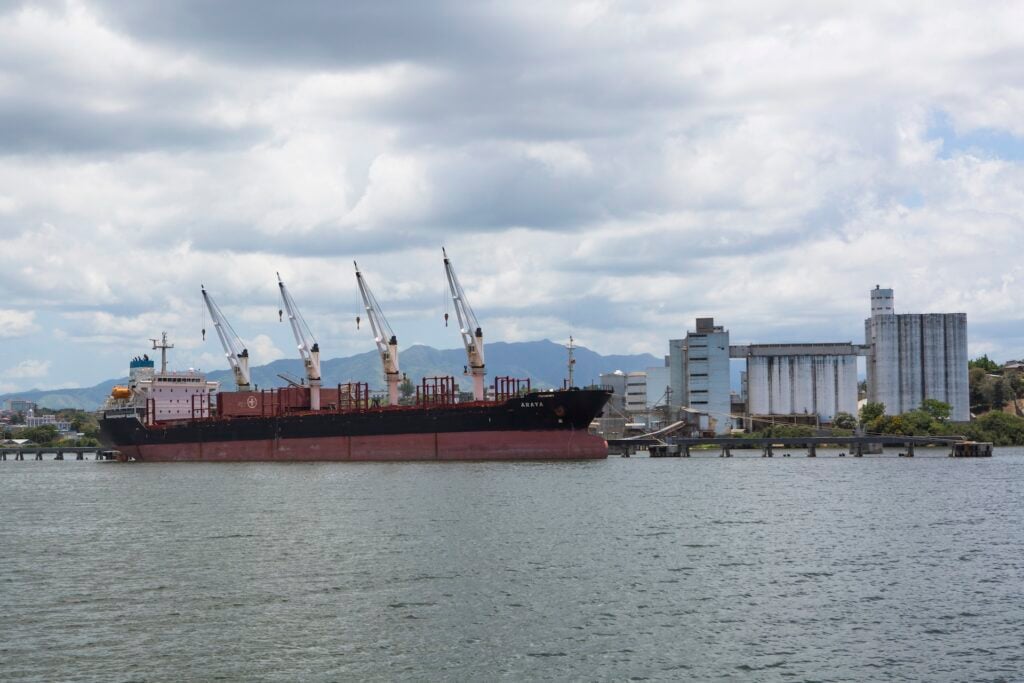
China’s footprint in Cuba also extends to the logistics and port sector, a critical component of any long-term strategy for regional influence. Over the past decade, Beijing has strengthened its presence at the ports of Santiago de Cuba and Mariel, two key hubs for the island’s maritime connections.
In Santiago de Cuba, the state-owned China Communications Construction Company (CCCC) led a major modernization project financed through Chinese government loans. In Mariel, Shanghai Zhenhua Heavy Industries Company (ZPMC) supplied container cranes and cargo-handling equipment, while Huawei contributed telecommunications infrastructure used to digitally manage port operations.
Experts point to the risks posed by dual-use infrastructure — the possibility that civilian facilities could also support military, logistics, or intelligence activities. In ports, those concerns center on access to cargo data, shipping routes, customs systems, port communications, vessel traffic patterns, and other information tied to critical infrastructure.
Concerns are also heightened by the presence of companies such as SF Express, one of China’s largest logistics operators, which cooperates domestically with the Central Military Commission and the People’s Liberation Army on logistics and technology projects, including drone operations.
The strategic importance of these ports has grown alongside increasing maritime traffic from China. Since 2024, the Port of Mariel has seen more Chinese vessels transporting solar panels, industrial components, and materials for Beijing-backed projects. At the same time, Dofimall — an e-commerce platform created through China-Cuba economic cooperation — is expanding new channels for economic and logistics integration.
Critical infrastructure and regional security
China’s growing presence in Cuba should be understood as part of a broader strategy to gain access to critical infrastructure. Telecommunications, ports, energy systems, digital commerce platforms, technical universities, and cybersecurity centers are not isolated sectors. Together, they can create long-term dependencies while expanding Beijing’s ability to collect information, project influence, and support an authoritarian ally in the Caribbean.
According to experts, the technological dependence developed over recent years will make it difficult to quickly reduce Beijing’s influence.
“Beyond strengthening cybersecurity, there is little that can be done to prevent China from taking advantage of the technological infrastructure it has already installed in Cuba,” Puyosa warned.
Over the long term, experts point to several possible responses, including diversifying technology suppliers, conducting independent audits of critical infrastructure, strengthening regional cybersecurity cooperation, protecting government and military communications, and developing shared mechanisms to counter cyber threats and intelligence activities.