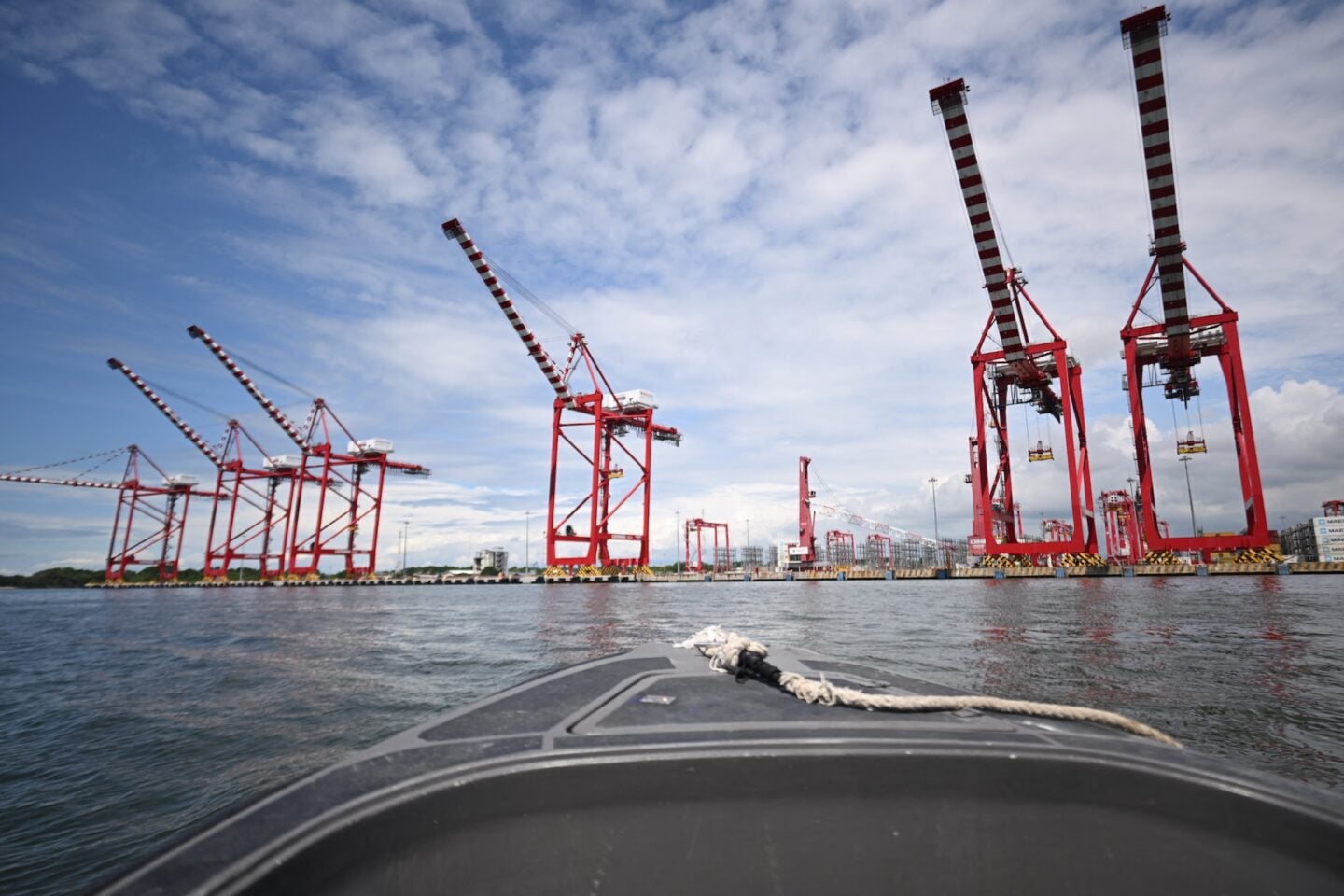

Commercial ports across Latin America and the Caribbean have become one of the primary battlegrounds in the fight against transnational organized crime. In Ecuador, one of the clearest examples is Puerto Bolívar, a strategic hub for banana exports that has also emerged as one of the main departure points for cocaine shipments bound for Europe.
To regain control, the Ecuadorian government launched one of the largest port security operations in its history on May 14, 2026. More than 1,000 military personnel and hundreds of police officers took part in Operation Total Cleanup (Operación Limpieza Total), an offensive aimed at dismantling the criminal networks operating from this key port in El Oro province.
“The mafias’ time is up,” Defense Minister Gian Carlo Loffredo said when announcing the deployment.
In 2025 alone, counternarcotics authorities seized 10.8 metric tons of drugs linked to shipments originating from Puerto Bolívar, representing 11.24 percent of all drugs confiscated at Ecuador’s seaports.
But Puerto Bolívar is only one piece of a broader regional trend. The growth of maritime trade and rising cocaine demand in Europe have turned Latin American ports into prime targets for transnational criminal organizations.
“Criminal organizations seek to control the logistical hubs of international trade and have turned ports into strategic assets for concealing illicit activities within legitimate commercial flows while extending their operations far beyond national borders,” Lea Giménez, security, justice, and governance advisor at the Development Bank of Latin America and the Caribbean (CAF), told Diálogo.
Ecuador on the cocaine route
In little more than a decade, Ecuador has evolved from a transit country into a strategic hub for transnational organized crime. According to President Daniel Noboa, nearly 70 percent of the cocaine circulating worldwide passes through Ecuadorian ports.
“We are witnessing a structural transformation. The combination of a strategic geographic location, high-volume ports, and institutional vulnerabilities has turned Ecuador into a key logistical platform for transnational drug trafficking,” Ecuadorian Navy Vice Admiral Marcos Salinas, coordinator of the Center for Strategic Studies at the Naval War Academy, told Diálogo.
At the same time, Europe’s cocaine market has reached record levels of both consumption and seizures. The European Union Drugs Agency (EUDA) identifies Belgium, the Netherlands, and Spain as the continent’s main entry points for cocaine.
The figures reflect that pressure. Ecuador seized a record 294.6 metric tons of drugs in 2024, followed by another 222 metric tons in 2025, remaining one of the region’s leading countries in counternarcotics interdiction.
Containers: The new battleground
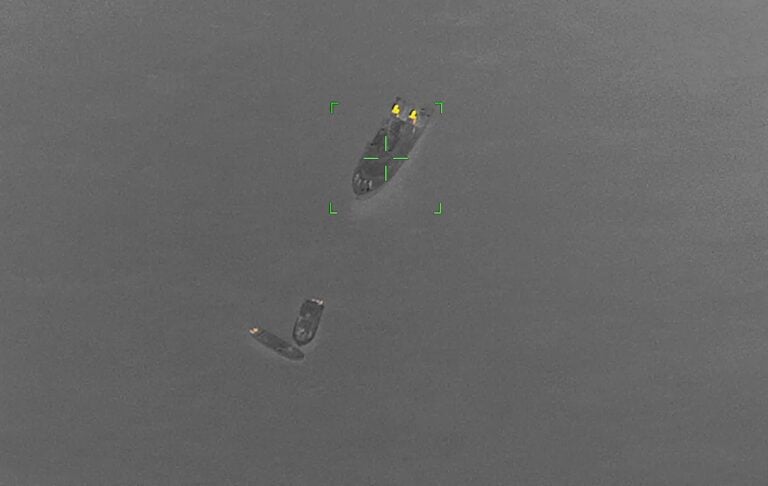
Criminal organizations no longer rely solely on go-fast boats or semi-submersibles. Today, they exploit the global container shipping system to conceal illicit cargo among legitimate commercial shipments.
According to the World Customs Organization (WCO), roughly 85 percent of detected drug trafficking cases involve maritime shipping containers, which account for approximately 80 percent of the global volume of drug seizures.
In Ecuador, banana shipments have become one of the principal targets. Bananas account for more than 66 percent of the cargo handled through the country’s commercial ports, and about 30 percent of Ecuador’s banana exports are destined for the European Union.
The United Nations Office on Drugs and Crime (UNODC) reports that more than half of the cocaine seized in Ecuador whose destination could be identified was bound for Europe.
How criminal networks operate
One of the most common methods used by criminal organizations is known as the rip-on/rip-off technique, also referred to as the “blind hook” method. It involves inserting cocaine into already sealed shipping containers by manipulating or replacing the original security seals with nearly identical replicas.
“Criminals contaminate cargo and replace the seals with copies that are virtually indistinguishable from the originals,” Vice Adm. Salinas explained.
Investigations indicate that these operations often involve multiple actors throughout the logistics chain, from truck drivers and transport companies to dockworkers and port personnel, whether through corruption, intimidation, or coercion.
“The use of shipping containers exposes a systemic vulnerability. The enormous volume of cargo, combined with limited inspection capabilities, makes contaminated shipments difficult to detect, making closer cooperation between ports of origin and destination essential for identifying threats before they materialize,” Vice Adm. Salinas said.
Reclaiming Puerto Bolívar
The convergence of international commerce and organized crime is perhaps most evident in Puerto Bolívar.
Today, it ranks among Ecuador’s leading ports for drug seizures, behind only the port complexes of Guayaquil and Posorja. “Protecting Puerto Bolívar means safeguarding a critical hub of international trade and shutting down one of the principal corridors used by criminal organizations operating across the hemisphere,” Vice Adm. Salinas said.
Investigations point to the emergence of hybrid criminal networks in which local gangs and international criminal organizations exploit Puerto Bolívar’s commercial infrastructure by bribing, intimidating, or threatening logistics workers and other actors into facilitating illicit shipments through global supply chains.
Operation Total Cleanup
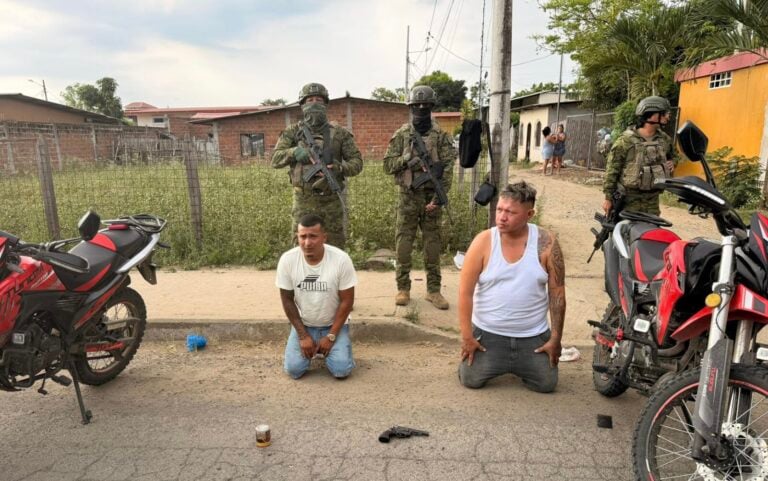
Over the course of 96 continuous hours, Operation Total Cleanup brought together the National Police, the Armed Forces, and the National Intelligence Center in coordinated operations by land, sea, and air, including raids on more than 1,600 homes across approximately 85 city blocks in Puerto Bolívar.
“The government’s message has been clear: There is a sustained state presence, political will, and a defined strategy,” Vice Adm. Salinas said.
Among the operation’s most significant results were the capture of one of the most wanted leaders of the Sao Box criminal gang and the dismantling of several facilities used to contaminate export-bound cargo with cocaine.
The operation also enabled authorities to regain control of areas that had remained under criminal influence for years and restore a permanent security presence in neighborhoods considered critical.
A hemispheric challenge
Puerto Bolívar’s experience reflects a challenge that extends far beyond Ecuador. Across the region, maritime commerce has become a strategic domain for transnational criminal organizations.
“Today, Ecuador faces more than a drug trafficking problem with a maritime dimension; it faces a maritime security challenge driven by transnational organized crime,” Vice Adm. Salinas said.
These networks exploit legal loopholes, regulatory differences, and gaps to adapt and evade enforcement efforts. As a result, strengthening port security alone is no longer enough.
“It is essential to integrate intelligence, security, justice, and international cooperation to stay ahead of the evolution of these criminal networks,” Giménez said.
Support from international partners, particularly the United States, reflects that effort. As a signatory to the Americas Counter Cartel Coalition, Ecuador is helping advance a regional framework for coordinating military, intelligence, and law enforcement capabilities against cartels and narcoterrorist organizations that operate across borders. The initiative strengthens Ecuador’s ability to exchange information, coordinate operations, and protect strategic infrastructure such as Puerto Bolívar while contributing to security across the hemisphere.
“Ecuador has established itself as a strategic partner within the Americas Shield initiative, a hemispheric security priority that is already producing tangible results through international cooperation,” Vice Adm. Salinas said.
According to experts, the response must be sustained over time. As long as criminal organizations continue to operate across borders, protecting ports and global supply chains will depend on increasingly close cooperation among countries throughout the hemisphere.
“As long as organized crime continues to operate as a transnational network, the response must also be transnational. That will be the key to regaining control of our ports and protecting hemispheric security,” Giménez concluded.