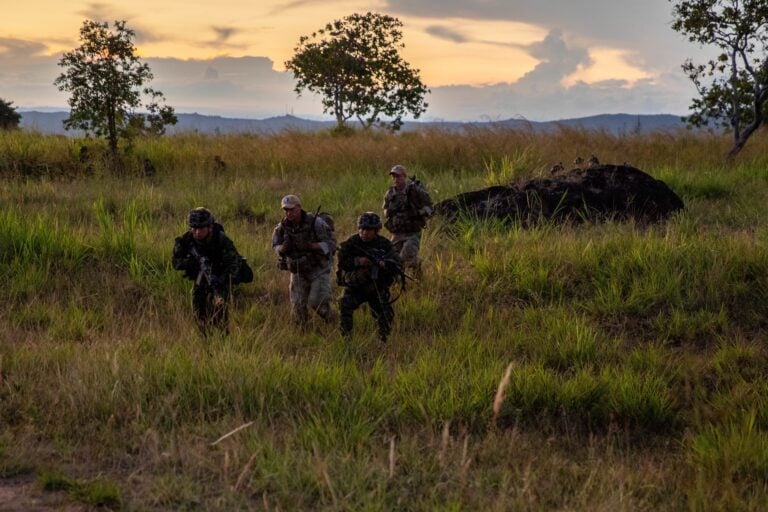

On the flight line at Soto Cano Air Base in Honduras, men and women loaded equipment into the belly of three CH-47 Chinooks. Their destination was Venezuela, where two powerful earthquakes had struck a day earlier and communities desperately needed help.
Rather than having to make their way from thousands of miles away, the helicopters, crews, equipment, and the people who would make the mission possible were already in the neighborhood.
The geography matters. From Honduras, at the heart of Central America, U.S. Southern Command’s (SOUTHCOM) Joint Task Force Bravo (JTF-Bravo) sits within reach of much of the region. Aircraft can lift off. Medical teams can deploy. Supplies can move. And when a partner calls for support, the response can begin from within the region without having to make its way there first.
For communities on the other end of that response, proximity means something more tangible: Help can arrive sooner.
“Being based at Soto Cano, Honduras gives us critical placement and access in Central America to support U.S. and partner-nation priorities. From Soto Cano we can launch capabilities within hours instead of days,” U.S. Army Colonel David A. Webb, JTF-Bravo commander, said. “Because we are co-located with our Central American partners, we have established partnerships built on decades of shared experiences in the region.”
Ready when disaster strikes
Months before the Venezuela earthquakes, JTF-Bravo aviation crews responded to another major regional emergency.
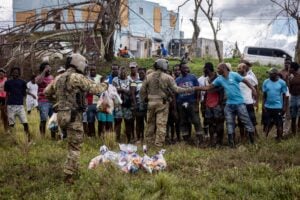
After Hurricane Melissa struck Jamaica in October 2025, JTF-Bravo deployed CH-47 Chinooks, UH-60 Black Hawks, personnel, and supplies from Soto Cano to support the Jamaican-led disaster response. JTF-Bravo said its initial personnel arrived within 72 hours of the hurricane.
Working with the Jamaica Defence Force (JDF), the U.S. State Department’s Disaster Assistance Response Team, and other U.S. military elements, JTF-Bravo helped move assistance to affected areas. The combined aviation force flew 133 missions and 249 flight hours, transporting more than 779,000 pounds of assistance, including about 600,000 pounds of food and water and 179,000 pounds of equipment. It also conducted 428 critical personnel movements.
Equally important was JTF-Bravo’s ability to integrate into Jamaica’s response efforts.
“The partnership between the Jamaica Defence Force and JTF-Bravo, along with the 22nd MEU [Marine Expeditionary Unit], is forged in a shared commitment to regional security,” JDF Lieutenant Colonel Morton Stewart, executive officer of the Maritime, Air and Cyber Command, said following the operation. “This was proven by the immediate deployment to Jamaica following Hurricane Melissa, swiftly integrating into the JDF response mechanism to address Jamaica’s needs.”
“This united effort showcases a resilience that not only thrives on interoperability, but also the incredible professionalism of the United States military, strengthening the very foundation of our bilateral cooperation to overcome any adversity,” Lt. Col. Stewart added.
The ability to respond quickly during a disaster depends on more than having aircraft available. Crews must be trained, aircraft maintained, supplies prepared, and procedures for working with other governments and security forces understood before an emergency begins.
Reaching communities beyond the road
The same aviation capability used during emergencies can address persistent challenges created by the region’s geography.
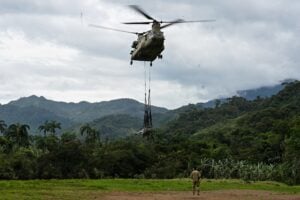
In Panama in July 2026, JTF-Bravo CH-47 Chinook helicopters supported Panamanian agencies during PANAMAX-Alpha by transporting materials to communities where moving heavy cargo by ground is difficult.
Working alongside Panama’s National Aeronaval Service (SENAN) and government ministries, JTF-Bravo aviation personnel sling-loaded six water tanks purchased by Panama’s Ministry of Health to communities in Donoso Province. The tanks, with capacities of 5,000 or 10,000 liters, were intended to improve access to clean water for more than 4,000 residents.
U.S. and Panamanian personnel also transported approximately 66,000 pounds of materials for construction of a bridge in Mayo, in the Ngäbe-Buglé Comarca. The steel cable, cement, and other materials supplied for the project are intended to improve residents’ access across the Cricamola River, including children’s access to school.
“We build interoperability through deliberate team building and mission rehearsals with our partners. During PANAMAX 2026, we trained with Panama’s National Civil Protection System on sling-load operations, a vital capability also employed during the Venezuelan earthquake response,” Col. Webb said. “Across the region, we conduct table-top exercises, standardize communications, pre-stage logistics, and survey regional airfields. This preparation helps ensure that we can integrate into host-nation disaster response frameworks as soon as assistance is requested.”
That readiness was put to use again following the October 9, 2026 earthquake in Panama, when JTF-Bravo deployed CH-47 Chinook helicopters to transport personnel and humanitarian supplies, including food and water, in support of the Panamanian-led response.
Joint preparedness also extends beyond aviation. During PANAMAX Alpha Phase II in September 2025, JTF-Bravo and SOUTHCOM joined Panamanian health and security agencies in a mass-casualty exercise designed to strengthen emergency medical response. Panamanian teams deployed 17 mobile hospital modules and practiced responding to a simulated influx of casualties.
“Through extensive training and operations, we increase both U.S. and partner-nation capabilities,” Col. Webb said. “We not only train with our partners, we repeatedly operate alongside them in real-world crisis responses.”
A presence felt beyond emergencies
Not all of JTF-Bravo’s regional work begins with a hurricane, earthquake, or isolated community.
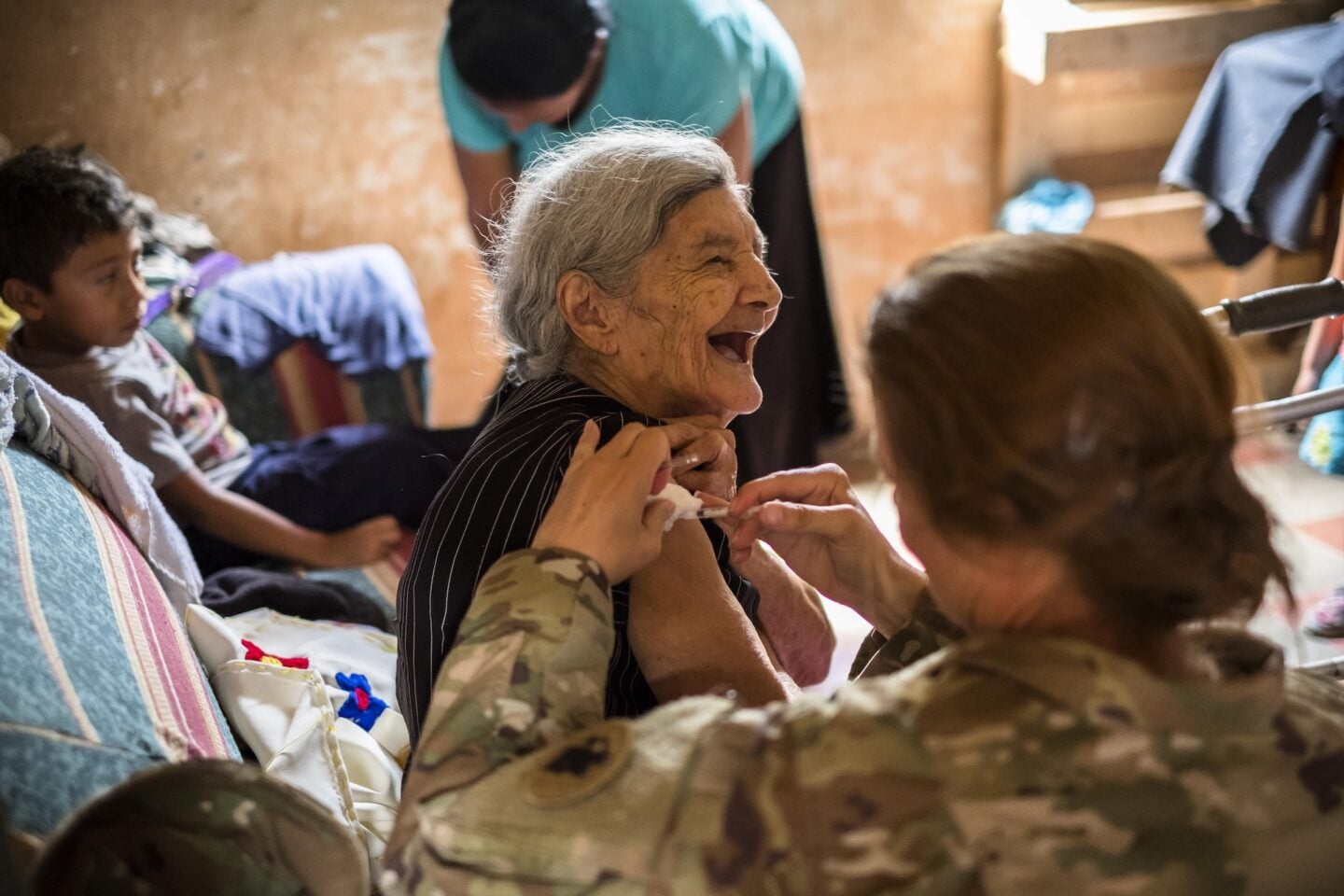
Its medical and civil affairs teams regularly work alongside national and local health authorities, adding personnel, specialized expertise, equipment, or supplies to services already being provided by partner nations.
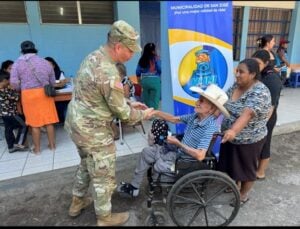
That supporting role is particularly significant in Honduras, JTF-Bravo’s host nation, where its presence at Soto Cano provides opportunities for sustained cooperation with Honduran institutions and direct support to local communities. In June 2026, JTF-Bravo personnel joined the Honduran Air Force and local health professionals during a Honduran-led medical brigade in Villa de San Antonio, Comayagua. Some 460 patients received care across specialties including general medicine, pediatrics, ophthalmology, dentistry, physical therapy, and pharmacy services.
The brigade was part of broader, recurring health cooperation in Honduras. In 2025, more than 40 U.S. Air Force dental personnel joined JTF-Bravo and Honduran partners for a two-week community dental mission in Tegucigalpa, providing examinations, crowns, fillings, cleanings, dental hygiene education, and other support benefiting 300 youths and their families.
In Guatemala in January 2026, JTF-Bravo’s Civil Affairs Team 4361 and SOUTHCOM’s Humanitarian Assistance Program worked with Guatemala’s Ministry of Health to transfer more than $250,000 in medical equipment to a health center in Esquipulas. The equipment — including hospital beds, diagnostic devices, surgical instruments, and oxygen concentrators — was intended to strengthen a facility serving approximately 25,000 people.
“This gathering is a testament to the importance of humanitarian and medical assistance efforts,” Esquipulas Mayor Carlos Portillo said during the transfer. “Our focus is on providing medical care efficiently and respectfully, serving our community with collaboration, organization, and shared responsibility in delivering healthcare services.”
The following day, the team worked with Guatemalan health authorities in Puerto San José, providing approximately $12,000 in medication and medical supplies during a two-day medical mission that benefited about 1,500 people. Guatemalan health personnel provided primary and pediatric care, vaccinations, physical examinations, and pharmacy services.
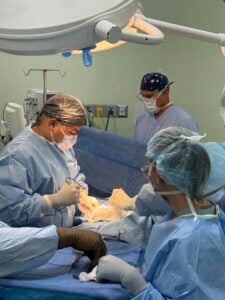
In neighboring Belize, JTF-Bravo personnel provided a different kind of medical support. In August 2025, U.S. Army medical personnel worked alongside Belizean doctors and nurses at Western Regional Hospital in Belmopan during gallbladder and hernia surgeries.
The mission built on earlier surgical cooperation between JTF-Bravo and Belize’s health system. During a similar engagement in 2022, JTF-Bravo medical personnel worked with their Belizean counterparts in Dangriga and Belmopan to expand surgical capacity.
“I personally want to say a big thank you to the team who have left all their family and friends back home and come to Dangriga, Belize to give our people this free service,” Dangriga Mayor Robert Mariano said during the mission.
Maria Monima, a Belizean regional health manager who headed the Southern Health Region at the time, explained that the cooperation helped Belize address demand for elective surgeries that had accumulated during the COVID-19 pandemic.
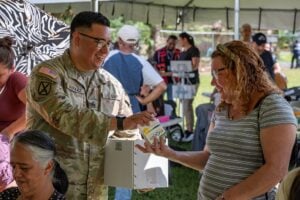
“For us, it has been a great benefit, a great assistance,” Monima then told Belizean broadcaster News 5. “We will continue providing the services as much as possible in our capacity.”
Monima said equipment and materials provided for the mission remained at the hospital, allowing Belizean medical personnel to continue performing surgeries after the visiting team departed.
In Costa Rica, the focus was extending existing health services into a remote community.
Seventeen members of JTF-Bravo’s 349th Medical Detachment joined 46 health professionals from the Costa Rican Social Security Fund (CCSS) in Pejibaye in February 2025. Over three days, the combined team provided care to 620 people, including medical, preventive, pharmacy, and dental services.
The Costa Rican personnel significantly outnumbered the JTF-Bravo team, illustrating the supporting role the task force can play: adding capacity and expertise to a service led by the partner nation’s own health system.
Readiness built before it is needed
Decades of operations from Soto Cano have allowed JTF-Bravo to build relationships with regional partners through training, medical missions, and disaster response. Those established relationships help personnel coordinate quickly when emergencies arise.
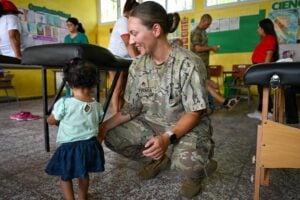
For Honduras, that relationship extends beyond responding to individual missions. Honduran Air Force Lieutenant Colonel Dulce Maria Vasquez Amador highlighted the operational dimensions of the partnership when she served as commander of Soto Cano Air Base in 2024.
“I consider that the most important aspects between Joint Task Force Bravo and the Honduran Air Force is the alliance, cooperation, coordination of logistical support, and mutual support in both security and training,” Lt. Col. Vasquez said. “Also, the support to air operations during natural disasters and humanitarian aid.”
That longstanding cooperation in Honduras has helped shape JTF-Bravo’s broader engagement across Central America and the Caribbean.
“JTF-Bravo’s presence in Central America has established the U.S. military as a credible and trustworthy partner within the region for both humanitarian assistance and security cooperation,” Col. Webb said. “For more than four decades, JTF-Bravo has demonstrated the United States’ enduring commitment to regional stability. That legacy is reflected in lives saved, increased partner capabilities, and a more secure and resilient region.”