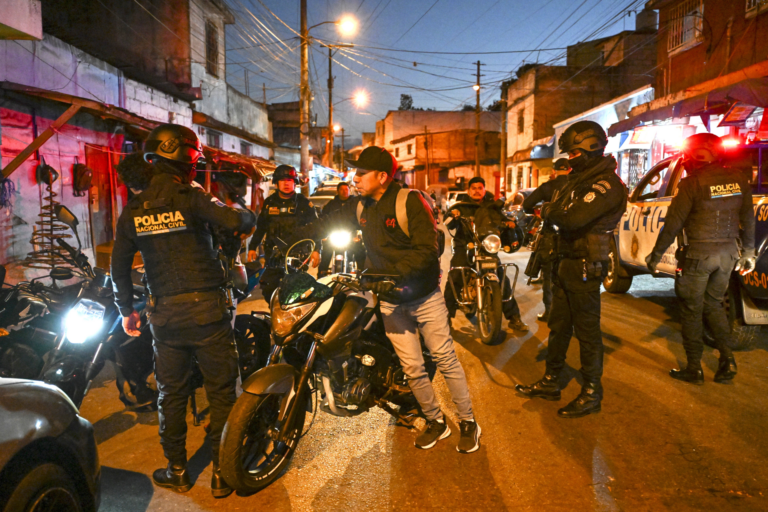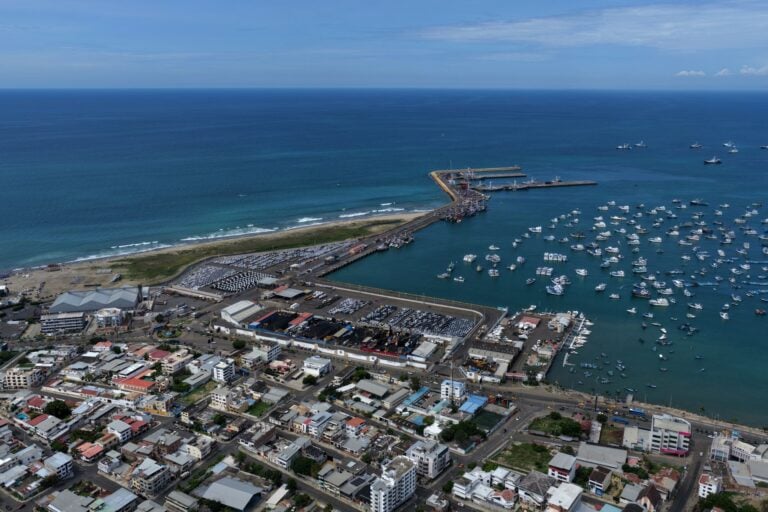
Chile brings to the Shield of the Americas its experience in combating transnational criminal organizations, its strategic importance as the world’s largest producer of mined copper, and its longstanding partnerships with neighboring countries. In turn, joining the initiative creates new opportunities for intelligence sharing, training, and regional coordination within a hemispheric framework that brings security, economic cooperation, and multilateral engagement.
Chile formally announced its decision to join the Shield of the Americas on September 22, during a meeting of leaders in New York. Having attended the inaugural summit in March as an observer, Chile became one of the governments to sign a joint declaration aimed at strengthening cooperation across the hemisphere.
“This is a voluntary coordination effort among governments of the Americas that will allow us to combat transnational organized crime more effectively, a reality that affects communities in Chile today,” Chile’s Foreign Ministry told Diario Financiero. “Each state acts in accordance with its respective international and domestic legal obligations.”
Chile strengthens police cooperation and intelligence sharing
In late September, Chile’s Foreign Ministry outlined how joining the Shield of the Americas could strengthen the country’s response to transnational organized crime. The ministry emphasized the importance of expanding cooperation with regional partners to address criminal networks operating across national borders.
On October 7, Foreign Minister Francisco Pérez Mackenna elaborated on these benefits during a special session of the Senate. “Our government has only one objective: to drive organized crime and drug trafficking out of Chile,” he said. Joining the initiative, he explained, would mean “more intelligence to take action against criminal gangs, training for Carabineros and the Investigative Police, and better coordination along our borders with Argentina, Bolivia, and Peru.”
The foreign minister also outlined the tools available through this cooperation. “We have decided to pursue closer cooperation with other countries in the region and across our hemisphere,” he said. “This includes intelligence sharing, access to technology where appropriate, training and best practices, and coordination on sanctions, designations, and financial measures against organized crime and drug trafficking.”
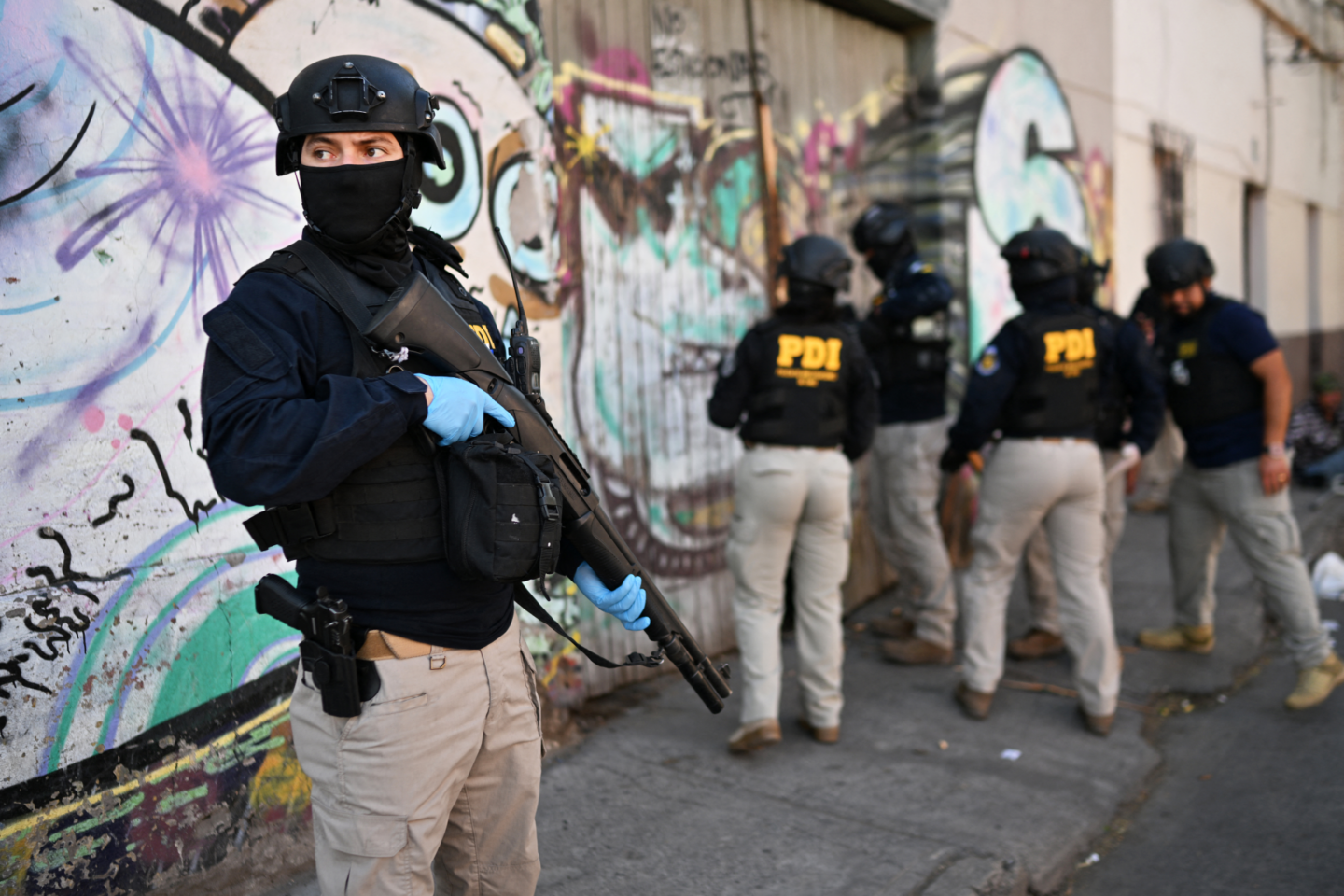
This cooperation is particularly important in the fight against transnational criminal networks such as Venezuela’s Tren de Aragua, whose expansion has triggered investigations across the region. In Chile, the PDI and the Public Prosecutor’s Office have investigated local branches of the organization, including Los Piratas, a group linked to kidnappings and murders. These investigations have given Chile valuable experience that can support closer police and judicial cooperation with other countries confronting the same criminal organization.
International cooperation yields concrete results
Chile already has concrete examples of the international cooperation it hopes to expand through the Shield of the Americas. In August, Chilean courts ordered Rafael Enrique Gámez Salas, alias El Turko, and Alfredo Camilo Carrillo Ortiz, alias El Gocho, held in pretrial detention after they were extradited from the United States and Colombia, respectively. Both are linked to Los Piratas and face charges in connection with the 2024 kidnapping and murder of former Venezuelan Army Lieutenant Ronald Ojeda in Santiago.
The extraditions demonstrate the kind of cross-border police and judicial cooperation that the Shield of the Americas aims to strengthen.
“The extradition to Chile of two defendants linked to Los Piratas of Tren de Aragua, accused of terrible crimes in Chile, demonstrates what we can achieve when our countries work together against transnational organized crime,” U.S. Ambassador to Chile Brandon Judd wrote on X, thanking Chilean and Colombian authorities for their cooperation. He pointed to the case as an example of the collaboration promoted by the Shield of the Americas.
Guillermo Holzmann, an international affairs analyst and academic at Chile’s University of Valparaíso, stressed the need for a systematic approach to intelligence sharing.
“The first challenge is to establish the origin of the information analyzed by law enforcement agencies, not only in Chile but in all the countries participating in the capability proposed by the United States,” he told Diálogo.
This he explained, requires “greater interagency coordination between criminal intelligence units and the Prosecutor’s Office’s criminal analysis teams,” as well as clear rules governing what information can be accessed by counterparts in other agencies.
Chile’s critical minerals strengthen the Shield’s economic pillar
The Shield’s joint declaration calls for assessing foreign investment screening mechanisms on national security grounds, diversifying and securing supplies of critical minerals, and promoting nondiscriminatory rules for digital infrastructure providers.
As the world’s largest producer of mined copper and major lithium producer, Chile has a significant role to play in this effort. Both minerals are essential to industrial and technological supply chains, including those supporting defense and advanced technologies. Chile’s participation adds an important economic dimension to hemispheric security cooperation, particularly efforts to diversify sources of supply and make supply chains more resilient.
Cooperation in this area was already underway before Chile joined the Shield. On March 12, 2026, Chile and the United States signed a Joint Declaration Establishing Consultations on Critical Minerals and Rare Earths during a meeting between President José Antonio Kast and U.S. Deputy Secretary of State Christopher Landau. The consultations are intended to strengthen supply chains and identify priority projects to address gaps in the sector.
Although separate from the Shield of the Americas, the bilateral agreement provides an existing foundation for cooperation in a strategic sector that is also central to the initiative’s economic agenda.
Regional coordination
The Shield’s third pillar calls for participating governments to consult and coordinate their positions on issues of common interest in regional and multilateral forums. The joint declaration also expresses their intention to request a meeting of consultation under the Inter-American Treaty of Reciprocal Assistance (Rio Treaty), a regional security agreement.
Chile brings to this effort its experience in developing regional mechanisms to combat organized crime. In May 2026, the country launched the Santiago Regional Commitment Against Transnational Organized Crime, bringing together Argentina, Bolivia, Chile, Ecuador, Paraguay, Peru, and Uruguay. Chile’s Foreign Ministry views the initiative complementary to the Shield of the Americas.
In August, the Santiago initiative established a working group focused on four areas: security; financial and tax intelligence; migration monitoring and control; and border surveillance and enforcement. The seven participating countries reaffirmed their commitment to developing a joint action plan in September.
The initiative has already produced concrete steps toward technical cooperation. On October 5, representatives of Chile’s Financial Analysis Unit (UAF) took part in the first meeting of the financial and tax intelligence working group, chaired by Chile’s Internal Revenue Service. According to the UAF, participating institutions began identifying priorities for joint efforts to trace financial flows that support criminal organizations.
While the Santiago Regional Commitment operates independently of the Shield of the Americas, both initiatives seek to strengthen information sharing and coordination among participating countries. Chile’s experience in police cooperation, border security, and financial intelligence provides a foundation for broader collaboration across the hemisphere.
Through its participation in the Shield of the Americas, Chile contributes operational experience, strategic resources, and established regional partnerships to a hemispheric effort aimed at combating transnational criminal organizations and securing critical supply chains. Its involvement reinforces a collective approach that draws on the capabilities and priorities of participating nations while respecting national sovereignty and mutual interests.