

Chile is strengthening a growing network of regional and international partnerships as it confronts the expanding challenge of transnational organized crime. Through cooperation agreements with the United States, joint mechanisms with Argentina and Bolivia, and broader coordination initiatives with neighboring countries, Santiago is enhancing the intelligence, investigative, and operational capabilities needed to address criminal organizations that operate across borders.
The effort reflects a broader reality facing countries throughout the region. Criminal groups no longer operate within isolated national jurisdictions. Instead, they rely on cross-border logistics corridors, illicit financial flows, migration routes, and decentralized networks that require coordinated responses among security institutions.
Chile’s evolving strategy comes amid a changing security environment. The 2025 Security Snapshot of Chile, prepared by the Institute of Public Policy at Andrés Bello University, documented increases in homicides and kidnappings that continue to place pressure on the country’s security institutions.
At the same time, the 2025 Global Organized Crime Index warned that criminal organizations such as the Tren de Aragua have expanded their presence in Chile through activities linked to drug trafficking, human trafficking, and other illicit economies. According to Spanish daily El País, the group now operates in 14 of Chile’s 16 regions.
The agreement with the United States
One pillar of Chile’s strategy has been deeper security cooperation with international partners.
In April 2026, Chile strengthened its security relationship with the United States through an agreement that includes a $1 million investment to support Chilean institutions combating organized crime, with assistance from the FBI and the U.S. Department of State. The initiative focuses on strengthening capabilities related to financial investigations, money laundering, cybercrime, and the dismantling of criminal networks.
For Guillermo Holzmann, political analyst and international consultant at the University of Valparaíso, this type of cooperation reflects the need for institutions to adapt to increasingly sophisticated criminal organizations.
“Countries with stronger institutions, such as Chile, seek to strengthen criminal intelligence, the work of prosecutors’ offices, and police capabilities,” he told Diálogo. Those efforts, he added, produce better results when combined with cooperation among neighboring countries.
And that cooperation, he argues, cannot be built solely through political agreements.
“The interaction of institutions such as the Prosecutor’s Office and the Police with their counterparts in other countries creates the necessary spaces of trust. It’s impossible to establish cooperation and intelligence without trust,” he stated.
In his view, the continuity of those institutional relationships is what sustains effective cooperation over time and enables security agencies to respond more effectively to criminal organizations that operate across multiple jurisdictions.
Strengthening border coordination
Chile’s strategy is also increasingly reflected in operational coordination with neighboring countries.
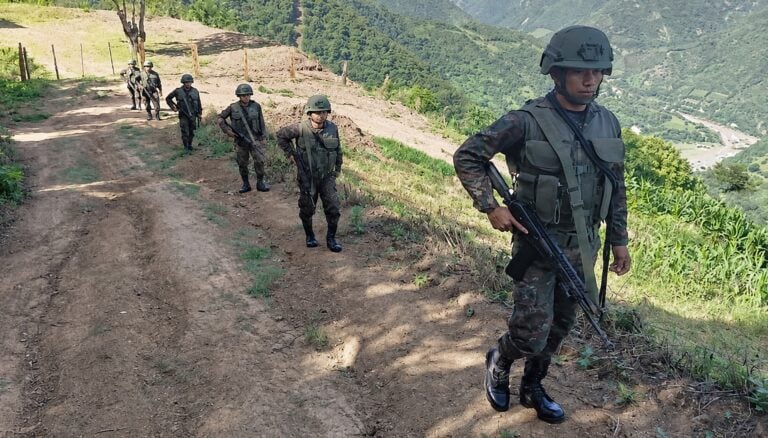
In March 2026, Argentina, Bolivia, and Chile advanced plans to establish a joint task force designed to coordinate security efforts against criminal organizations operating across shared borders, according to Chile’s Ministry of Public Security. The mechanism includes intelligence sharing, operational coordination, and joint efforts to identify and dismantle drug trafficking, human trafficking, and smuggling networks.
According to ADN Radio, the initiative seeks to deny criminal organizations the ability to exploit jurisdictional differences and remote border areas to sustain illicit activities.
Holzmann sees significant potential in the initiative but stresses that effectiveness will depend on deeper regional integration.
“The formation of the task force should be integrated at the bilateral or regional level,” he noted, and warned that “the effectiveness of these mechanisms depends on greater compatibility between national laws to reduce the spaces of impunity exploited by criminal organizations.”
The challenge, he added, is that organized crime constantly adapts.
“The business model of organized crime has been refined. When cooperation between countries begins to take effect, these organizations find new ways to use unauthorized crossings,” he explained.
As governments strengthen coordination, criminal groups continue adjusting their routes, methods, and logistics structures to evade detection and maintain operational freedom.
A regional response
What began as bilateral and trilateral cooperation is increasingly taking on a broader regional dimension.
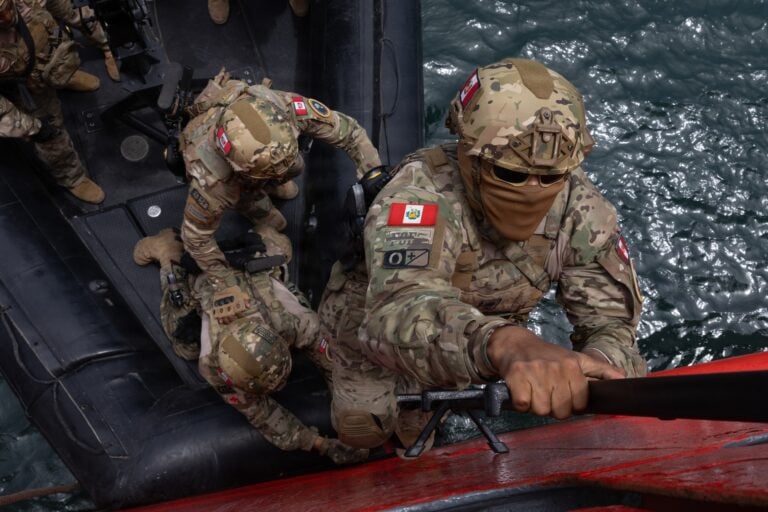
In May 2026, Chile led the signing of the Santiago Regional Commitment alongside Argentina, Bolivia, Ecuador, and Peru, an initiative aimed at strengthening intelligence sharing, judicial cooperation, and coordinated actions against criminal organizations operating across multiple countries.
Chile’s participation in the Americas Counter Cartel Coalition further extends this cooperation across the hemisphere. By bringing together partner nations to improve coordination, information sharing, and operational cooperation against cartels and narcoterrorist organizations, the initiative complements Chile’s regional partnerships and strengthens collective efforts to disrupt criminal networks that operate across borders.
Chile’s Foreign Ministry emphasized that transnational threats require coordinated responses focused on financial intelligence, the traceability of illicit financial flows, migration management, and border coordination.
These initiatives reflect a growing recognition that criminal organizations increasingly function as regional networks and therefore require equally networked responses among governments, law enforcement agencies, prosecutors, and intelligence services.
Holzmann argues that without that level of coordination, even substantial investments and external support will have limited impact.
“All of that, which is very relevant, does not have the desired impact if there is no interregional cooperation,” he said.
That perspective was echoed on May 28, when security officials and foreign ministers from five South American countries gathered in Santiago for an international summit focused on organized crime. Participants agreed that no country can effectively confront drug trafficking, human trafficking, money laundering, and other transnational criminal activities alone.
For Holzmann, anticipation remains one of the most important elements of the response.
“Criminal intelligence is essential because it is the only way we have to anticipate the movements of organized crime,” he noted.
He also warned of another challenge confronting governments throughout the region.
“One of the most complex consequences is the significant rise in increasingly sophisticated corruption and the erosion of institutional trust within the state,” he said.
For Chile and its regional partners, transnational organized crime has reinforced the value of sustained cooperation among security institutions. Through intelligence sharing, joint mechanisms, and stronger regional coordination, countries are expanding their ability to identify threats, disrupt criminal networks, and strengthen security across borders. As criminal organizations continue to adapt, these partnerships provide an increasingly important foundation for a more coordinated regional response.