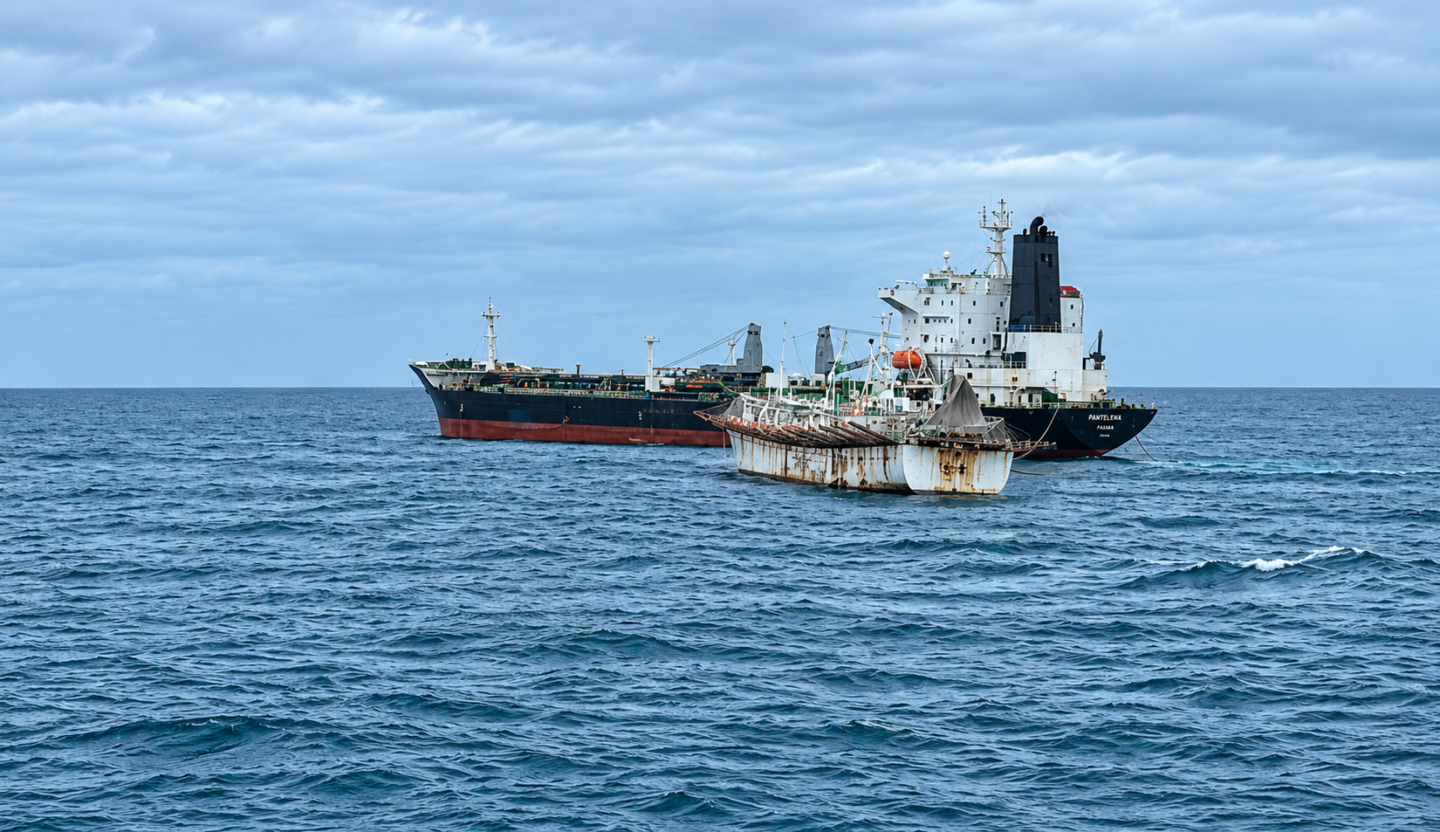

Amid growing international scrutiny of China’s distant-water fishing fleet over allegations of illegal fishing, forced labor, and concerns about its implications for maritime security, Chilean authorities have stepped up inspections of foreign fishing vessels arriving at the country’s ports following a sharp increase in requests from Chinese-flagged ships to call there.
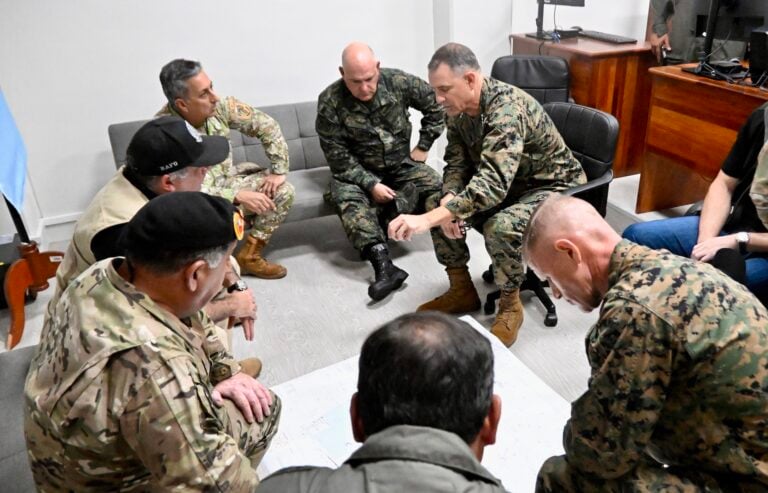
One such operation took place in June 2026 and focused on the Chinese fishing vessel Ning Tai 97, which entered the Chilean Navy Shipyards and Arsenals (ASMAR) in Talcahuano. ASMAR is a state-owned strategic defense company responsible for building, repairing, and maintaining naval vessels and civilian ships.
Chile’s National Fisheries and Aquaculture Service (Sernapesca) led the inspection, which is mandatory for all foreign fishing vessels authorized to call at Chilean ports.
As part of these inspections, Sernapesca reviews vessels’ navigation histories, verifies the proper transmission of satellite-tracking equipment, and inspects cargo holds to ensure that fishing activity and catch status match what has been declared. Authorities also analyze vessels’ routes to rule out fishing inside Chile’s Exclusive Economic Zone (EEZ) and verify that onboard cargo matches the submitted documentation.
The Chilean Navy also maintains continuous surveillance through its Monitoring and Analysis Center, which tracks vessel movements in real time and complements satellite monitoring with air and surface assets.
China increases port calls
The surge in port calls followed China’s accession in April 2025 to the Port State Measures Agreement (PSMA), the first binding international treaty specifically designed to prevent, deter, and eliminate illegal, unreported, and unregulated (IUU) fishing. Joining the agreement expanded Chinese vessels’ ability to request access to ports in other member states while increasing inspection requirements for receiving countries.
“The objective of the PSMA, which Chile signed in 2009, is to prevent vessels engaged in illegal fishing from using ports to land their catches or refuel. This discourages the practice and contributes to the sustainability of marine resources,” Sernapesca Deputy Director Esteban Donoso told the press.
According to Sernapesca, requests from Chinese fishing vessels to call at Chilean ports increased sharply after China joined the agreement. The growing number of port calls also renewed concerns about logistical support previously provided to vessels linked to sanctioned companies. A BioBioChile investigation found that in 2025 ASMAR serviced the Chinese fishing vessels Fu Yuan Yu 7871 and Fu Yuan Yu 7872, both linked to Pingtan Marine Enterprise, a company sanctioned by the U.S. Department of the Treasury in 2022 over allegations of forced labor, physical abuse, and illegal fishing.
The Ning Tai 97 was not among the sanctioned vessels. Nevertheless, the case underscored the need for port inspections to go beyond a vessel’s immediate condition and include information on ownership, parent companies, operational history, international sanctions, and possible changes in identity or flag.

Peru tightens controls
A report by the Environmental Justice Foundation warned that Chinese fishing vessels criticized for their fishing practices shifted part of their logistical operations from Peru to Chile, according to BioBioChile. The change followed Peru’s decision to require vessels operating on the high seas to keep their satellite-tracking systems connected to Peruvian authorities as a condition for entering the country’s ports.
Peru recorded more than 200 arrivals by Chinese fishing vessels in 2024, but that number dropped to zero in 2025. In Chile, meanwhile, arrivals increased from fewer than 10 to nearly 200 during the same period. The shift illustrates how differences in national regulations can quickly redirect the logistics of China’s fishing fleet without necessarily changing its behavior on the high seas.
“Regulatory incentives work, and port controls are an effective tool against illegal fishing,” Daniel Olivares, Oceana’s senior vice president, told Diálogo. “By reviewing navigation histories, satellite transmissions, cargo holds, fishing authorizations, and labor conditions, Chile could deny services to vessels that cannot demonstrate legal operations.”
“Strict inspections do more than detect violations; they remove the incentive to use Chile as an operating base. When Peru required foreign fleets to maintain satellite tracking, they stopped entering the country the very next day,” Olivares added.
The shift also demonstrates that monitoring China’s fishing fleet is not solely an environmental issue. The prolonged presence of hundreds of vessels near the EEZs of South American countries raises challenges for maritime domain awareness, the protection of strategic resources, the security of shipping routes, and port infrastructure.
China has used fishing vessels as part of its maritime militia in the Indo-Pacific to maintain a persistent presence, monitor the activities of other countries, and support its territorial claims. Its civil-military fusion strategy also seeks to ensure that capabilities, technologies, and data collected by civilian actors can support broader state and military objectives.
The documented use of Chinese civilian vessels for surveillance and strategic support in other regions, combined with concerns over possible intelligence gathering and marine data collection in the South Atlantic, makes monitoring the fleet a matter of national security — not just fisheries enforcement.
A regional challenge
The arrival of the Ning Tai 97 prompted the Biobío Marine Engineers Union to call for inspections to include the living and working conditions of crews who spend months at sea, in addition to verifying what vessels catch, where they operate, and in what quantities.
The union called for inspections covering onboard living conditions, hygiene, occupational safety, rest periods, and crew welfare. It also argued that Chile’s ratification of the International Labour Organization’s Work in Fishing Convention (Convention No. 188) would provide a stronger legal framework for overseeing these conditions, complementing existing health, fisheries, and maritime inspections.
Chilean authorities continue to strengthen monitoring efforts while promoting international cooperation against IUU fishing. After Chile received international recognition for its implementation of the Port State Measures Agreement, Sernapesca Director Soledad Tapia emphasized the need to address emerging challenges through artificial intelligence, new monitoring technologies, coordination, and online information systems.
“We must strengthen the traceability of fisheries and legal seafood markets, together with a regulatory compliance strategy that intensifies our work against illegal fishing,” Tapia said. According to Sernapesca, Chile inspects every foreign fishing vessel authorized to call at its ports.
Olivares placed those efforts within a broader multilateral framework. “Illegal fishing requires a coordinated response. The South Pacific Regional Fisheries Management Organisation is the forum where these issues must be addressed. Peru, Chile, Ecuador, and the other coastal states need to arrive at international meetings with scientific evidence, common proposals, and the capacity to negotiate,” he said.
He added that the United States can support concrete measures, including an effective catch limit for jumbo flying squid, a buffer zone on the high seas adjacent to coastal states’ jurisdictions, verifiable satellite-monitoring systems, and decent labor conditions aboard fishing vessels. It can also contribute technology, satellite imagery, data analysis, and maritime intelligence, provided that such support complements a strong regional position capable of preventing the problem from simply shifting from one country to another.
Chile’s experience demonstrates that ports — not just naval patrols on the high seas — are critical points where coastal states decide whether foreign vessels may access repairs, resupply, and other logistical services. It also shows that technical regulatory measures can quickly reshape the logistics of a fishing fleet, but that without regional harmonization, operations may simply shift to ports with different requirements.
Port controls do not replace naval surveillance. They complement it by allowing states to review vessels’ backgrounds, inspect equipment, verify routes, and deny services when there is insufficient evidence of compliance.
Facing a large state-subsidized Chinese fishing fleet whose global operations can serve both commercial and strategic interests, traceability and maritime intelligence sharing have become increasingly important tools for protecting sovereignty. Interoperability among fisheries, naval, port, customs, and intelligence authorities helps protect not only marine resources, but also critical infrastructure, maritime routes, and the strategic information of countries across the region.