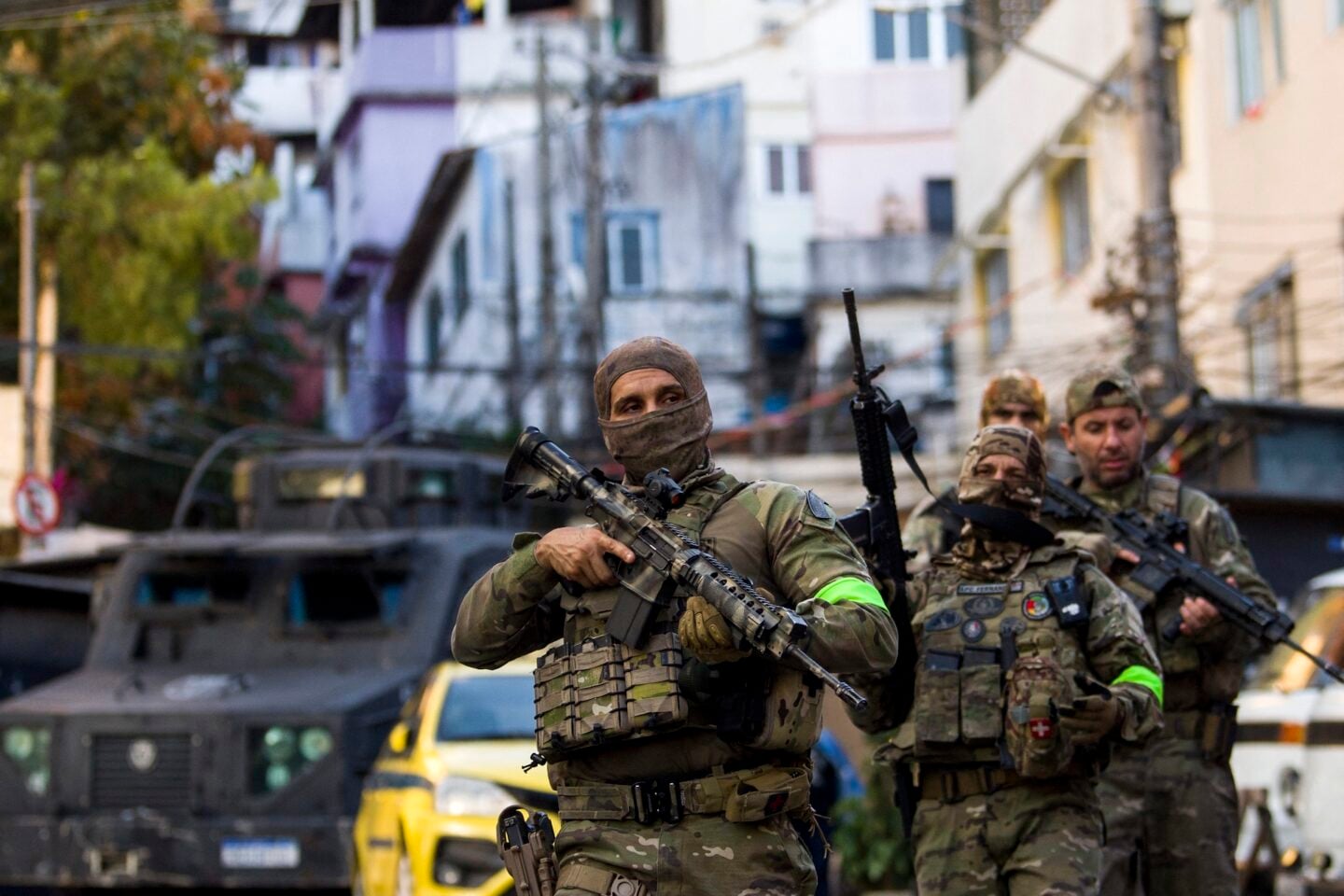

Transnational criminal organizations are expanding across Latin America at a pace that increasingly challenges the ability of individual countries to respond. They manage integrated illicit supply chains, control logistics corridors that span multiple borders, and exploit differences in national legislation, judicial systems, and border controls, making purely national responses increasingly inadequate. The 2025 Global Organized Crime Index ranks several South American countries among those most affected by organized crime. Colombia ranked second worldwide, while Ecuador and Paraguay tied for fourth; Brazil and Peru also recorded high levels of criminal activity, underscoring the regional scope of the threat and the need for coordinated responses.
The security consequences are equally evident. According to InSight Crime, Latin America and the Caribbean recorded more than 108,000 homicides in 2025, while Ecuador reached a record homicide rate of 50.9 per 100,000 inhabitants — one of the highest in the world — driven by competition among criminal organizations for control of drug trafficking routes, ports, territory, and other illicit economies.
“Latin America’s homicide rate is 18 per 100,000 inhabitants, three times the global average of 5.6, and half of those deaths are linked to organized crime,” Chilean National Prosecutor Ángel Valencia told AFP during the signing of the Santiago Regional Commitment Against Transnational Organized Crime, adopted in late May by Argentina, Bolivia, Chile, Ecuador, and Peru.
The agreement establishes a roadmap to strengthen migration and financial controls, as well as coordination between security and judicial authorities. More importantly, it represents a shift in approach: Rather than relying solely on traditional information sharing, countries are seeking to develop operational cooperation through intelligence sharing, coordinated investigations, and joint operational planning to confront organizations that operate across national borders.

The new dynamics of organized crime
The growing ability of criminal organizations to expand beyond their countries of origin has become one of the region’s most significant security challenges. In June, Brazilian authorities dismantled a Tren de Aragua network operating in several states. The investigation revealed links between the Venezuelan criminal organization and Comando Vermelho (CV), particularly in the supply of weapons, as well as connections to drug trafficking and money laundering networks. Other investigations have also identified contacts with members of the Primeiro Comando da Capital (PCC), although the available evidence points to a stronger and more thoroughly documented relationship with CV.
“The increasingly transnational nature of criminal organizations and their ability to operate across multiple jurisdictions have completely transformed the global security landscape,” Juan Belikow, professor of international relations at the University of Buenos Aires, told Diálogo. “The traditional security response has become obsolete against an adversary that has diversified its economic activity into a multi-business criminal enterprise, operating simultaneously across multiple illicit markets.”
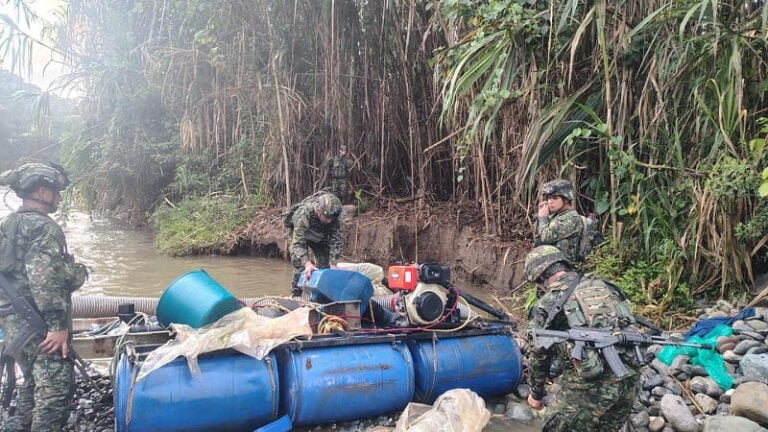
This evolution extends beyond geographic expansion to the organizations’ business model. In Ecuador, Los Choneros, which began as a group involved in common crime before moving into drug trafficking, has evolved into a diversified criminal network that even uses illegal gold mining areas as operational bases. To support this expansion, the group has forged alliances with Mexican cartels, including the Sinaloa Cartel, Albanian criminal networks, and Italy’s ‘Ndrangheta, expanding its ability to operate in international markets.
Diversification has also reached the digital domain. Cybercrime-as-a-Service (CaaS) has created a criminal marketplace in which specialized groups develop and sell malware, access to compromised computer networks, and other capabilities used to carry out cyberattacks. Traditional criminal organizations are increasingly able to acquire these services to complement drug, weapons, and human trafficking operations with cyber capabilities, expanding their operational reach without developing those technical skills internally.
According to cybersecurity firm Check Point Research, organizations in Latin America suffered an average of 3,065 cyberattacks per week in December 2025, a 26 percent year-over-year increase — the largest increase recorded among all regions analyzed.
Why transnationality benefits criminal networks
The transnational nature of organized crime has become one of its greatest strategic advantages. In addition to facilitating money laundering and the diversification of illicit activities, it allows criminal organizations to exploit differences among national legal frameworks, slowing investigations and increasing the costs of law enforcement operations.
“Criminal organizations no longer corrupt only local police officers; they buy customs officials, political and law enforcement authorities, and financial regulators across multiple continents to secure their operations,” Belikow said. This enables them to move people, money, and illicit goods rapidly through corridors that cross multiple jurisdictions, reducing the effectiveness of national responses.
According to Brazilian news outlet G1, nine people were killed over a five-day period in August in a series of attacks that Bolivian authorities linked to a conflict between PCC and CV over control of drug trafficking corridors. The violence prompted the Bolivian government to announce the establishment of a permanent Brazilian Federal Police office in La Paz to strengthen intelligence sharing, alongside a reciprocal Bolivian law enforcement presence in Brazil, reinforcing bilateral cooperation against criminal organizations.
Jurisdictional fragmentation also slows judicial action. “Criminal organizations, mafias, and terrorist groups choose specific countries to establish command centers, others to launder money, and still others to store goods,” Belikow explained. One notable example is Larry Amaury Álvarez Núñez, alias Larry Changa, co-founder of Tren de Aragua. Wanted by Chilean authorities, he was arrested in Colombia in 2024, and in July 2026 the Colombian government authorized his extradition to Chile after a lengthy judicial and diplomatic process.
An increasingly regional response
To reduce the operational advantages enjoyed by criminal organizations, countries across the region are strengthening cooperation at multiple levels. In addition to the Santiago Regional Commitment, Mercosur member and associate states signed the 2026 Asunción Commitment Against Corruption and Organized Crime in May, with the goal of strengthening information sharing, police and judicial cooperation, and transnational financial investigations.
“Today, law enforcement and judicial authorities require a multisector, multilevel, and international strategy,” Belikow said. According to the expert, “that means conducting joint patrols, sharing biometric databases in real time, and executing simultaneous arrest warrants across continents.”
This regional architecture is also being reinforced by growing cooperation at the hemispheric level. In August, U.S. Southern Command (SOUTHCOM) activated Joint Task Force–Western Hemisphere (JTF-WHEM), a new joint command structure designed to synchronize operations with the 19 partner nations of the Americas Counter Cartel Coalition, increase effectiveness against transnational criminal organizations, and strengthen the region’s ability to respond to emerging crises.
The challenge is no longer limited to protecting borders. It now lies in identifying and disrupting the flows of people, money, weapons, and illicit goods across the entire logistical chain of transnational criminal networks. In this context, regional and hemispheric cooperation has become a force multiplier, essential to confronting criminal organizations that operate across borders.