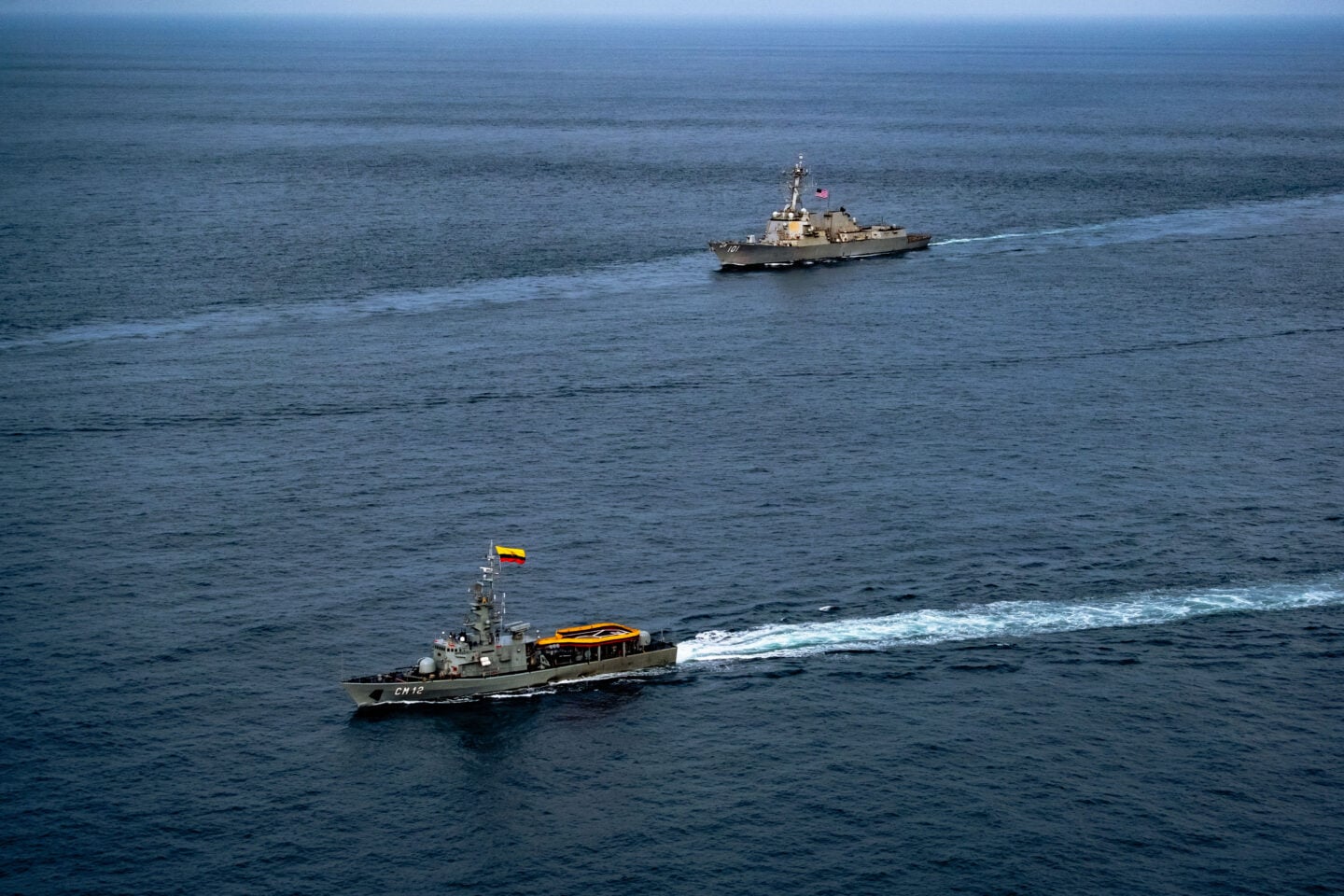

Countries across Latin America and the Caribbean are strengthening intelligence sharing, interoperability, and operational planning to confront transnational criminal organizations operating across borders and maritime routes. A new U.S. Southern Command (SOUTHCOM) structure seeks to support those efforts and help turn available information and capabilities into coordinated operations.
Joint Task Force-Western Hemisphere (JTF-WHEM), activated on August 4, 2026, provides unified command and control at the tactical and operational levels and synchronizes U.S. operations with those of allies and partners. The structure also supports cooperation with the 19 nations that make up the Americas Counter Cartel Coalition.
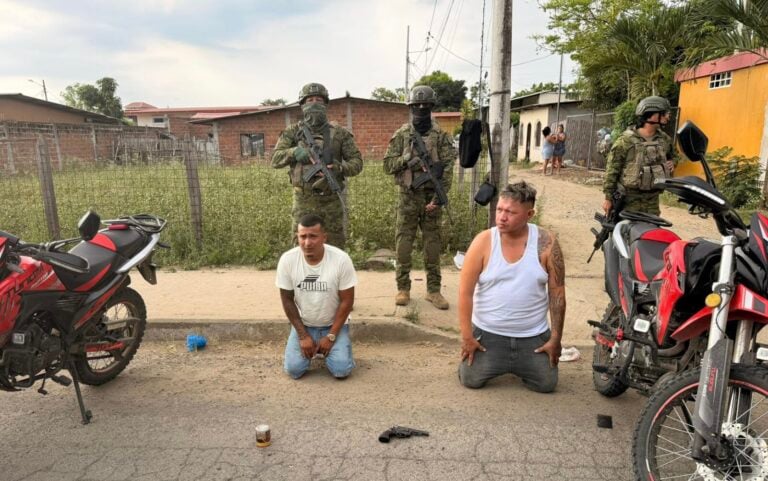
That cooperation is already translating into action. In late August and early September, JTF-WHEM and Ecuadorian authorities carried out several maritime interdictions against vessels identified by SOUTHCOM and the Ecuadorian government as floating refueling stations linked to the terrorist organization Los Choneros and used to support drug trafficking in the Eastern Pacific.
The operations concluded without incident, with those found aboard safely transferred to Ecuador and the vessels sunk once inspections were completed.
Also in early September, the Colombian Navy, together with Joint Interagency Task Force South (JIATF-S) intercepted a go-fast vessel north of Cabo de la Vela after a U.S. maritime patrol aircraft helped locate and track the vessel and guide Colombian Coast Guard units to the intercept. Colombian authorities seized 736 kilograms of cocaine and detained two Dominican nationals.
From information to action
Intelligence only has operational value when it reaches those who need to make decisions. That is why integrating intelligence, surveillance, and reconnaissance (ISR) capabilities into the planning and execution of operations is a central element of this cooperation.
JTF-WHEM seeks to incorporate information gathered through those capabilities into operations with partner nations and facilitate the information sharing needed to coordinate missions against criminal networks operating across borders.
Henry Ziemer, a fellow with the Americas Program at the Center for Strategic and International Studies (CSIS), told Air & Space Forces Magazine that ISR are among the region’s most pressing needs. Air and space assets, he added, are critical to obtaining that information.
For Yadira Gálvez, a security and defense specialist and professor-researcher at the National Autonomous University of Mexico’s Faculty of Political and Social Sciences, the new task force represents more than simply bringing military resources together.
“More than integrating capabilities, it is about strengthening cooperation,” Gálvez told Diálogo.
Each country retains command of its own military institutions. The objective is to share information and capabilities, strengthen interoperability, and conduct joint deployments. Such exchanges can help reveal how criminal networks operate and adapt, as well as expose their routes, methods, and the links that sustain their operations.
Understanding how these networks operate is a first step. “The objective has to be centered on dismantling these transnational criminal organizations,” Gálvez said. To accomplish that, intelligence must help identify not only their leaders, but also the facilitators and other actors who sustain their operational capabilities.
Capabilities to operate together
Cooperation requires connecting the capabilities of different countries and forces to respond to threats that transcend national borders. As SOUTHCOM’s air component, U.S. Air Forces Southern (AFSOUTH) integrates air, space, and cyber capabilities in support of JTF-WHEM, while also providing combat support, ISR, and interoperability with countries across the region.
These capabilities are part of the transition from Joint Task Force Southern Spear to the new JTF-WHEM, expanding the structure available to coordinate operations with regional partners.
Cooperation also includes activities aimed at strengthening partner-nation capabilities. In Trinidad and Tobago, for example, these include joint training, capacity-building exercises, maritime interdiction coordination, and disaster preparedness, Barbados-based Caribbean Broadcasting Corporation reported.
The new task force also seeks to accelerate decision-making and increase the tempo of multinational operations against criminal organizations in the region.
For Gálvez, one of the most important advances is precisely bringing that cooperation to the operational level. “It is no longer just about political agreements, but about moving toward operational cooperation, where we can share information, share capabilities, and conduct joint deployments,” she said.
Planning and shared responsibilities
Operational planning connects available information with the definition of concrete objectives. It also helps determine what capabilities each participant can contribute and how they can be integrated during a mission.
Defense Security Monitor, a publication specializing in defense and security, said JTF-WHEM and the Americas Counter Cartel Coalition can help guide that planning and build consensus in confronting transnational organized crime. The U.S. Department of War indicated that, in coordination with regional partners, the task force seeks to strengthen intelligence sharing, expand combined training, and improve interoperability, while also supporting maritime interdiction operations and capacity building.
For Gálvez, progress in that direction strengthens countries’ ability to act together. More operational cooperation, she said, allows countries to make better use of available information and capabilities to respond to shared threats.
Toward more operational cooperation
The creation of JTF-WHEM adds a new tool to the mechanisms through which the United States and its partners seek to expand operational cooperation against transnational criminal organizations and other threats affecting the hemisphere.
For countries across the region, this cooperation creates greater opportunities to turn intelligence sharing, available capabilities, and joint planning into operational results: detecting criminal networks, identifying their routes and facilitators, coordinating the necessary resources, and carrying out operations that contribute to dismantling them.
For Gálvez, the new structure could pave the way for “new forms of military cooperation that are much more operational.”