
The maritime environment in Latin America and the Caribbean is undergoing a rapid transformation. Traditional threats such as drug trafficking and illegal fishing are now compounded by emerging challenges, including the expansion of transnational criminal networks along maritime routes, the use of advanced technologies, the protection of critical infrastructure, and the growing presence of extra-regional actors.
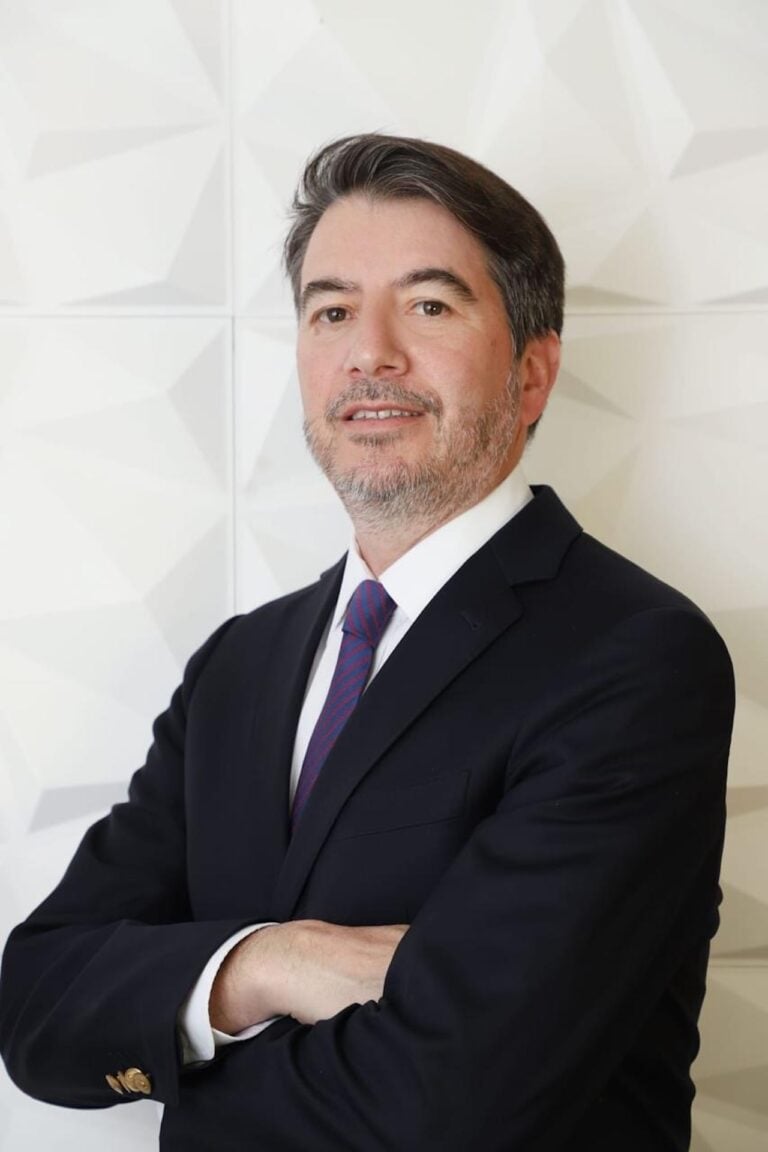
In an interview with Diálogo, Juan Pablo Toro, senior researcher at AthenaLab, a Chilean think tank specializing in security, defense, and international affairs, discusses how these trends are reshaping regional maritime security and why strengthening cooperation and intelligence sharing are essential to addressing them.
Diálogo: Latin America’s maritime domain has become a critical space where state capacity, transnational organized crime, and governance challenges converge. How would you characterize the current maritime security landscape in the region? What makes this moment different from previous years?
Juan Pablo Toro, senior researcher at AthenaLab: Over the past several decades, maritime security efforts in Latin America have focused primarily on combating drug trafficking and the criminal organizations that use the maritime domain to move narcotics to international markets. Later, much of that attention shifted to illegal, unreported, and unregulated (IUU) fishing, particularly in the South Atlantic and South Pacific, where foreign fishing fleets have violated countries’ sovereignty and exclusive economic zones.
More recently, however, our attention has had to shift once again. We are now seeing the growing presence of extra-regional vessels — particularly Chinese ships — conducting intelligence-gathering activities and mapping the seabed. Many of these are not warships, yet they possess intelligence capabilities comparable to those of military ships.
Beneath the surface, another critical layer has emerged: the submarine fiber-optic cables that carry global data traffic and effectively serve as the nervous system of the world economy. This has become another strategic area of concern, making the maritime domain increasingly complex and forcing us to pay closer attention to the convergence of non-state actors, extra-regional powers, digital infrastructure, natural resources, and criminal activity. Ultimately, we are operating in a far more complex maritime environment than ever before.
Diálogo: As illicit maritime trafficking has evolved — from drug trafficking and illegal fishing to other criminal economies — what do you see as the most significant changes in routes, methods, and actors? What do these developments mean for regional security?
Toro: Since the pandemic, criminal organizations have made much greater use of maritime routes, largely because land borders were closed. That prompted a significant shift toward the maritime domain.
At the same time, we have seen increasingly sophisticated low-profile vessels — commonly known as narco-submarines. The technology continues to evolve year after year. Some of these vessels are now capable of operating autonomously and are connected through commercially available satellite communications. In essence, criminal organizations are already using unmanned maritime systems to transport illicit cargo.
Alongside these technological advances, trafficking routes have also changed. We are no longer talking only about corridors within the region but about transcontinental routes. Criminal networks are opening new routes across the Pacific. These are enormous distances, but record levels of cocaine production have pushed them to seek new markets beyond their traditional destinations in Europe and North America. To do so, they are willing to invest in new technologies and develop entirely new maritime routes. That is one of the most significant changes we are seeing today.
Diálogo: As these trends evolve, there is also growing concern about criminal networks infiltrating legitimate maritime commerce. To what extent are transnational criminal organizations embedding themselves in formal maritime logistics chains — such as commercial shipping and port operations — and what new vulnerabilities does this create for countries across the region?
Toro: That’s an excellent question because while go-fast boats and narco-submarines can carry significant quantities of drugs, their capacity is still limited. By contrast, when a criminal organization succeeds in concealing drugs inside a large container ship — such as a post-Panamax vessel [capable of carrying very large cargo volumes] — the volume it can move is dramatically greater.
As a result, infiltrating ports has become another powerful incentive for criminal organizations to compromise the legitimate logistics chain that moves cargo around the world.
Ultimately, we are facing a far more complex maritime environment. We need to strengthen regional cooperation, improve maritime domain awareness, and understand the maritime domain as an integrated system. We can focus on go-fast boats and narco-submarines, but we must also ensure the integrity of the legitimate supply chains that underpin global trade and keep our economies functioning.
In this context, port security is critical. Some ports are well known as drug-export hubs and are therefore heavily monitored. Colombia’’ ports are a good example. Having worked there, I know they are under constant scrutiny because they operate in one of the world’s largest cocaine-producing countries.
What we are beginning to see, however, is a shift toward less obvious ports, such as those in Uruguay and Chile. Because these countries are not major drug producers but rather transit — and to some extent consumer — countries, their ports have historically attracted less attention. They are perceived as lower-risk departure points by the countries receiving those shipments.
As a result, many of these ports are now emerging as new points of concern. One example is the Port of San Antonio in Chile, where drug trafficking operations have already been detected and where increased vigilance is now required
Diálogo: Faced with this evolving threat landscape, what are the most critical gaps that countries in Latin America and the Caribbean must address to better protect their ports? How should the region’s maritime and port security architecture evolve to respond to these emerging threats?
Toro: The focus should be on those ports that historically have not been identified as drug-export hubs. These less visible ports now require closer scrutiny to identify potential vulnerabilities. Authorities need to determine who operates these terminals, assess the effectiveness of anti-corruption measures, and monitor seizures involving vessels departing from them. That information can then be used to strengthen oversight, improve transparency, and identify emerging drug trafficking routes.
It’s no longer just about the traditional routes to Europe or North America. We also need to pay close attention to trans-Pacific routes. For countries along Latin America’s Pacific coast, understanding how expanding cocaine trafficking is affecting markets in Asia and Oceania has become increasingly important. Small island states in the South Pacific are already showing signs of concern. Various studies indicate that these islands are beginning to receive drug shipments and that their limited institutional capacity makes them particularly vulnerable to corruption. Their strategic location between the Americas and Asia is turning them into increasingly attractive transit and redistribution points for criminal organizations.
Diálogo: The growing presence of extra-regional actors — particularly China — in port infrastructure and maritime logistics has raised strategic concerns. How should countries in the region assess the risks associated with these investments, especially regarding oversight, transparency, and long-term dependence?
Toro: China has clearly become a major commercial player in the region. If you look at South America, with the exception of Colombia, China is now the principal trading partner for most countries, and much of that trade moves by sea. As a result, Beijing has developed a strong interest not only in gaining access to ports, but also in developing its own port infrastructure, as we are seeing with the Port of Chancay in Peru.
That said, China is not a transparent country; it is an authoritarian regime. Demanding transparency from its companies or institutions is therefore extremely difficult. Moreover, even when Chinese companies appear to be private enterprises, once you identify the ultimate controlling entity, the Chinese state is always present. At the very least, there is a clear alignment between the company’s objectives and the strategic interests of the Chinese government.
For that reason, there is growing interest in understanding China’s broader objectives in seeking control of — or access to — port infrastructure. From a commercial standpoint, those investments may appear logical. But when analyzing China, we also need to consider the nature of its political system and its concept of civil-military fusion, in which technology and infrastructure can serve both civilian and military purposes. If those ports remain under Chinese control, they could one day support vessels from the People’s Liberation Army Navy — not necessarily warships, but oceanographic vessels, hospital ships, or other platforms used for intelligence collection and seabed mapping. Added to that is China’s massive distant-water fishing fleet, which requires secure ports to sustain its operations.
This brings us back to the central issue: how extra-regional actors have gradually expanded their presence in our countries’ critical infrastructure and the geopolitical implications of that trend. For many years, we viewed the relationship primarily through a commercial lens — Latin America exported raw materials, China bought them, and both sides benefited economically. But today we live in a world defined by spheres of influence, intensifying strategic competition, and growing geopolitical tensions. That reality requires us to think much more carefully about how our security priorities align with our economic relationships. These were once treated as separate issues, but today they are increasingly interconnected.
In that regard, the U.S. administration has been clear in seeking closer alignment with Latin American countries whose relationships with China could affect their sovereignty. The Port of Chancay illustrates the point. When Peru’s state oversight agency attempted to inspect the port, a court ruled that because the facility is privately owned and controlled by a Chinese company, the Peruvian government had no authority to intervene. [Note: This interview was conducted before a Peruvian appeals court overturned that ruling on July 1, 2026, reaffirming the authority of the country’s transport infrastructure regulator (Ositrán) to supervise the Port of Chancay.]
Diálogo: As these challenges continue to evolve, technologies such as satellite monitoring, data analytics, and maritime domain awareness systems are transforming the way maritime spaces are monitored. How effectively are countries in Latin America and the Caribbean incorporating these capabilities? Where do you see the greatest gaps or limitations?
Toro: The first thing to recognize is that Latin America is an extremely diverse region. We can’t speak of a single regional level of capability. Some countries have much higher levels of development. They are OECD [Organisation for Economic Co-operation and Development] members with stable public policies and the financial resources needed to build more advanced capabilities. Others, particularly in the Caribbean, are small, more vulnerable, and have far more limited resources.
That diversity is precisely why we need a much more cooperative and shared approach to maritime domain awareness. What happens in one country’s waters does not stay there. The ocean is, ultimately, a continuous space.
In that context, the United States has an important opportunity — and I know this is a priority for U.S. Southern Command — to help countries with more limited maritime monitoring capabilities strengthen them. The European Union is also supporting these efforts through the Intelligence Fusion Center in Ecuador, which is helping countries improve their understanding of activity in the maritime domain.
Satellite surveillance and monitoring capabilities are essential, but they are not enough. We also need assets at sea. We need ships deployed where they are needed. The objective is not to conduct aimless patrols, but to use intelligence to identify where a problem is emerging and deploy maritime assets efficiently.
Going forward, we will also need to incorporate more technology, including coastal surveillance drones, high-altitude unmanned systems, and closer cooperation with the U.S. Coast Guard, the U.S. Navy, and our own navies. That is one of the region’s greatest challenges, particularly at a time when our prosperity increasingly depends on what happens at sea.
The 90-80-70 rule illustrates why. Ninety percent of global trade moves by sea, 80 percent of the world’s population lives on or near coastlines, and 70 percent of the planet is covered by water. If we take that reality seriously, we should be investing far more in maritime capabilities. For too long, however, Latin America has focused primarily on solving problems on land, while underinvesting in the maritime domain, despite its strategic importance.
Diálogo: Another challenge gaining increasing attention is the use of advanced technologies by criminal organizations. How are these groups employing these technologies in the maritime domain, and what impact is that having on surveillance, maritime security, and interdiction efforts?
Toro: Returning to where we began, criminal organizations have made remarkably rapid technological advances in the maritime domain, and they have proven highly effective at putting those capabilities into practice.
We’re no longer talking about the first generation of fiberglass narco-submarines. Today’s vessels are far more sophisticated. They incorporate metal structures, Starlink antennas and other commercially available satellite communications systems that allow them to be guided to their destination, powerful outboard engines, and low-profile designs that make them extremely difficult to detect. Some have already crossed the Atlantic to Spain, while others operate completely autonomously, without a crew.
The challenge is that access to this technology is becoming easier, cheaper, and more widespread. The components needed to build these vessels are readily available on the commercial market. Anyone can purchase a satellite antenna or an outboard motor.
Governments, by contrast, move much more slowly. Acquiring a new vessel or technological system requires procurement processes, competitive bidding, and contracting procedures. Those safeguards are important because they promote transparency and responsible use of public funds. Criminal organizations, however, face none of those bureaucratic constraints and are often able to innovate much faster than governments.
In many ways, we are witnessing a race between governments that struggle to adapt quickly and organized crime that adopts new technologies with remarkable speed. That is one of the defining battles we face today.
Against that backdrop, the United States has launched initiatives such as the Americas Shield Initiative and other mechanisms designed to strengthen information sharing and coordinate efforts against transnational criminal organizations. There has been a noticeable shift in approach, and we hope it will translate into sustained cooperation and concrete operational results. Many countries in Latin America are very good at conducting joint exercises. The challenge now is to move beyond exercises and into operations. That is where the real difference will be made.
Diálogo: Throughout this conversation, you have emphasized that cooperation is essential to addressing these challenges. What makes this a particularly favorable moment to strengthen regional cooperation, especially with the United States?
Toro: Latin America is undergoing a political shift driven by a variety of domestic factors. As a result, governments that are more willing to work with the United States are coming to power. There is less resistance than there was during the period dominated by the so-called “Pink Tide.” Today, there is greater openness to cooperating with the United States and to engaging with the initiatives it is promoting.
This also reflects a broader change in the region itself. Countries that were traditionally viewed as relatively safe — such as Costa Rica, Ecuador, Chile, and Uruguay, all of which I visit regularly — now rank crime and insecurity among their top public concerns. Ten years ago, those issues were largely associated with countries such as Colombia, Mexico, or parts of Central America affected by gang violence. Today, they have become shared concerns across much of Latin America.
That shift, combined with the current political environment, has created a window of opportunity for cooperation unlike anything we have seen since the launch of Plan Colombia in 1999. Several factors have converged to create a different strategic moment, one that could produce very positive results for the region if it leads to effective, sustained cooperation.
Diálogo: Finally, returning to the importance of both bilateral and regional cooperation, what forms of collaboration have proven most effective so far? What additional mechanisms — or even public policy innovations — would be needed to strengthen maritime security governance across the hemisphere?
Toro: There are successful models we can learn from, such as Plan Colombia, which I witnessed firsthand. I worked in Colombia and traveled throughout the country to observe how the strategy was implemented and the positive impact it had on restoring security. At one point, guerrilla forces were operating just 30 kilometers from major cities and attempting to enter them. Later, people were once again able to travel safely by road between cities. The change was real because the strategy was comprehensive. It was an institutional stabilization plan that began by restoring state control and confronting the armed groups — guerrillas and criminal organizations — that were challenging the state’s authority on a daily basis.
I believe it was a successful model, but it also required a tremendous effort from Colombia itself. Colombians fought a difficult battle to restore security. They achieved significant progress, brought the guerrillas to the negotiating table, and reduced coca cultivation to its lowest level in history — about 44,000 hectares, compared with roughly 230,000 today.
In the maritime domain, however, there is still much to be done. We need more intelligence fusion centers. We need a more persistent maritime presence, although many Latin American countries face serious budget constraints. Maintaining ships at sea requires resources. We also need more multinational joint task forces. Organizations such as Joint Interagency Task Force South (JIATF-S) in Key West have proven highly effective, but they require greater capacity for sustained deployment. Operations such as Operation Martillo, which brought together multiple countries, provide another successful model. Similar efforts should be replicated in both the Caribbean and the South Pacific.
Ultimately, there are successful models to follow, but we need to move from planning to action — from exercises to operations. Intelligence fusion centers like the one in Key West could also be established elsewhere in the region. They need to be more geographically distributed. I believe that is another area where significant progress can be made.