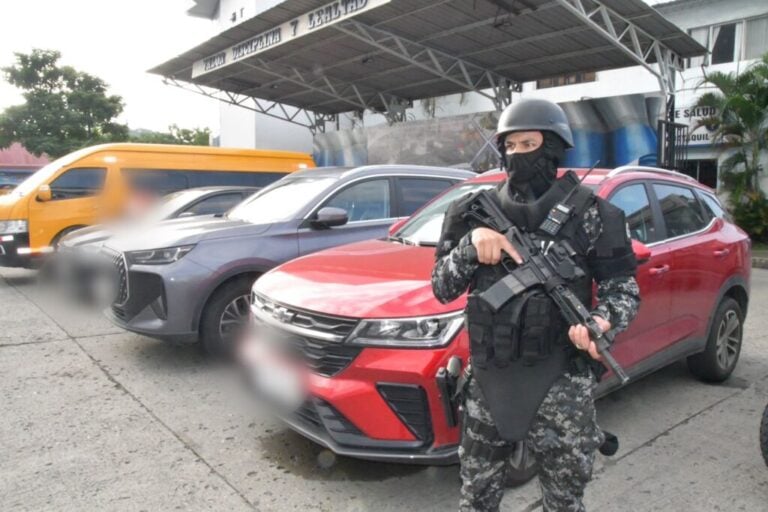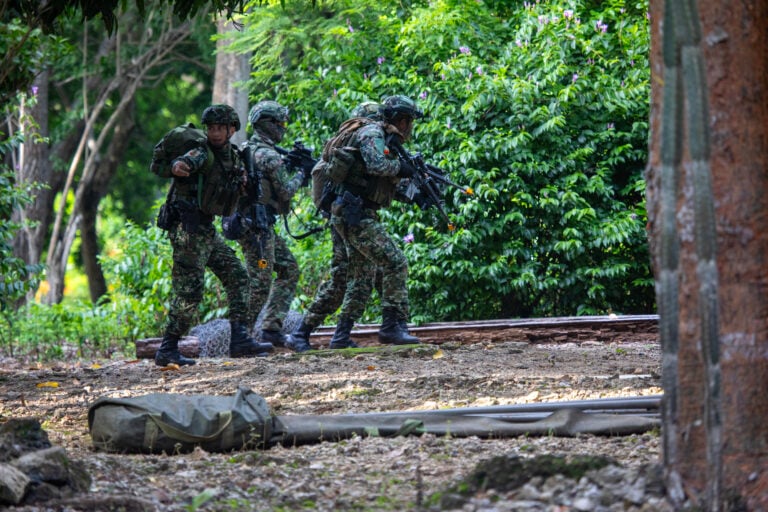

Honduran security forces, working in close coordination with regional and U.S. partners, seized 2,560 kilograms of suspected cocaine and detained nine suspected smugglers during Operation Barracuda, a multinational maritime counterdrug operation conducted September 6–21, 2026. The operation underscored Honduras’s leadership in combating transnational criminal organizations and demonstrated how coordinated intelligence, aerial surveillance, and maritime capabilities strengthen regional efforts to disrupt illicit trafficking.
Led by the Honduran Navy, with support from other elements of Honduran Armed Forces and national law-enforcement and prosecutorial authorities, the operation brought together capabilities from Honduras, Colombia, U.S. Customs and Border Protection (CBP), and Joint Interagency Task Force South (JIATF-S) to detect, monitor, and intercept suspected drug-trafficking vessels operating along maritime routes in the Caribbean.
The multinational effort relied on close coordination between maritime patrol aircraft, intelligence-sharing networks, and Honduran surface assets. JIATF-S contributed detection and monitoring capabilities, intelligence fusion, operational coordination, and planning support, enabling Honduran authorities to act on information about suspected trafficking vessels approaching their waters.
This integration of capabilities allowed Honduran forces to conduct interdictions under their national authorities while drawing on the surveillance, intelligence, and operational support of regional and U.S. partners.
Coordinated action at sea
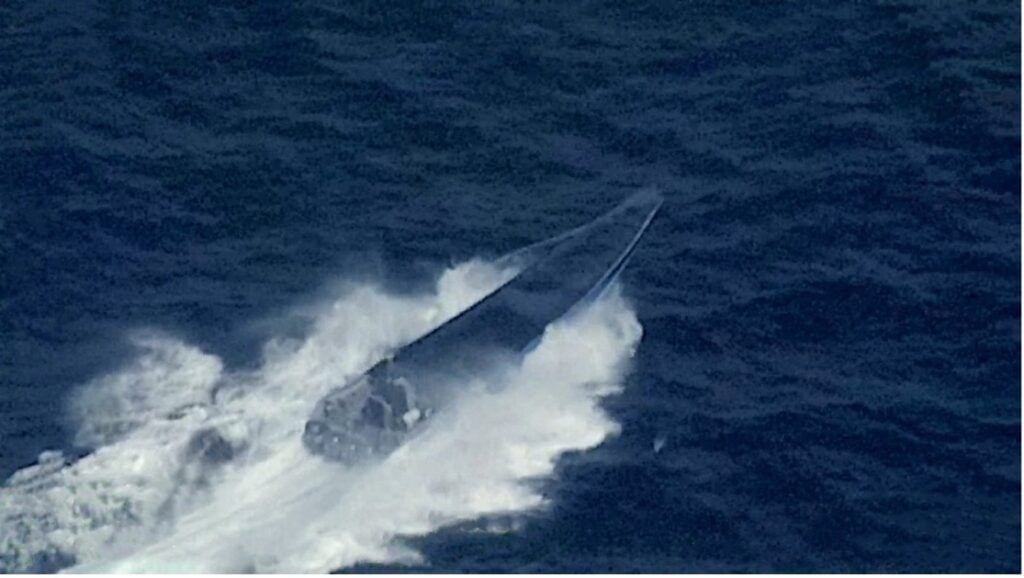
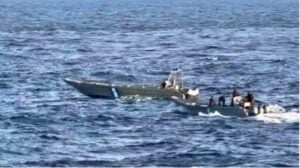
One interdiction began September 5, when a U.S. maritime patrol aircraft detected a suspicious four-engine go-fast vessel departing Colombia. The vessel was tracked as it approached Honduras, allowing maritime forces to coordinate an interdiction.
On September 6, a Honduran interceptor, supported by Ship Special Mission (SSM) personnel, was deployed to engage the vessel approximately 30 nautical miles north of Barra Patuca, along Honduras’s Caribbean coast.
The Honduran Navy, working alongside the Technical Investigation Agency for Criminal Research and the Special Prosecutor’s Office Against Organized Crime, coordinated the interdiction and subsequent law-enforcement actions.
As Honduran forces approached, the go-fast vessel’s crew allegedly jettisoned more than 100 bales of suspected cocaine into the sea in an apparent attempt to prevent their seizure. Honduran authorities, supported by SSM personnel, recovered 36 bales weighing 899 kg.
Five suspected smugglers were detained, and the vessels were towed to a Honduran naval base for further investigation.
A second interdiction followed the detection of a suspicious fishing vessel, First in Line, by a U.S. maritime patrol aircraft operating over international waters. Acting on the information provided through the coordinated surveillance effort, Honduran forces, with SSM support, intercepted the vessel approximately 135 nautical miles northeast of Gracias a Dios, Honduras.
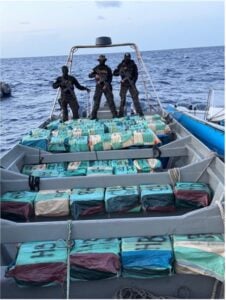
During the encounter, the crew allegedly threw bales of suspected narcotics overboard. Honduran surface assets recovered 55 bundles containing approximately 1.6 metric tons of suspected cocaine. Four crew members were detained and transferred to Honduran authorities.
Together, the interdictions demonstrated the importance of integrating aerial surveillance with rapid maritime response. Although the suspected traffickers attempted to dispose of their cargo as Honduran forces approached, coordinated tracking and timely deployment of Honduran surface assets enabled authorities to recover substantial quantities of suspected narcotics and detain those involved.
Partner-nation leadership and interoperability
Beyond the seizure totals, Operation Barracuda highlighted Honduras’s ability to integrate its maritime, air, law-enforcement, and prosecutorial capabilities with those of its regional and U.S. partners against illicit trafficking. The operation also reinforced the value of regional cooperation in confronting transnational criminal organizations that exploit maritime routes in the Caribbean and eastern Pacific.
By combining Honduran leadership with coordinated detection, monitoring, and information sharing, Operation Barracuda removed suspected narcotics from illicit trafficking networks and demonstrated a shared commitment to regional security. The operation’s results underscored the value of interoperability and sustained partnerships in strengthening maritime security and disrupting transnational criminal networks.