
The balloon effect has long been a feature of counternarcotics operations worldwide. When law enforcement pressure increases along one route, traffickers change departure points and schedules, use different vessels or concealment methods, recruit new facilitators, or shift operations toward jurisdictions and routes where they perceive surveillance and interdiction to be less effective.
The Caribbean is no different. A sharp increase in cocaine seizures in Jamaica in 2026 is drawing renewed attention to the island’s role within a constantly evolving regional trafficking environment. Jamaica has long been a transit point for cocaine moving from South America toward North American and European markets.
Record seizures alone do not establish that a greater share of regional cocaine flows is moving through Jamaica; increased seizures can also reflect stronger intelligence and interdiction. But the scale and diversity of the 2026 cases are drawing greater attention to Jamaica’s place within trafficking networks that continually adjust routes, methods, and logistics in response to law enforcement pressure.
In February, Prime Minister Andrew Holness warned that “trafficking networks are adaptive and multimodal,” pointing to the use of containerized cargo, clandestine airstrips, unmanned aerial vehicles, and semi-submersible vessels to challenge Jamaica’s border security.
The numbers illustrate the scale of the challenge. In August, a joint operation involving the Jamaica Customs Agency (JCA), the Jamaica Constabulary Force’s (JCF) Firearms and Narcotics Investigation Division (FNID), and its Specialised Operations Branch, intercepted over 2 tons of cocaine at the Kingston Freeport Terminal. Authorities found approximately 1,813 parcels in containers destined for Spain and Florida, demonstrating how criminal networks exploit legitimate commercial supply chains to reach different international markets.
That seizure followed two major operations earlier in the year. In May, police acting on intelligence seized more than 725 kilograms of cocaine hidden in 23 bags at a property in Llandewey, St. Thomas. Two Jamaicans were arrested. Authorities estimated the local street value at more than $2.5 million.
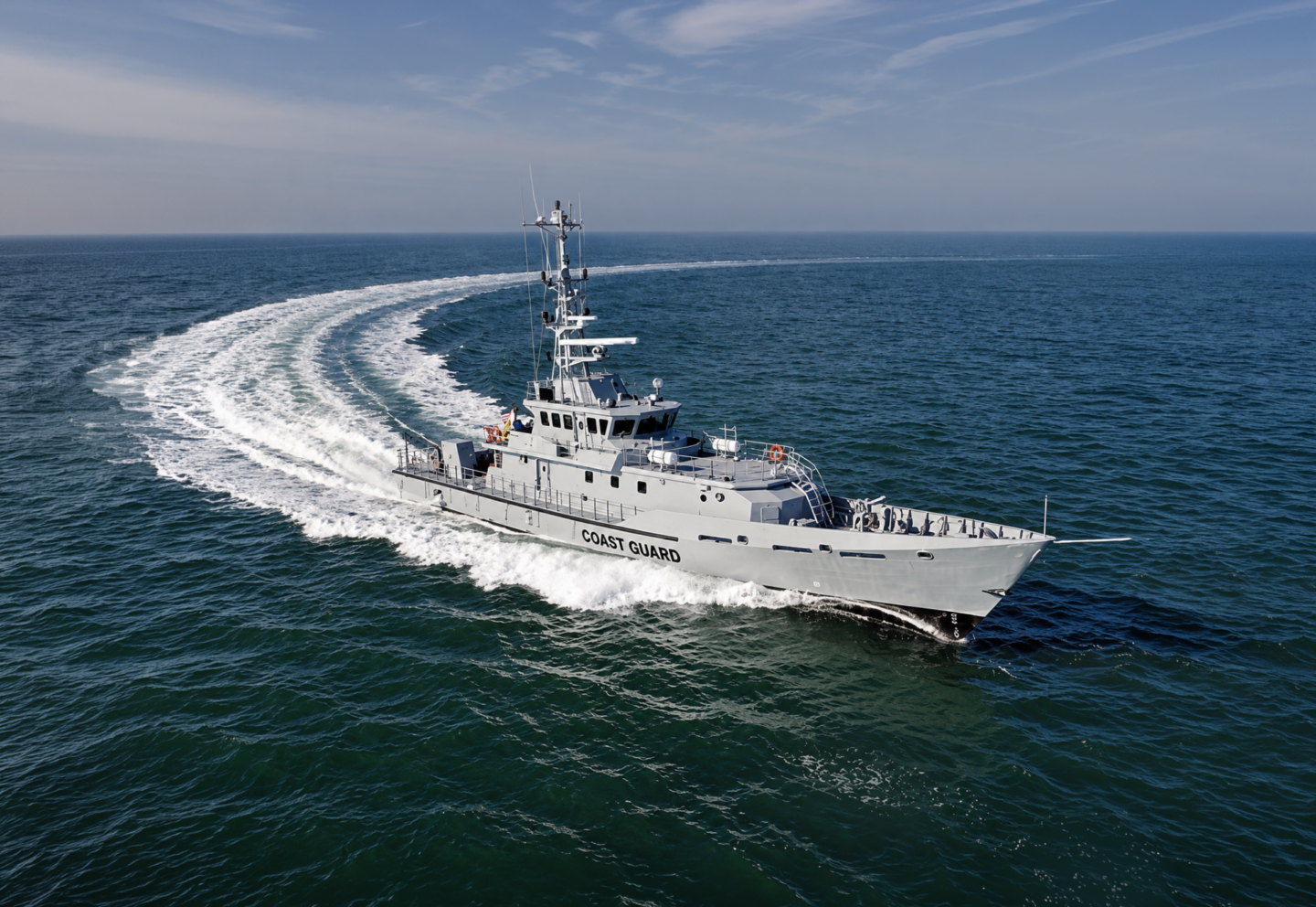
On March 21, the Jamaica Defence Force (JDF) Coast Guard intercepted a go-fast vessel about 10 nautical miles southeast of Treasure Beach, St. Elizabeth, seizing 2,544 kg of cocaine with an estimated local street value equivalent to approximately $8.2 million. Three people were detained and subsequently handed over, along with the drugs and vessel, to the FNID for investigation.
Taken individually, each seizure represents a successful law enforcement operation. Taken together, they point to something larger: Jamaica is confronting cocaine flows on a scale not seen in recent years and across very different environments — at sea, on land, and inside commercial port infrastructure.
By late August, Jamaican law enforcement agencies had seized more than 7,200 kg of cocaine since the beginning of 2026, according to Minister of National Security and Peace Horace Chang. That compared with 1,378 kg seized during all of 2025, 2,508 kg in 2024, and 1,682 kg in 2023. The 2024 figure had previously represented Jamaica’s single-year record.
Jamaican authorities attribute at least part of the increase in seizures to stronger enforcement and coordination. Following the March interdiction, FNID Director Superintendent Patrae Rowe said the results reflected a more consistent collaborative approach against the drug trade. “Our efforts are paying off, our strategies are working,” Rowe said, pointing to improvements in operational output and engagement with partner agencies. By June, after cocaine seizures surpassed 5,100 kg, Rowe also stressed the broader impact of interdiction, saying the seizures were directly affecting “the financial infrastructure of criminal syndicates” and helping authorities disrupt the violence associated with those networks.
According to local law enforcement officials, the drug smuggling environment in the Caribbean remains increasingly dynamic, both in terms of the quantity and types of contraband moving through the region. Cocaine and marijuana remain the dominant illicit drugs moving through Jamaica, but authorities are also detecting an emerging synthetic-drug threat. In June, Jamaica Customs reported increased detections of MDMA/ecstasy, although at significantly lower levels than cocaine and marijuana. The changing mix provides another indication of how illicit drug markets and trafficking patterns continue to evolve.
“These detections demonstrate the Jamaica Customs Agency’s continued vigilance and commitment to protecting Jamaica’s borders from emerging illicit drug threats,” Deputy CEO for Border Protection Marlon Lowe said, adding that Customs was applying “intelligence-led and risk-based enforcement” supported by technology, law-enforcement collaboration, and capacity building to disrupt transnational criminal networks.
For cocaine, South America remains the principal production region, while Central America and the Caribbean continue to serve as important transit zones toward major consumer markets in North America and Western Europe. Within these flows, Jamaica remains an important intermediary point for narcotics moving toward international markets.
Despite the emergence of synthetic drugs, cocaine remains the dominant northbound drug, moving primarily from South America through Caribbean maritime channels or through Central America toward Mexico and the United States. Traffickers continue to adjust routes and transportation methods in response to changing law enforcement pressure, shifting activities when particular trafficking channels become more difficult to use.
The concealment methods identified across recent cases also serve as a reminder that criminals are increasingly inventive. Drugs have been hidden in passenger luggage, vehicle compartments, and ordinary commercial cargo, among other methods. In many cases, illicit shipments are concealed within everyday items and legitimate commercial flows, complicating detection and interdiction. The challenge is therefore not simply the volume of cocaine moving through the region, but the ability of traffickers to continually change how they move it.
But there are encouraging signs. For one, the JDF and JCF seizures demonstrate the importance of coordination among Jamaica’s security, intelligence, surveillance, and law enforcement bodies. While major seizures provide the most visible evidence of these efforts, behind them is a broader operational chain involving analysts, surveillance, maritime domain awareness, interagency coordination, legal work, and intelligence sharing.
Jamaica’s newly established police branch, the Specialised Investigation Branch (SIB), is part of that effort to strengthen the country’s response to organized crime. For narcotics cases specifically, the Firearms and Narcotics Investigation Division plays a central investigative role. Likewise, the JDF Coast Guard’s surveillance and presence in Jamaica’s maritime domain are increasingly important to detecting and interdicting illicit trafficking at sea. Jamaica Customs also plays a critical role through border-control operations, intelligence gathering, and international liaison mechanisms.
These results and relationships show that cocaine trafficking is not simply a maritime interdiction problem, but a transnational organized crime challenge intertwined with illicit finance, corruption, and violence.
The law enforcement and interdiction results in recent months demonstrate Jamaica’s efforts to respond to the evolving regional narcotrafficking environment. They underscore the importance of coordination among intelligence-led task forces, shared databases, and local, regional, and international partners.
As trafficking organizations shift routes, concealment methods and logistics networks, that cooperation becomes even more important. Jamaica cannot see the entire trafficking chain from South American departure point to final destination, nor can any single Caribbean country. Holness has framed that cooperation as both necessary and grounded in Jamaica’s sovereignty. “We will continue to strengthen intelligence sharing, maritime coordination, and joint enforcement,” he said in February, adding that such cooperation must respect Jamaica’s sovereignty, national interests, and regional leadership within CARICOM.