Every year, tons of cocaine cross the Atlantic concealed within legitimate cargo. To detect these shipments before they reach their destination, authorities increasingly rely on maritime intelligence sharing — a key tool for identifying suspicious vessels and tracking the criminal networks that exploit international trade routes.
An analysis by EU Today examined drug trafficking cases involving refrigerated cargo vessels and found that high-risk trade routes and fragmented corporate structures can make it more difficult to identify suspicious ships. The separation between vessel owners, operators, and management companies complicates ship traceability and risk assessments before vessels arrive at port.
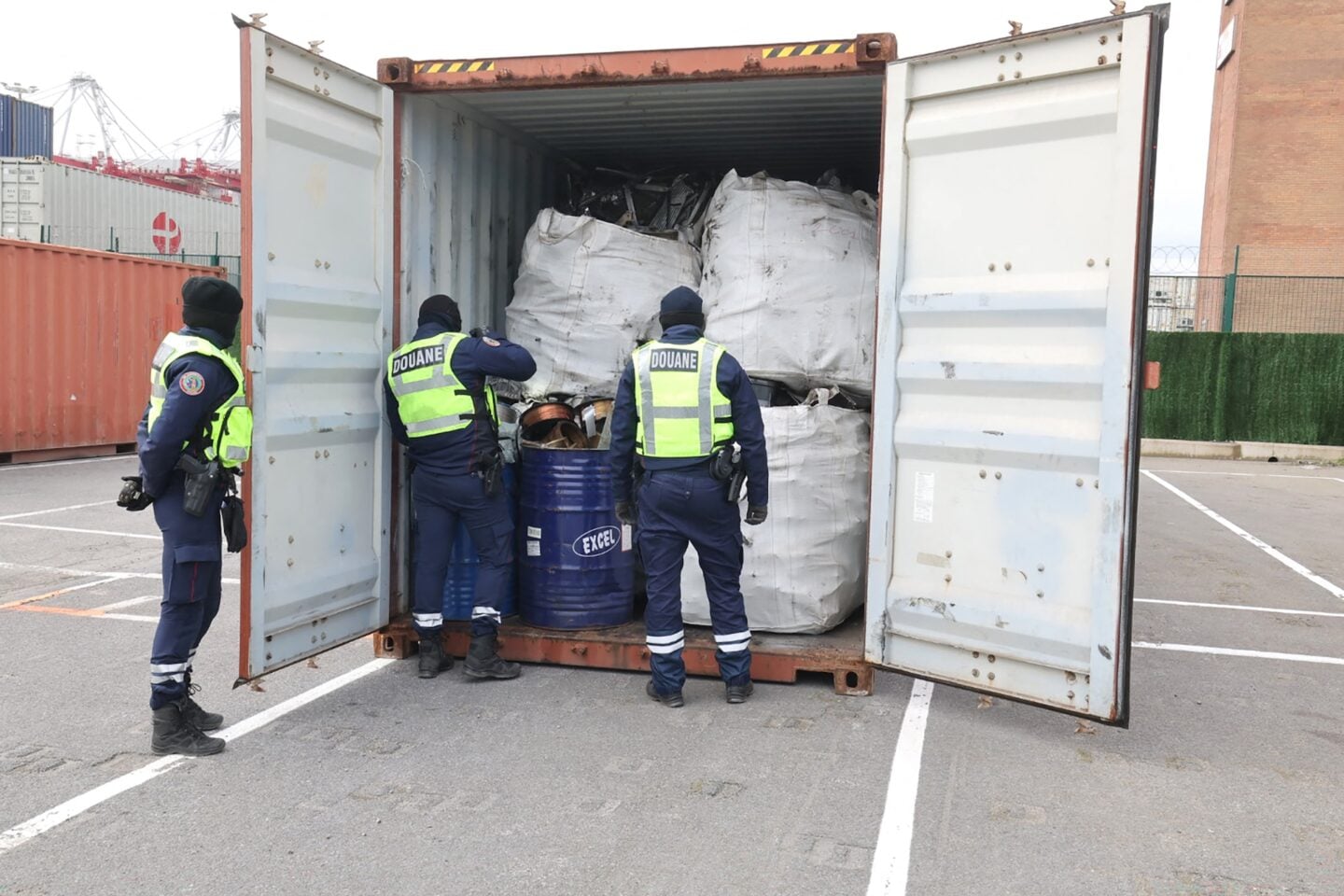
Recent seizures show that these practices remain widespread. On July 21, during an inspection at the Italian port of Vado Ligure, Italy’s Financial Police and customs authorities seized more than 770 kilograms of cocaine hidden among pallets of bananas inside a refrigerated container shipped from one of Ecuador’s main ports, ANSA news agency reported.
Cases like this reflect the evolution of maritime drug trafficking. Europol has warned that criminal organizations continuously adapt their routes and concealment methods to evade law enforcement. This underscores the growing need to strengthen intelligence sharing and international cooperation.
Criminal networks shift operations offshore
Drug trafficking organizations have modified their methods to reduce the risk of detection at Europe’s major ports. According to Europol, some networks are moving part of their operations farther offshore, where they conduct successive transfers at sea, fragmenting trafficking operations across multiple vessels and making shipments more difficult to track.
One such scheme begins with mother ships that collect cocaine in Latin America and transport it hundreds or even thousands of nautical miles through international waters. Container ships, bulk carriers, and other commercial vessels serve as platforms to move the drugs to rendezvous points in the Atlantic, where the cargo is transferred to high-endurance go-fast boats.
“The operational model of drug trafficking no longer depends on a single criminal organization. It functions through a system of interrelationships that integrates different actors and capabilities,” Daniel Pontón, dean of the School of Security and Defense at Ecuador’s IAEN Graduate University, told Diálogo. That flexibility allows criminal networks to constantly innovate and incorporate new technologies adapted to changing conditions.
In the final stage, the cocaine is redistributed aboard smaller vessels and landed on isolated beaches and at marinas, avoiding inspections at commercial port terminals. According to Europol, this model makes it much harder to reconstruct the entire logistics chain. As a result, even when one shipment is intercepted, the rest of the network can continue operating.
Contamination of legitimate cargo
Before beginning its maritime journey, cocaine is often inserted into containers carrying legitimate goods at different points along the supply chain. The United Nations Office on Drugs and Crime (UNODC) notes that this contamination of legitimate cargo can occur at farms, packing facilities, distribution centers, during transportation to the port terminal, or inside the port before loading. This makes it difficult to determine exactly when the drugs were introduced into the shipment.
One of the most common methods is the rip-on/rip-off technique, in which criminal organizations place cocaine inside containers carrying legitimate cargo, often without the exporter’s knowledge, and later remove it at the destination port with the assistance of individuals who have access to the logistics chain. According to UNODC, this method enables criminal networks to move large quantities of drugs without altering the shipment’s documentation.
“One of the main vulnerabilities in the logistics chain is found at ports,” Pontón said. Differences in port governance models make it difficult for countries to harmonize control strategies. What is achieved at one port is not necessarily replicated at another.
From information sharing to maritime intelligence
Identifying high-risk vessels begins long before they reach port. Naval, customs, and port authorities collect and share information to build a common picture of the maritime environment — a process known as maritime domain awareness. This process transforms scattered data into operational intelligence.
To detect anomalies and develop risk profiles, authorities analyze multiple factors, including shipping routes, port calls, vessel histories, flag changes, operators, owners, and cargo manifests. This enables them to prioritize surveillance and focus inspections on vessels, containers, and cargo presenting the strongest indicators of illicit activity, optimizing resources in an environment where inspecting every container is impossible.
“There is no single model for anticipating this phenomenon because every country faces different realities and institutional capacities,” Pontón said. “Ultimately, drug trafficking is also an institutional challenge, and asymmetries among states determine their ability to confront it.”
Intelligence sharing for regional interdiction
Shared intelligence efforts have evolved into a concrete operational framework in the Western Hemisphere. One of its principal hubs is the Joint Interagency Task Force South (JIATF-S), a subordinate organization of U.S. Southern Command (SOUTHCOM) that integrates information from U.S. agencies and partner nations to detect and monitor illicit activities and coordinate the transfer of targets to the authorities responsible for interdiction.
For example, between December 2025 and January 2026, Operation Southern Triangle, led by Panama with support from JIATF-S, deployed naval and air assets in the Caribbean and the eastern Pacific to strengthen regional coordination. At the same time, Operation Pacific Viper, led by the U.S. Coast Guard, resulted in the seizure of more than 45 metric tons of cocaine in 2025.
Real-time coordination is the cornerstone of this model. In July 2026, a coordinated operation involving JIATF-S, the Ecuadorian Navy, the Colombian Navy, and the DEA led to the seizure of nearly 2.7 metric tons of cocaine in the eastern Pacific. A SOUTHCOM maritime patrol aircraft detected two go-fast boats operating south of Colombia after departing Ecuador en route to Mexico. Throughout the night, the aircraft tracked the vessels and relayed their position to JIATF-S, which coordinated the interdiction with Ecuadorian naval units.
Operations like this demonstrate how maritime domain awareness can be translated into concrete action when information flows among surveillance platforms, intelligence fusion centers, and naval units from multiple countries. Interdiction begins long before a boarding operation. It requires detecting anomalous patterns, maintaining continuous tracking, correlating information, and transferring targets to the authorities with the jurisdiction and assets to act. This reinforces Pontón’s argument that combating drug trafficking requires a comprehensive national strategy.
Toward a more permanent maritime security architecture
“International cooperation should focus on strengthening national capabilities through information sharing, technical and technological assistance, as well as the investigation and prosecution of criminal cases,” Pontón said. However, these tools are most effective when they form part of a comprehensive national counterdrug strategy.
As criminal networks fragment their operations among mother ships, offshore transfers, and go-fast boats, the institutional response is moving in the opposite direction, integrating sensors, intelligence, and naval capabilities from multiple countries under a coordinated framework.
The gap between criminal adaptation and states’ capacity to cooperate will be a decisive factor. The consolidation of mechanisms such as JIATF-S demonstrates that the region is moving toward a more permanent maritime security architecture. By integrating surveillance platforms, intelligence fusion centers, and operational units from partner nations, this cooperation strengthens the region’s ability to detect illicit shipments, coordinate responses, and transform shared information into operational results.