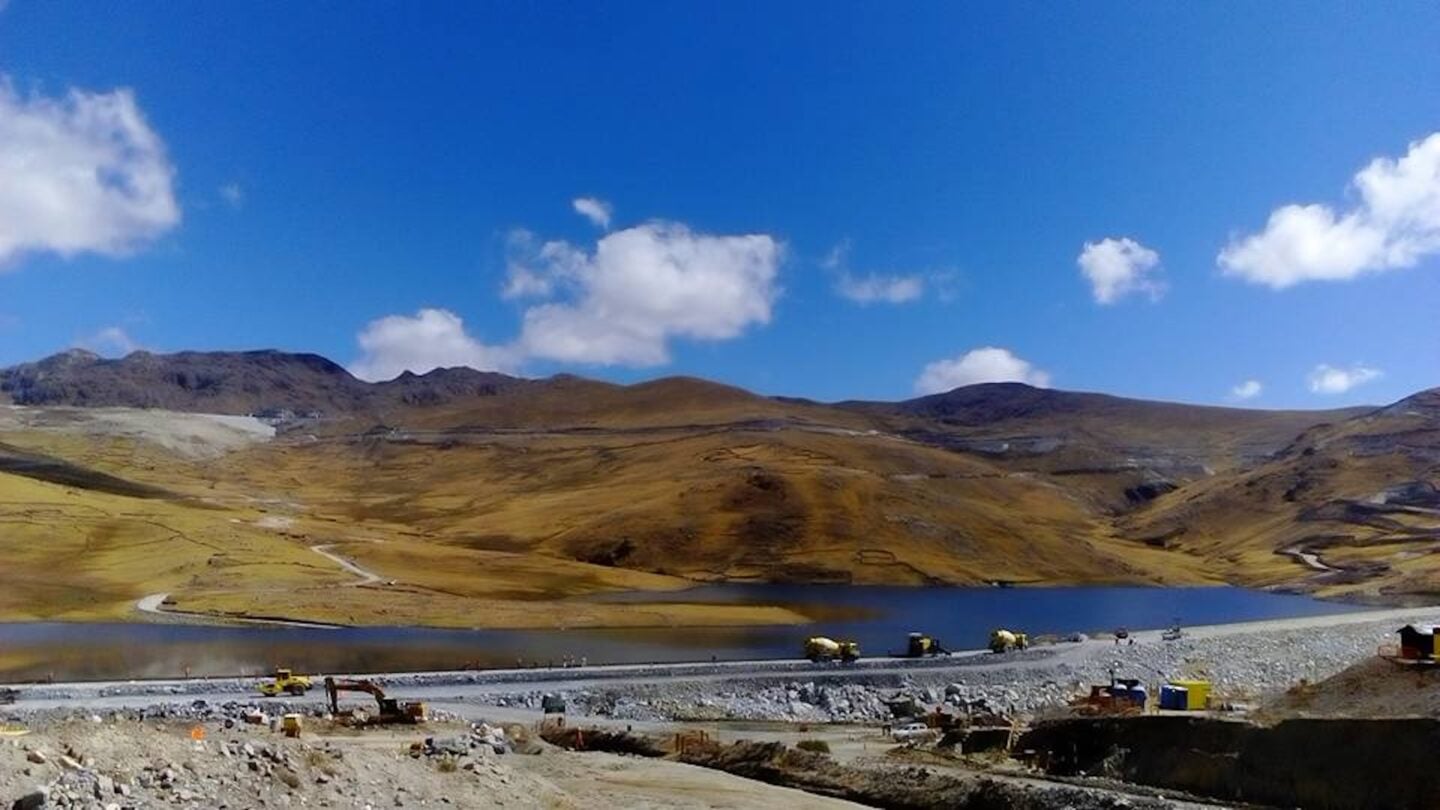

The expansion of the state-owned Aluminum Corporation of China (Chinalco) at the Toromocho copper mine, in Peru’s Junín region, represents the latest step in a long-term strategy through which Beijing is strengthening its position in supply chains of global strategic importance. The approval of 28 projects comprising 33 operational components — backed by an investment of more than $700 million over the next three years — brings Chinalco’s total investment at Toromocho since 2018 to about $1.7 billion. The project includes molybdenum recovery, extends the mine’s operational life through 2042, and reinforces Toromocho’s position as one of South America’s most significant mining assets.
Toromocho: Copper infrastructure with a strategic dimension
Toromocho accounts for approximately 10 percent of Peru’s copper production and has incorporated autonomous drilling and fleet management technologies developed in partnership with Huawei. The integration of Chinese digital technologies into one of Peru’s largest mining operations adds another dimension to China’s presence beyond mineral extraction.
The incorporation of molybdenum as a byproduct further increases the project’s strategic significance. The mineral is widely used in the aerospace and defense industries because of its resistance to high temperatures, durability, and ability to strengthen high-performance alloys. According to the Peruvian Institute of Mining Engineers (IIMP), demand for molybdenum is expected to continue rising, driven by electromobility, the energy transition, and infrastructure development.
Jorge Serrano, a member of the advisory team for the Peruvian Congress’s Intelligence Committee, told Diálogo that the rationale behind these investments extends beyond commercial considerations.
“China is focusing on critical minerals because it knows that the defense sector, the missile sector, the nuclear energy industry, and the chips used for communications are linked to both the civilian and military sectors,” Serrano said.
He added that Chinese investment, both inside and outside the country, combines commercial objectives with broader national security considerations.
“The same modus operandi is observed in countries that need investment and have institutional, diplomatic, or defense weaknesses, and it is repeated in Africa and Asia,” Serrano said.
Building long-term supply chains
Peru has an estimated 85 million metric tons of copper reserves, compared with about 41 million metric tons in China, according to the U.S. Geological Survey (USGS). China purchases roughly 70 percent of Peru’s copper exports, underscoring the importance of Peruvian production to Chinese manufacturing and strategic industries.
A study by AidData provides additional insight into the financial model supporting Beijing’s approach. Copper represents 83 percent of China’s official-sector financing for critical mineral projects in low- and middle-income countries. The study also found that these financial commitments were directed exclusively toward mining projects in which Chinese companies held either full or partial ownership.
Between 2000 and 2021, 66 percent of Chinese official financing for transition minerals was concentrated in just 14 large mining projects across eight countries. Among them are Toromocho, Las Bambas, and Marcona in Peru; Mirador in Ecuador; and Tenke Fungurume, Kamoa-Kakula, and Sicomines in the Democratic Republic of the Congo.
AidData concludes that Beijing is expanding its role across critical segments of global mineral supply chains through financing, equity ownership, and long-term purchasing agreements linked to mining production.
Serrano argues that China’s interest extends well beyond extraction. “China spans the entire production and processing chain, transforming the ore into an input for industries of strategic value.”
Chinese state-owned enterprises strengthen their presence
Las Bambas, operated by MMG Limited a subsidiary of China Minmetals Corporation, led Peru’s copper production through November 2025 with about 380,000 metric tons of fine copper, according to official production data. It marked the first time a Chinese-owned company became Peru’s largest copper producer. Combined production from Las Bambas and Toromocho has increased by more than 750 percent since 2014. Today, Chinese-owned companies account for roughly 30 percent of Peru’s copper production.
This expansion reflects the growing role of Chinese state-owned enterprises in Peru’s mining sector. Chinalco, MMG, and China Minmetals all operate within a strategic framework in which copper is considered a critical resource for China’s industrial, technological, and energy security.
“This scheme indicates that China has set its sights on using Peru, within Latin America, as one of its main suppliers of classic and critical minerals,” Serrano said. He projects that China will continue increasing investments in copper, gold, molybdenum, and rare earths elements in Peru and elsewhere in the region.
The geopolitical context amplifies the significance of these moves. Spanish daily El Economista notes that stockpiling raw materials can help China maintain its position in the face of trade wars or armed conflicts. Spanish technology news outlet Xataka, for its part, argues that Beijing’s accumulation of copper goes beyond its immediate needs and reflects a deliberate effort to increase its influence over the global supply chain for that resource.
“If one of the players in this competition among major powers fails to establish a presence in countries where critically important natural resources exist, China will continue to fill that void, and that will allow it to influence global processing and marketing chains,” Serrano said.
Long-term implications
The growing presence of Chinese state-owned enterprises in Peru’s largest copper and molybdenum deposits reflects a long-term strategy to secure reliable access to raw materials essential for advanced manufacturing, energy technologies, communications, and defense industries. As Beijing continues expanding its role through ownership, financing, digital technologies, and long-term supply agreements, Peru is becoming an increasingly important link in China’s global critical minerals strategy.