
Transnational criminal organizations are refining methods to conceal drugs within legitimate commercial cargo. The discovery in Brazil of cocaine chemically impregnated into timber illustrates the growing challenge these techniques pose to custom authorities and the security of global supply chains.
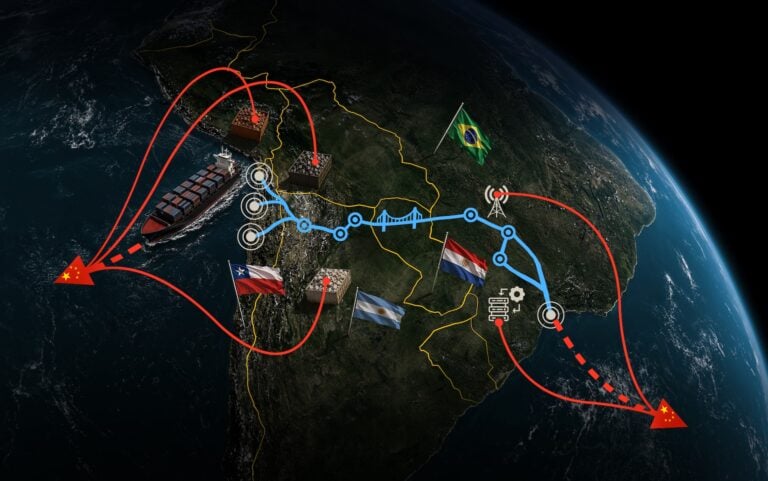
In June, Brazilian authorities intercepted a shipment of Bolivian timber suspected of containing cocaine chemically embedded in the wood. According to Argentine news outlet Infobae, the shipment — approximately 260 metric tons of timber — was initially estimated to contain around 50 metric tons of cocaine, although forensic analysis was still underway at the time of writing. Once confirmed, it would rank among the largest cocaine seizures ever recorded in Brazil.
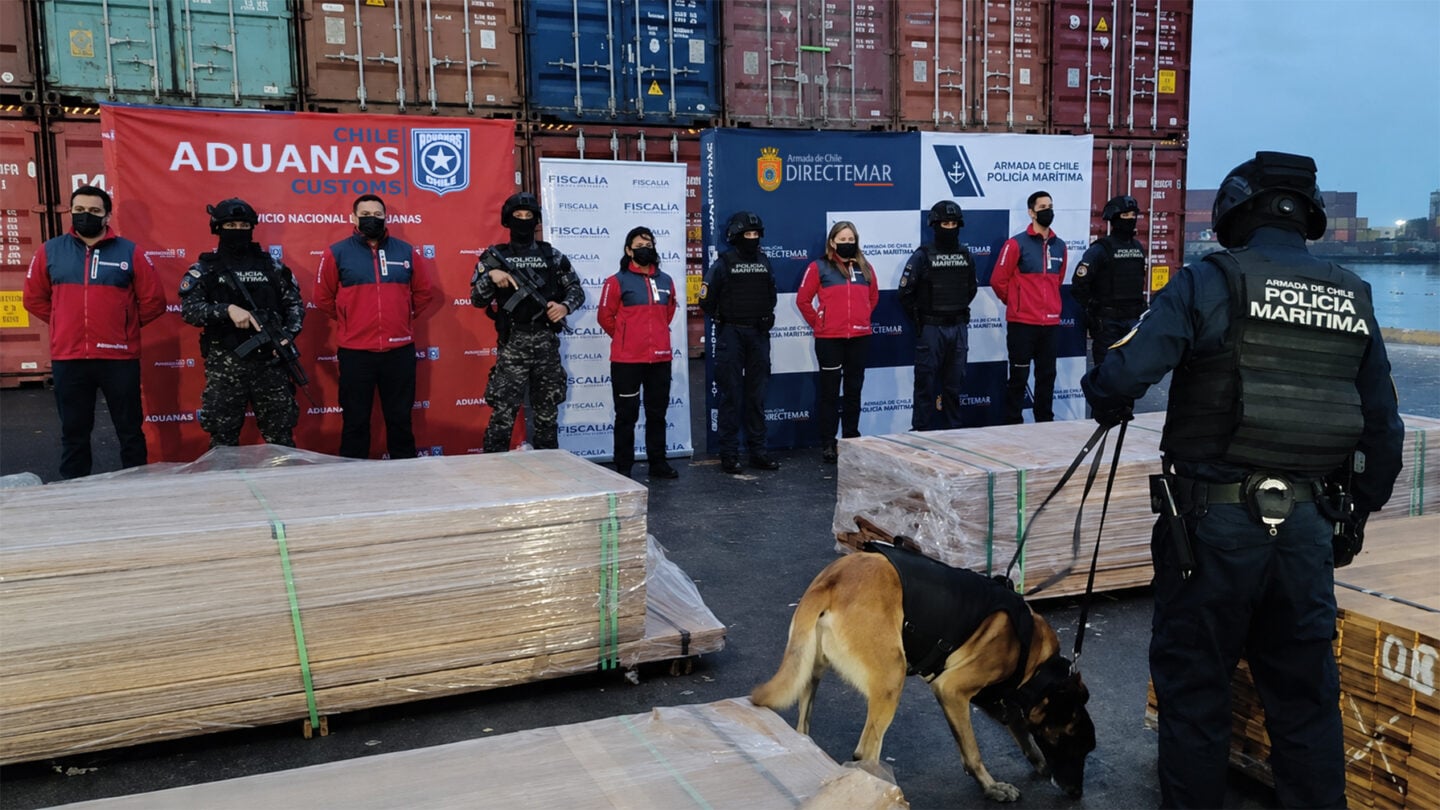
The Brazilian investigation is linked to a broader case in Chile. According to Mongabay Latam, Chilean authorities identified 32 shipments associated with 15 timber companies involving wood contaminated with cocaine and ketamine. Investigators estimated the shipments contained approximately 108 metric tons of illicit drugs. Mongabay reported that both investigations were linked to timber originating from the same production facilities in Bolivia and involved cooperation among authorities in Brazil, Bolivia, Chile, and the United States, including the DEA.
“As interdiction improves, criminal organizations seek alternative trafficking methods,” Juan Belikow, a political scientist and organized crime expert at the University of Buenos Aires, told Diálogo. “They are creative and have resources, and they employ increasingly sophisticated systems because detection mechanisms have been refined.”
Chemical concealment complicates traditional detection
According to Mongabay Latam, traffickers exploit the natural porosity of wood by introducing cocaine in liquid form into its fibers. Once the shipment reaches its destination, the drug can be separated from the timber and recrystallized through specialized chemical processes.
According to the Colombian Navy’s International Center for Research and Analysis Against Maritime Drug Trafficking (CIMCON), these chemical transformation techniques can make cocaine significantly more difficult to detect using conventional scanners, K-9 units, and standard field tests, requiring more advanced forensic capabilities.
The case also illustrates how criminal organizations exploit legitimate industries. Mongabay Latam reported that investigators have identified repeated use of Bolivian timber supply chains for this form of concealment.
The technique itself is not new. According to CIMCON, investigators began systematically documenting these forms of chemical transformation in 2017, after discovering tons of cocaine mixed with salt in Colombia. Since then, authorities have identified variations involving oils, lubricants, coal, minerals, fruits, and other commercial products.
Belikow noted that authorities have also detected clothing impregnated with liquid cocaine. “The case in Brazil and Chile does not represent a new modus operandi, but rather a different application of already known methods. It is diversification rather than specialization within organized crime,” he said.
Beyond timber
Timber is only one of many legitimate commodities exploited by traffickers.
At the Mexican port of Veracruz, the Secretariat of the Navy seized 530 sacks of zeolite — an absorbent mineral widely used in agriculture and industry — that had been intentionally contaminated with cocaine.
In a separate operation in Colombia, authorities found cocaine concealed inside hollow construction slabs destined for Europe.
Criminal organizations have also concealed cocaine in shipments of industrial coke. According to W Radio Colombia, traffickers chemically alter the drug so it resembles the coal-derived material while reducing its odor, allowing it to blend into legitimate exports.
Another common method targets the containers themselves rather than the cargo they carry. According to a World Customs Organization (WCO) report, Ecuador has become one of the principal hubs for container contamination, particularly in banana exports. Criminal groups break into legitimate containers after inspection, insert narcotics into cargo, pallets, container walls, or refrigeration systems, and then replace the locks or seals before the shipment departs.
“The most cost-effective way to traffic is to ‘stow’ contraband in a container: They don’t pay freight charges, they use known cargo, and the probability of detection is low,” Belikow said.
Intelligence and cooperation to close loopholes
Given the enormous volume of global maritime trade, inspecting every shipment is impossible.
Belikow said that random inspections remain essential for identifying emerging concealment methods, but intelligence-driven targeting and risk analysis are the only sustainable approach.
“That is why information sharing, enhanced intelligence, and the ability to adapt to new technologies are essential,” he said. “Warning signs must be tracked throughout the entire supply chain.”
The WCO has likewise concluded that protecting maritime supply chains increasingly depends on intelligence-led operations, international information sharing, and cooperation among customs authorities, law enforcement agencies, ports, shipping companies, and the private sector to identify cargo contamination before shipments reach their destinations.
“Disparities in capabilities between countries constitute a vulnerability that organized crime recognizes and exploits. International cooperation is a step in the right direction, but if each country does not do its part in terms of laboratories, staff training, and specialized drug trafficking prosecution units, our effectiveness will not improve. A country that cooperates needs a partner with equipment, knowledge, personnel, and resources,” Belikow concluded.
The investigations in Brazil and Chile demonstrate that sophisticated drug trafficking schemes can infiltrate legitimate commercial supply chains across multiple countries before reaching international markets. As criminal organizations continue adapting their concealment methods, disrupting these networks will increasingly depend on intelligence sharing, advanced forensic capabilities, coordinated border security, and close cooperation among military, customs, law enforcement, and judicial authorities.