
The expansion of Chinese companies in Latin America’s lithium sector has evolved from a purely commercial enterprise into a source of geopolitical leverage. Beijing’s ambitions extend well beyond mining. Chinese firms are increasingly seeking influence across the entire lithium value chain — from extraction and processing to exports, and, increasingly, the regulatory frameworks that govern these resources.
Evan Ellis, research professor of Latin American Studies at the U.S. Army War College Institute for Strategic Studies, told Diálogo that “for the Chinese state, there is a strategic interest in ensuring that its own companies have access to the materials they need to support industrial development, supply their industries, and possess the technology to extract added value on their own.”
The report, China’s Presence in the Lithium Sector in Latin America and the Caribbean, produced by the Collective on Chinese Financing and Investments, Human Rights, and the Environment, warns that this model risks relegating producer countries to the role of raw material suppliers, with limited technology transfer or participation in higher-value stages of the supply chain. According to commodities analysis firm Wood Mackenzie, Chinese companies are expected to control 39 percent of global lithium production by 2030. In this scenario, Latin America supplies the resource while capturing only a fraction of its economic value.
Beijing strengthens its grip on critical minerals
China has also strengthened its legal framework governing strategic minerals. New regulations implementing the country’s Mineral Resources Law took effect on June 15, 2026, reinforcing state oversight of the exploration, extraction, processing, and management of strategically important minerals. The regulations complement China’s broader system of export controls and national security measures designed to safeguard access to critical mineral supply chains.
Ellis believes this framework has significant geopolitical implications. “The Chinese state uses not only its access to minerals but also its processing capacity as a tool of leverage against other countries. Particularly in certain critical sectors, Beijing that uses that dominance as a strategic weapon,” Ellis said.
Regulatory changes open the door
China’s influence has expanded not only where regulatory gaps exist but also where legal frameworks have been modified to facilitate investment.
“China is making inroads in contexts where it was believed that the notion of danger would prevail — in cases where regulatory frameworks are not only weak but have been altered precisely to legalize that participation,” María Isabel Puerta, a political analyst and adjunct professor in Orlando, Florida, told Diálogo. “It’s not just a matter of vulnerable frameworks; they go so far as to modify them to facilitate this type of intervention.”
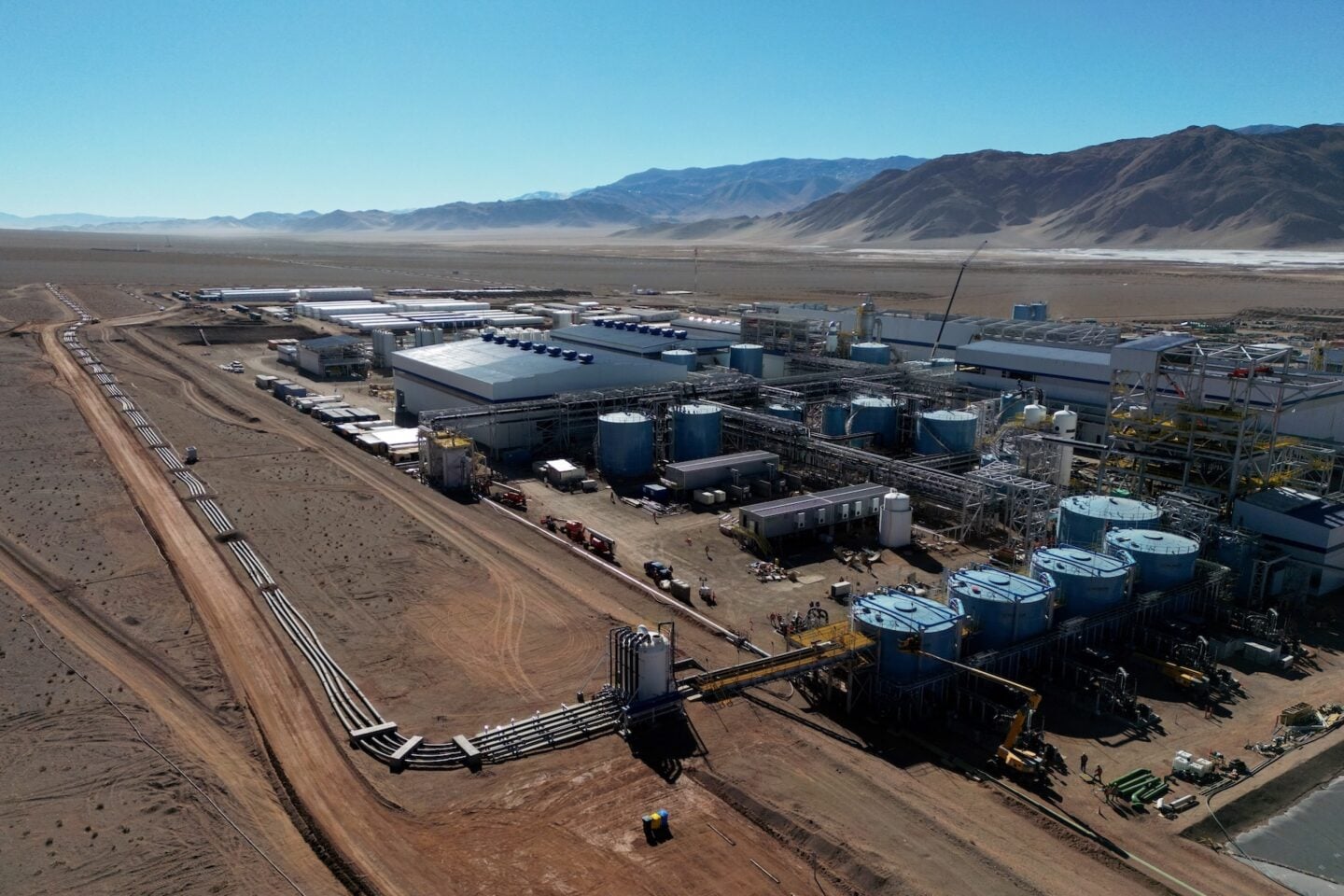
Argentina illustrates this dynamic. In May 2026, the government approved incentives under its Large Investment Incentive Regime (RIGI) for the expansion of the Cauchari-Olaroz lithium project, operated by a joint venture that includes China’s Ganfeng Lithium Group alongside Lithium Argentina and Jujuy Energía y Minería Sociedad del Estado (JEMSE). The decision reflects Argentina’s willingness to encourage China’s participation in strategic projects.
Puerta argues that viewing Chinese investment as less risky is a strategic mistake. “It may have decreased in some cases, but it has increased in others, such as in Brazil and even in Central America — and I’m not just talking about regimes aligned with China, like Nicaragua.”
Opacity, organized crime, and sovereignty
Beijing’s growing presence in Latin America’s mining sector is also accompanied by another concern: limited transparency. Contracts, bidding processes, and memorandums of understanding between governments and Chinese companies are often protected by confidentiality clauses that restrict public oversight and weaken accountability. This lack of transparency can create opportunities for corruption and criminal activity.
An investigation by OjoPúblico found that Peruvian authorities are investigating representatives of eight companies allegedly linked to a criminal network that illegally extracted, stole, and exported mining tailings containing gold, copper, and silver to China using fraudulent permits in an operation valued at nearly $12 million.
The cumulative effect is a gradual erosion of national sovereignty. Countries risk losing greater control over strategically important resources, limiting opportunities for industrial development while increasing their exposure to geopolitical pressure beyond their control.
The trend extends beyond mining policy. It reflects a long-term strategy that combines investment, legislation, commercial influence, and limited transparency to strengthen China’s position across critical mineral supply chains, making lithium an increasingly important factor in the region’s strategic landscape.