
Jamaica’s approach to maritime security has become a key example of how interagency coordination, integrated capabilities, and cooperation with regional partners can strengthen responses to transnational organized crime in the Caribbean. This strategy combines intelligence sharing, maritime domain awareness, surveillance, and joint operational action to improve the detection and interdiction of illicit maritime activity.
Maritime interdiction: A blow to drug trafficking
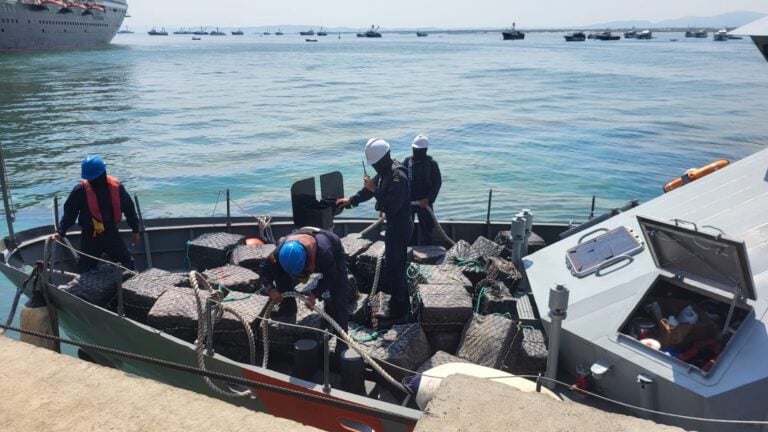
On March 21, 2026, the Maritime, Air, and Cyber Command of the Jamaica Defence Force (JDF) carried out an operation that demonstrated the effectiveness of Jamaica’s maritime security strategy. During a routine patrol about 10 nautical miles southeast of Treasure Beach, in St. Elizabeth, Jamaican forces intercepted a speedboat carrying more than 2.5 tons of cocaine, according to local media reports.
The vessel, which was heading toward the mainland, was boarded by authorities, who seized 99 packages of cocaine along with fuel drums and additional equipment. Three people were arrested, and the case was transferred to the Firearms and Narcotics Investigation Division of the Jamaica Constabulary Force (JCF).
According to the JDF, the operation reflected the country’s commitment to maritime security, through coordination among military, law enforcement, intelligence, and regional partners. The seizure also underscored Jamaica’s strategic location within Caribbean trafficking routes used by transnational criminal organizations to move cocaine from South America toward North American and European markets.
The March seizure reflected a sustained operational effort. In late 2025, Jamaican authorities seized hundreds of kilograms of cocaine during another maritime operation off the island’s southern coast, reflecting continued operational pressure against trafficking networks operating across Caribbean waters. These repeated interdictions illustrate how persistent patrols, intelligence sharing, and rapid-response capabilities are increasingly important as traffickers adapt routes and tactics throughout the region.
A strategic maritime corridor
Jamaica’s geographic position, extensive coastline, and role as a regional transshipment hub make the island particularly significant within Caribbean trafficking dynamics. According to regional security assessments, criminal networks exploit the Caribbean’s vast maritime space, dispersed coastal landing areas, containerized shipping routes, and proximity to major international markets to move illicit cargo.
Authorities estimate Jamaica has more than 150 unofficial maritime entry points, many of them difficult to monitor continuously. This operational environment creates opportunities for traffickers to use go-fast vessels, fishing boats, and commercial cargo routes to transport narcotics and other illicit goods across the Caribbean basin.
On May 1, 2026, Panamanian authorities seized 194 packages of suspected narcotics concealed inside a container originating from Jamaica and destined for Ireland, according to Panamanian media reports. The seizure highlighted how Caribbean trafficking networks increasingly exploit commercial shipping routes and regional logistics hubs to move illicit cargo toward Europe.
As regional and international pressure increases in other trafficking corridors, criminal organizations continue adapting by diversifying routes, using smaller maritime shipments, and exploiting jurisdictions with challenging maritime-monitoring coverage. This evolving threat environment has increased the importance of integrated maritime surveillance and coordinated interdiction operations among Caribbean nations.
Institutional cooperation and regional strengthening
Jamaica has strengthened its interdiction capabilities by integrating efforts not only nationally, but also regionally and internationally. According to the United Nations Office on Drugs and Crime (UNODC), Jamaica’s security agencies — including the JDF, the JCF, the Jamaica Customs Agency, the Major Organized Crime and Anti-Corruption Agency (MOCA) — work in coordination to combat transnational crime.
Regional cooperation has also become increasingly important. Collaboration with the United States, the Caribbean Community (CARICOM), and CARICOM Implementation Agency for Crime and Security (CARICOM IMPACS) has helped improve intelligence sharing, maritime coordination, and technical capabilities throughout the Caribbean.
Alejo Campos, regional director of Crime Stoppers for the Caribbean and Latin America, highlighted Jamaica’s role in coordinating regional efforts.
“Jamaica has taken an active role in strengthening regional coordination, integrating intelligence, investigation, and operational action with international partners,” Campos told Diálogo.
He also emphasized the role of CARICOM IMPACS initiatives in facilitating information sharing and supporting coordinated responses to transnational threats affecting multiple jurisdictions simultaneously.
This cooperation extends beyond information exchange. It also includes specialized training, interoperability development, technical modernization, and efforts to improve real-time operational coordination among partner nations. According to Campos, increasing coordination among Caribbean countries is placing greater pressure on criminal networks reducing operational freedom across regional maritime corridors.
Security experts warn, however, that uneven levels of regional cooperation and information sharing across parts of the Caribbean, including countries such as Cuba, continue to create operational challenges for coordinated maritime interdiction efforts.
Fleet modernization and evolving challenges
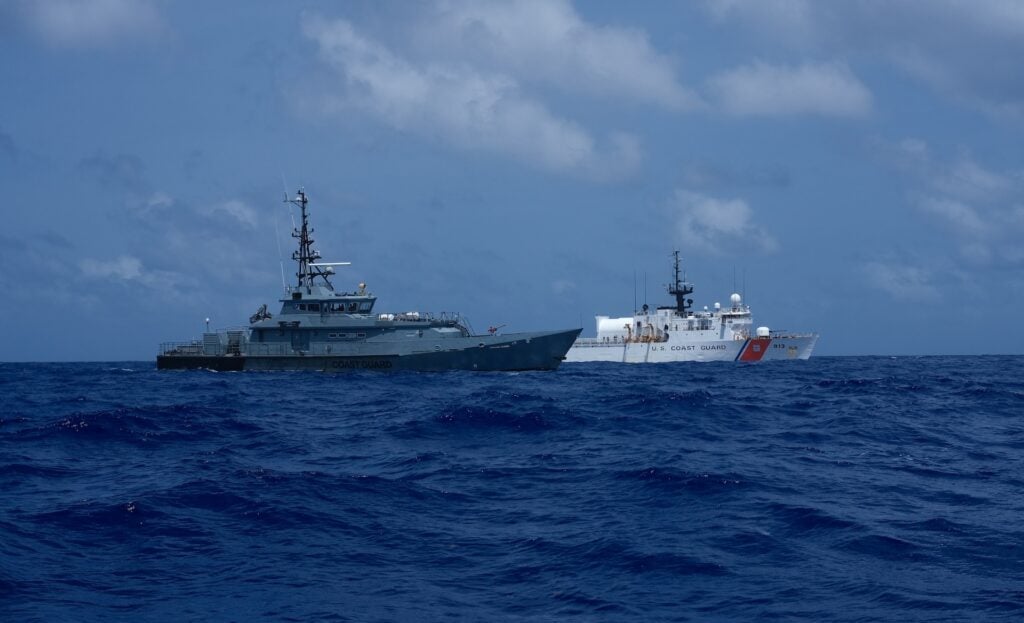
Strengthening maritime security in Jamaica also includes the modernization of its naval fleet and maritime response capabilities. In March, the JDF Coast Guard received four high-speed interceptor vessels manufactured by the U.S. company Metal Shark, as part of a broader modernization program that includes 22 units intended to enhance surveillance and interdiction operations in Jamaican territorial waters.
These capabilities are increasingly important as trafficking organizations continue adapting their tactics. Maritime traffickers frequently exploit large operating areas, nighttime movement, dispersed coastal zones, and rapid transfers between vessels to evade detection.
Despite progress, regional security officials continue to face significant challenges. Campos warn that criminal organizations are evolving quickly, using increasingly sophisticated logistical networks and exploiting gaps in maritime governance, surveillance coverage, and legal coordination across jurisdictions.
In this context, regional cooperation and sustained operational integration have become critical components of Caribbean maritime security. For Jamaica, continued coordination among national agencies and international partners is helping strengthen maritime domain awareness and improve the country’s ability to detect, track, and disrupt transnational criminal activity across one of the hemisphere’s most strategically important maritime regions.