

As Canadian company Sherritt International’s participation in Cuba’s nickel sector faces a period of uncertainty after initially announcing plans to withdraw from one of its joint ventures with the Havana regime, China is steadily expanding its technological support for the island’s mining industry. The introduction of Chinese-supplied equipment to modernize aging facilities is helping keep one of the Cuban regime’s principal sources of foreign currency operational while further integrating Cuba into critical mineral supply chains over which China exercises growing influence.
According to analysts, this trend raises concerns about strategic dependence, economic sovereignty, and the security of global supply chains.
“Cuba remains an important partner for Beijing from both a political and ideological standpoint,” Adam Ratzlaff, founder and CEO of the think tank Pan-American Strategic Advisors, told Diálogo. According to the expert, “China, which already controls a significant portion of global critical mineral supply chains, is well positioned to leverage its relationship with Cuba to further expand its influence and secure resources it considers indispensable.”
Cuba possesses some of the world’s largest nickel and cobalt reserves, concentrated primarily in the Moa-Nicaro mining district in the eastern province of Holguín. These minerals are essential for electric vehicle batteries, energy storage systems, renewable energy technologies, advanced electronics, and a wide range of industrial and defense applications.
Although Cuba accounts for only a small share of global production, its reserves are strategically important because they could be integrated into supply chains in which Chinese companies already play a dominant role, further strengthening Beijing’s position in a market considered critical to the technologies of the future.
As critical minerals become increasingly important to global supply chains, analysts warn that a larger Chinese presence in Cuba’s mining sector would not only provide the Cuban regime with additional revenue and technological support, but would also strengthen Beijing’s ability to expand its influence over supply chains that underpin the energy transition, advanced manufacturing, and key defense industries. This could increase many countries’ dependence on China-linked supply chains while expanding Beijing’s economic and geopolitical influence in the Caribbean.
The island’s strategic reserves
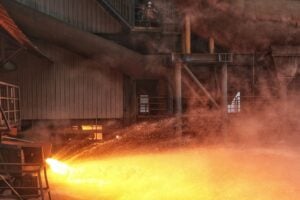
Moa’s nickel and cobalt deposits are among Cuba’s most important mining assets. Yet for years the island has lacked the financial, technological, and industrial resources needed to fully develop that potential. Mining operations in Moa are carried out by the Comandante Ernesto Che Guevara and Comandante Pedro Soto Alba companies, while the closure of the historic Comandante René Ramos Latour complex in Nicaro in 2012 significantly reduced the industry’s production capacity. Since then, output has depended on a limited number of facilities that have deteriorated after years of chronic underinvestment, deferred maintenance, persistent energy shortages, and broader economic mismanagement under the Cuban regime.
The combination of deteriorating industrial infrastructure, shortages of investment capital, and limited access to financing has increased the Cuban regime’s dependence on foreign partners capable of providing financing, equipment, and technology. In this context, Ratzlaff noted that “Chinese purchases of critical minerals could become an important source of revenue and foreign currency for the Cuban regime, bringing the two countries even closer together.”
Beyond purchasing the mineral itself, analysts warn that greater involvement by Chinese companies and technology could deepen Cuba’s structural dependence on Beijing to keep one of its strategic industries operating and maintain access to international markets.
At the same time, Chinese companies control approximately 75 percent of Indonesia’s nickel refining capacity, making them dominant players in the world’s largest nickel-producing country. Integrating Cuban production into China-linked supply chains would further reinforce that position. Nickel prices have fallen from more than $40,000 per metric ton in 2022 to around $15,000 in 2025, largely because of oversupply from Indonesia. This trend has strengthened Beijing’s position in the global supply chain, reducing the bargaining power of many producers while increasing exporting countries’ dependence on China-linked supply networks.
Lower prices have also increased the financial pressure on higher-cost producers such as Cuba, making support from external partners capable of providing technology, equipment, and market access even more important.
Beijing’s expanding role
China is among the principal destinations for Cuban nickel exports. According to data from the Observatory of Economic Complexity, China imported more than $53 million worth of nickel from Cuba in 2024.
Beijing’s interest, however, extends far beyond trade. China’s strategy seeks to secure access to critical minerals from extraction through processing and refining, strengthening supply chains over which it already holds a dominant position. Bringing Cuba into that ecosystem would further expand its influence.
As early as 2004, China and Cuba announced a joint investment of more than $500 million to modernize the Camarioca plant in Matanzas province through a joint venture with China Minmetals, although the project was never completed.
Two decades later, as the strategic importance of critical minerals continues to grow, China has renewed its technological support for Cuba’s mining sector. In April, the Ernesto Che Guevara plant began installing a new Chinese-supplied thickener designed to improve the efficiency of metal leaching and recovery processes.
“This demonstrates that, despite Cuba’s economic difficulties, the regime continues to rely on international patrons and is finding ways to generate financial margins,” Ratzlaff said. According to the expert, it also shows that Beijing continues investing in critical minerals it considers essential to its economic growth.
The Cuban case is part of a broader strategy through which Chinese companies have expanded their presence in lithium, copper, and other critical mineral projects across Latin America. Taken together, these investments allow Beijing to diversify its sources of supply, expand its influence over strategic resources, and strengthen supply chains essential to advanced industries.
Beyond critical minerals, cooperation between Beijing and Havana encompasses energy, infrastructure, telecommunications, and technology. According to analysts, China’s growing involvement in strategic sectors of the Cuban economy is helping consolidate Beijing’s presence in the Western Hemisphere while providing the Cuban regime with new sources of economic and technological support.
In this context, the growing integration of Cuba’s mining sector into China-linked supply chains extends well beyond economics. It illustrates how Beijing uses investment, technology, and market access to strengthen relationships with allied governments, expand its influence over strategic resources, and consolidate its position in industries that are critical to both economic prosperity and national security. According to analysts, the Cuban case also demonstrates how China’s support continues to provide the Havana regime with the resources needed to sustain strategic sectors of its economy despite the island’s prolonged economic crisis.
“It will become increasingly important,” Ratzlaff concluded, “for regional actors to work together to identify and counter the risks posed by China’s control of strategic industries and critical sectors of the economy.”