
Ecuador is intensifying efforts to trace transfers, companies, properties, and other assets linked to suspected criminal networks. Cases investigated in 2026 point to a strategy that seeks to go beyond arrests: reconstruct the flow of money, identify the business networks that move it, and target the assets that sustain illicit operations.
The Financial Action Task Force (FATF) considers asset recovery an operational priority. Financial investigations can identify assets, transactions, and individuals linked to criminal activity, while also uncovering new suspects, offenses, and evidence. Freezing, seizing, and ultimately confiscating those resources can prevent illicit proceeds from returning to the criminal economy and financing new operations.
Financial trail exposes criminal networks
An investigation launched in 2025 illustrates the scope of this strategy. Ecuador’s Attorney General’s Office opened the case after receiving a report on unusual transactions involving individuals and companies that allegedly used transportation, food services, and security firms to introduce illicit funds into the financial system.
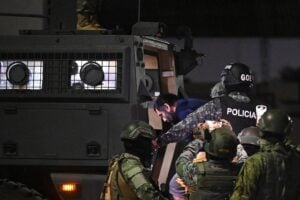
The investigation led to Operation Emporio Presidiario, carried out in mid-March 2026, in Guayas, Los Ríos, and Pichincha provinces. The National Police conducted 13 raids and arrested 11 people. According to authorities, a foreign national led the network through family-owned companies involved in transportation, food services, private security, and other activities.
Investigators also identified transfers involving Corganpecsa, a company linked to Inda Peñarrieta, the partner of Adolfo Macías, alias Fito, Primicias reported. The U.S. Department of the Treasury identifies Macías as the leader of Los Choneros, an Ecuadorian terrorist organization involved in drug trafficking and money laundering.
Ecuador’s Ministry of the Interior said the transactions under investigation spanned eight years and that the network had moved approximately $1.7 billion through Ecuador’s financial system. Interior Minister John Reimberg described the operation as “probably the biggest blow to Los Choneros’ criminal economy.”
Emporio Presidiario is not an isolated case. In April 2026, a judge ordered 19 individuals and five companies to stand trial in the Comandos de la Frontera case for the alleged laundering of nearly $398 million through heavy-transport companies, cattle businesses, and other activities. That investigation also originated from an unusual transaction report from Ecuador’s Financial and Economic Analysis Unit (UAFE).
From suspicious transaction to asset network
Financial information can provide a starting point for reconstructing broader relationships. According to UAFE, 87 percent of deposits recorded in accounts belonging to the mayor of Machala, in El Oro province, were made in cash. Many of the funds were withdrawn the same day or the following day. The agency also identified financial relationships between companies and municipal contractors.
“Criminal financial intelligence is a specialized area of economic intelligence focused on criminal prosecution. It seeks to analyze, pursue, and develop evidence to support criminal proceedings,” Edgardo Glavinich, executive director of the Sherman Kent Foundation, a Latin American think tank specializing in security, intelligence, and strategic governance, told Diálogo.
Following the money can also help locate assets acquired with funds of suspected illicit origin. In May 2026, a judge ordered an individual and PezyMar Export S.A.S. to stand trial for alleged money laundering and upheld the freezing of $66 million in bank accounts. The judge also maintained restrictions on assets and the company’s suspension and intervention.
The Attorney General’s Office presented UAFE reports, tax records, real estate purchase agreements, vehicle records, and financial, accounting, and corporate analyses. The case file indicates that approximately $13 million allegedly entered the financial system between 2021 and 2024 through the seafood export company.
“Funds from criminal markets can enter the formal economy. Trusts and other financial instruments are used,” Glavinich said. Once a property is acquired with those funds, he added, the asset becomes part of the formal economy.
From money to operational capability
Profits allow criminal organizations to sustain operations, expand networks, and penetrate legitimate activities. FATF therefore considers asset recovery an integral part of financial investigations and maintains that depriving these networks of their resources can disrupt and deter their operations.
The challenge extends beyond drug trafficking. “What is lacking is sufficient analysis of the activities: money laundering, human trafficking, trafficking in flora and fauna, illegal mining, among others,” Glavinich said. “We pursue money laundering and the financial assets of criminal organizations, but we do not prevent them. A mature and expanded economic intelligence system should generate alerts when funds are injected into the economy whose origin cannot be determined.”
In May 2025, FATF, INTERPOL, and the United Nations Office on Drugs and Crime emphasized that strengthening asset recovery would limit the ability of criminal and terrorist groups to expand. The organizations also called for more targeted financial investigations and greater international cooperation to trace illicit funds.
Cooperation extends financial tracking across borders
The speed at which money moves makes it necessary to expand investigations beyond national borders. In May, Ecuador, Colombia, and Peru conducted simultaneous controls at airports and border crossings to detect cross-border cash movements and exchange information on patterns and capital flows, according to UAFE. The operation also enabled authorities to share information on trends, profiling techniques, and typologies associated with cross-border movements of capital.
“Criminal organizations are not looking at borders; they are looking at regulatory frameworks and levels of punishment. If one country tightens its controls, they can shift their operations to another country,” Glavinich said. Without cooperation, he added, it is difficult to track networks whose financial flows “move with a click.”
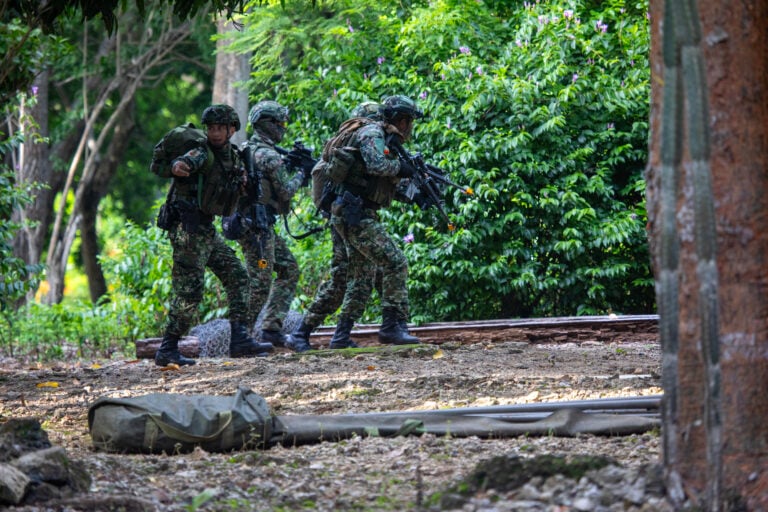
Ecuador strengthened that cooperation in March with the opening of the FBI’s first permanent office in the country, designed to facilitate intelligence sharing and coordinate investigations with the National Police. The office supports cases involving drug trafficking, money laundering, arms trafficking, and terrorist financing.
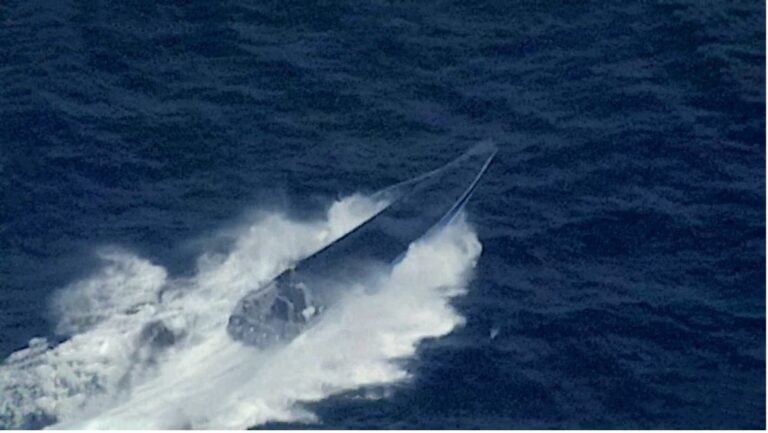
On August 20, the U.S. Department of the Treasury’s Office of Foreign Assets Control (OFAC) sanctioned 15 Ecuador-based targets and blocked 10 vessels linked to a cocaine trafficking network associated with Los Choneros and Los Lobos. According to the Treasury, the network used fishing companies as fronts and vessels based near Manta to support cocaine trafficking through the Eastern Pacific.
The case shows how financial tracking can reveal not only accounts and companies but also physical assets and logistical infrastructure linked to criminal organizations’ operations.
UAFE also exchanges information with the Treasury’s Financial Crimes Enforcement Network (FinCEN), facilitating access to information on accounts, companies, and transactions related to financial investigations. The United States also provides technical assistance and training to Ecuadorian officials.
Intelligence sharing is also integrated into broader mechanisms for cooperation against criminal networks. Ecuador is part of the Americas Counter Cartel Coalition, created in March 2026 to expand bilateral and multilateral cooperation against drug trafficking and other shared threats. In late August, that cooperation resulted in a coordinated operation between Ecuador and the United States against a vessel that, according to U.S. Southern Command (SOUTHCOM), was operating as a floating refueling station for drug trafficking operations in the Eastern Pacific.
Combining financial intelligence, asset identification, and operational action makes it possible to target different components of the same network, from companies and accounts to vessels and logistical nodes.
The challenge for Ecuador is to turn financial intelligence into action against the resources that sustain criminal networks. Cooperation with countries in the region and partners such as the United States expands that capability against organizations whose assets and financial flows cross borders. Analysis will also need to extend beyond drug trafficking to illicit markets such as illegal mining, human trafficking, and trafficking in natural resources.
“To achieve a sustained disruption of criminal organizations’ capital, the first step is to have asset seizure and forfeiture laws that make it possible to act against cash, property, vehicles, and financial assets,” Glavinich concluded.