

Ecuador, which until a decade ago was perceived as a relatively stable country in a region rife with transnational crime, now faces a pivotal test of its sovereignty. At the heart of this transformation are Los Choneros and Los Lobos, two powerful criminal structures the Ecuadorian government designated as terrorist organizations in January 2024. This landmark domestic classification followed a wave of unprecedented violence that forced the state to declare an internal armed conflict. These organizations have since then woven a complex web of illicit economies, backed by operational links to international cartels, International Crisis Group indicated.
The evolution of organized crime in Ecuador
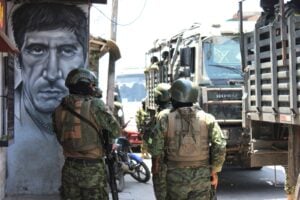
The inclusion of Los Choneros and Los Lobos on the list of terrorist organizations evidence that both groups have sophisticated their operations, establishing massive criminal corridors that range from drug production and trafficking to illegal mining, extortion, and prison violence. This includes systematic violence against authorities and the civilian population, local media outlet La Hora reported.
“It must be understood that both Los Choneros and Los Lobos are not independent criminal structures but are allied with much larger drug cartels operating outside the country,” Alexandra Zumárraga, a lawyer and former director of Ecuador’s National Social Rehabilitation System, told Diálogo. “Their leaders and funding come from abroad.”
Los Choneros, one of the oldest and most structured organizations in the country, emerged in 2005 in the province of Manabí. Since then, they have consolidated a network of influence that encompasses strategic ports, urban areas, and the prison system, exercising significant territorial control. Their hierarchical structure and armed capacity have established them as a central player in Ecuadorian organized crime, Argentine media outlet Perfil reported.
For their part, Los Lobos emerged as an independent organization in 2021. Originally a subordinate faction of Los Choneros, they capitalized on the 2020 assassination of Choneros leader Jorge Luis Zambrano, alias Rasquiña, to break away and lead a dissident coalition. This insurrection transformed them from a local gang into a national threat, partnering with international drug trafficking networks and venturing into illegal gold mining, which has allowed them to consolidate themselves as a dominant criminal actor in Quito, InSight Crime indicated.
The influence of international cartels
The Mexican cartels of Sinaloa and Jalisco New Generation (CJNG) have intensified their presence in Ecuador by partnering with these criminal gangs to move cocaine, using the country’s ports, border crossings, and financial systems. These ties are the essential engine of the conflict: Los Choneros serve as the primary logistical arm for the Sinaloa Cartel, while Los Lobos have risen to power through the direct backing of the CJNG. Balkan mafias have also found a way to smuggle narcotics into Europe via banana export routes, according to the Organized Crime Index 2025 of the Global Initiative Against Transnational Organized Crime (GI-TOC).
In addition, Colombia’s Clan del Golfo and dissidents from the Revolutionary Armed Forces of Colombia (FARC) are active in northern Ecuador, where they produce drugs, smuggle weapons, and extort local businesses, GI-TOC indicates.
During 2025, Ecuadorian security forces captured 20 high-value targets, including the historic extradition of José Adolfo Macías Villamar, alias “Fito,” to the United States on July 20, 2025. This extradition, made possible by the 2024 constitutional reforms, aimed to decapitate the Los Choneros leadership. However, this has accelerated an already ongoing phenomenon: the second major fragmentation of the local criminal map since the collapse of the unified Los Choneros command in 2020, Ecuadorian newspaper Primicias reported.
U.S. operational and military support
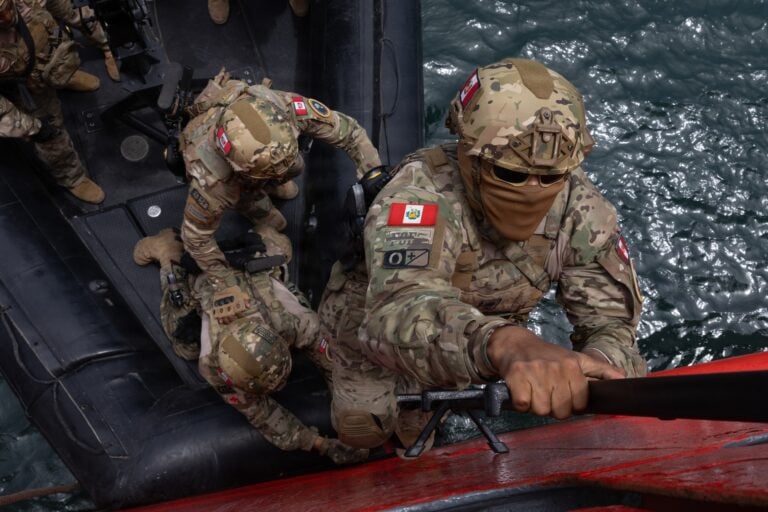
The partnership with the United States has evolved into a direct operational alliance. Following the U.S. designation of Los Choneros and Los Lobos as Foreign Terrorist Organizations (FTOs) on September 4, 2025, bilateral cooperation shifted toward high-stakes joint operations, with U.S. Southern Command (SOUTHCOM) providing real-time intelligence and aerial surveillance, as well as working in tandem with the Ecuadorian Navy to interdict high-speed smuggling vessels, resulting in the seizure of over 200 tons of cocaine in the Eastern Pacific in 2025.
the United States has also provided critical hardware and technology, including a fleet of surveillance drones specifically for naval domain awareness and the delivery of C-130H Hercules aircraft for rapid troop deployment. This is complemented by high-level intelligence sharing that has allowed the Security Bloc — the joint command of Ecuadorian Police and Military — to identify and dismantle over 35 transnational networks in 2024 alone. In January 2026, U.S. Deputy Assistant Secretary of Defense Joseph Humire visited Quito to further deepen these ties, signaling a move toward “joint targeting” efforts where U.S. technical expertise supports Ecuadorian special forces in precision raids.
Challenges and responses from the state
“The growing fragmentation of criminal gangs, driven by the capture, murder, or exile of their leaders, has generated internal friction between factions vying for leadership,” explained Tiziano Breda, senior analyst for Latin America and the Caribbean for Armed Conflict Location and Event Data (ACLED), a global monitor that collects, analyzes, and maps data on conflicts. “The disputes […] often originate in prisons, which act as operational centers for these groups, before spreading to the streets. Massacres in prisons and deadly clashes between organized crime groups contributed to a 42 percent increase in deaths recorded in the first 11 months of 2025.”
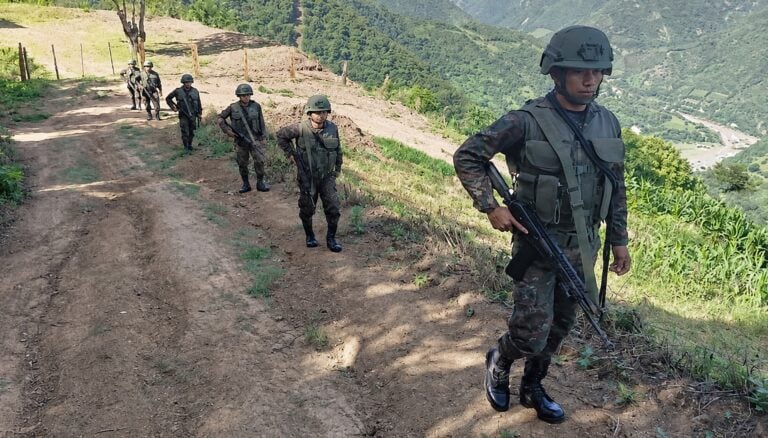
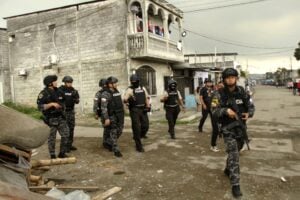
To counteract this situation, the Ecuadorian Armed Forces and National Police have deployed sustained operations in border and maritime areas, with the aim of dismantling the criminal economies that fuel Los Choneros and Los Lobos. In 2025, nearly 53,000 operations were carried out, resulting in the loss of more than $243 million for these criminal structures thanks to seizures of weapons, illicit substances, and the dismantling of key logistics routes.
One of the major challenges, according to Zumárraga, is that “in Ecuador there are visible and invisible leaders who are operators of a larger criminal structure, and this makes it difficult to dismantle.” The fragmentation of the criminal structure allows new leaders with stronger connections and external allies to emerge and support them.
During 2025, Reward Plan 131 was consolidated as a key tool for security forces, channeling more than $1.6 million in payments for strategic information that resulted in operations against organized crime.
In late December 2025, President Daniel Noboa declared restricted security zones around prisons, thereby expanding the operational powers of the Armed Forces in coordination with the National Police. The Ministry of Defense subsequently launched the Total Offensive phase on January 15, 2026, deploying 10,000 soldiers in the coastal provinces with the aim of ensuring an immediate response to any threat and closing the gaps exploited by organized crime.
“To close these gaps, coordinated work with different countries such as Mexico and Colombia is necessary, not only to eliminate leaders but also the criminal structure that sustains them,” Zumárraga concluded. This collaborative front represents a decisive step toward a future where the rule of law replaces the reign of terror.