

Chinese mining companies are steadily expanding their presence in Latin America, acquiring major mineral assets across the region and consolidating their position in the gold sector. As global competition for natural resources intensifies and gold prices remain elevated, Chinese state-linked mining groups are accelerating efforts to secure control over significant deposits in South America.
For governments and industry observers in the region, this growing Chinese footprint raises concerns that go beyond ordinary foreign investment. Analysts warn that the expansion of Chinese mining companies — backed by state financing and operating within opaque corporate and contractual structures — can shift control of strategic mineral resources away from local decision-making centers while complicating regulatory oversight, environmental enforcement, and transparency.
Recent acquisitions by the CMOC Group, one of China’s largest mining companies, illustrate the scale and pace at which Chinese firms are expanding their presence in the region’s mining sector.
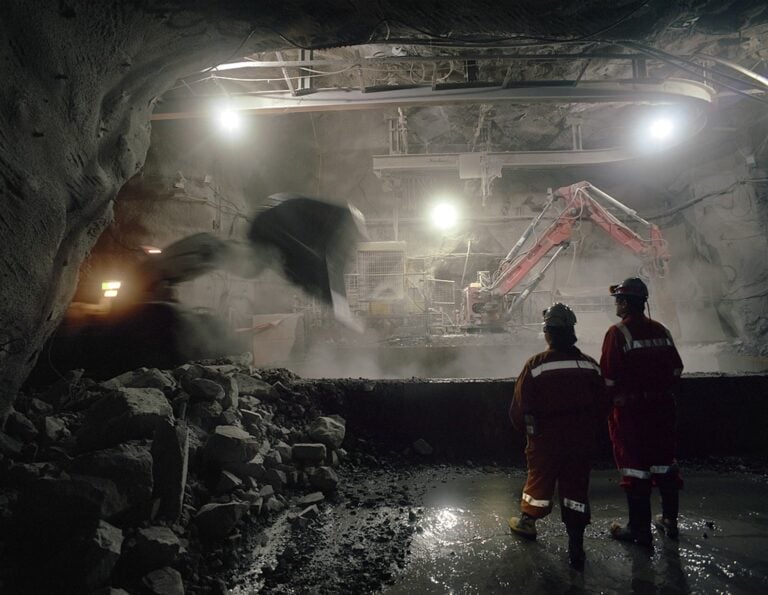
The CMOC Group expanded its portfolio of precious metals through a $1 billion deal to acquire the Brazilian operations of Canada’s Equinox Gold Corp., a transaction that closed in late January. The deal includes two entities, Leagold LatAm Holdings BV and Luna Gold Corp, which control several gold reserves and mines in the country. CMOC, whose main focus is on copper and cobalt, said the acquisition will add roughly 8 tons of annual gold production to its portfolio.
Six months earlier, the Chinese group had acquired the Canadian mining company Lumina Gold Corp. for approximately $422 million in Ecuador, in a deal that secured it access to that country’s largest gold reserve — the Cangrejos project. The acquisition significantly expanded CMOC’s footprint in South America and gave the company control over one of the most ambitious gold mining developments in the Andean region.
The acquisition in Brazil included the Aurizona Mine in Maranhão; the Bahia Complex, comprising the Fazenda and Santa Luz mines; and the RDM (Riacho dos Machados) Mine in Minas Gerais. The Cangrejos mining project, meanwhile, is located in Ecuador’s province of El Oro and covers approximately 5,000 hectares. Once developed, the project is expected to become one of the largest gold mining operations in the country.
Taken together, the two acquisitions represent a significant consolidation of gold assets under the control of a single Chinese mining group operating across multiple South American jurisdictions. Control of such deposits gives companies influence not only over extraction activities but also over logistics chains, infrastructure development, and export flows linked to the global gold market.
Lawyer, journalist, and strategic environmental consultant Antonio Fernando Pinheiro Pedro, former secretary of Climate Change for the city of São Paulo, points out risks associated with this expansion in Brazil.
“The Chinese system drives industrialization for itself and crushes the local industrial sector. It is their standard operating model, precisely because China acts and thinks like a large conglomerate, operating through cartelized and vertically integrated production and service delivery structures,” Pinheiro Pedro said.
The rapid expansion of Chinese mining companies has also raised questions about governance standards and transparency. Many Chinese overseas mining projects operate through complex networks of subsidiaries registered in multiple jurisdictions, a structure that critics say can make it more difficult for regulators and local communities to fully monitor the environmental and financial impacts of large extraction projects.
In gold mining regions across Latin America, environmental oversight and enforcement already pose significant challenges. Large-scale mining operations require strict monitoring of water use, waste disposal, deforestation, and land management. As Chinese companies expand their control over major concessions in the region, regulators face additional hurdles ensuring that national environmental standards are enforced, particularly when operational and financial decision-making is tied to parent companies in China, which can complicate transparency and oversight.
Similar concerns have emerged in other Chinese mining projects across the region. In Ecuador, the Mirador mining project — operated by a Chinese consortium — has faced criticism from environmental groups and local communities over deforestation, water contamination risks, and the displacement of residents in the Amazonian region. In nearby Zamora-Chinchipe province, the Chinese-owned Fruta del Norte gold mine has also highlighted the security and governance challenges that often arise around major gold deposits. The rapid development of large-scale projects backed by Chinese investment can attract illegal mining networks and gold trafficking operations seeking to exploit the economic activity generated around these sites.
The concentration of major gold reserves in the hands of Chinese mining groups also raises broader questions about economic sovereignty. When control over large deposits shifts to companies tied to China’s global resource strategy, decisions about production levels, project expansion, and the pace of extraction are increasingly shaped by geopolitical considerations and China’s strategic priorities, rather than by local economic interests. For countries whose economies depend heavily on mineral exports, this shift could influence not only local development but also long-term control over valuable natural resources.
Luiza Guitarrari, a researcher on oil, gas, and biofuels at FGV Energia — a think tank of the Getulio Vargas Foundation dedicated to the sector — draws attention, in a report by daily Valor Econômico, to the restrictions imposed by Beijing on the export of technologies and products related to rare earths.
“This move signals a trend toward ‘securitization’ in mining, where resources are treated as strategic assets of national power,” Guitarrari notes. “Thus, market control allows China to ensure energy security, commercial, and geopolitical influence, but also introduces elements of tension into the international landscape… Market control guarantees China energy security and influence.”
Although gold is not traditionally classified alongside minerals such as rare earths or lithium in strategic supply chains, the rapid expansion of Chinese companies into gold mining projects reflects a broader global strategy of securing access to natural resources. For Latin American countries rich in mineral deposits, the challenge will be ensuring that the development of these resources strengthens national economies rather than shifting control of valuable assets abroad.
As Chinese mining companies continue to expand their presence across Latin America, the growing concentration of gold assets under the control of Beijing-linked firms is emerging as a strategic concern for the region.