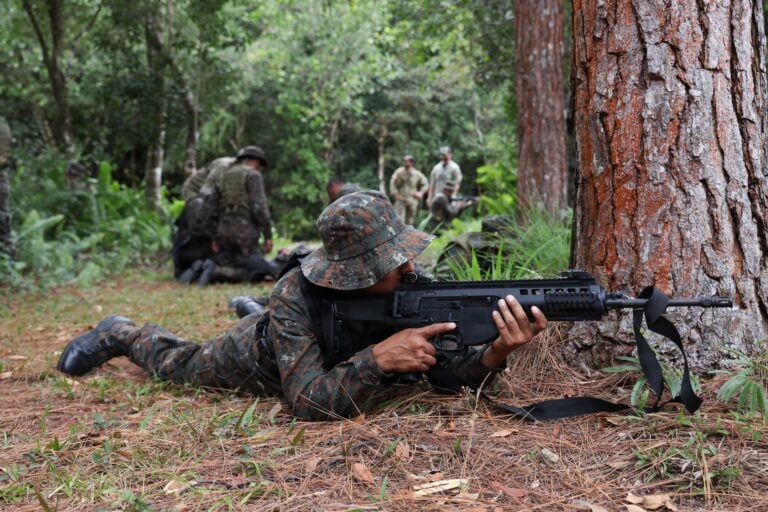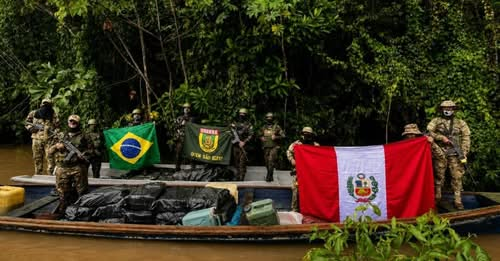

Panama and the United States concluded the annual bilateral exercise PANAMAX Alpha on July 27, strengthening interoperability, humanitarian response capabilities, and operational coordination between the two partners. Conducted with support from U.S. Southern Command (SOUTHCOM), the exercise brought together personnel from Panama’s National Air and Naval Service (SENAN), and Joint Task Force Bravo (JTF-Bravo) for humanitarian assistance missions, technical exchanges, and joint training activities.
The exercise focuses on enhancing bilateral cooperation, allowing both nations to refine security capabilities, improve logistics, and strengthen their ability to respond together to a range of operational and humanitarian scenarios.
“This year PANAMAX-Alpha focused on preparing forces for the higher tempo that will take place during the multinational exercise, PANAMAX, in August,” said U.S. Army Captain Mac Michael, JTF-Bravo lead PANAMAX planner. “With every mission and training scenario, we are building the muscle memory and tactical interoperability required for shared security challenges across the hemisphere.”
A major component of the exercise involved humanitarian support missions carried out with SENAN, Panama’s Ministry of health, Ministry of Education, and other government agencies.
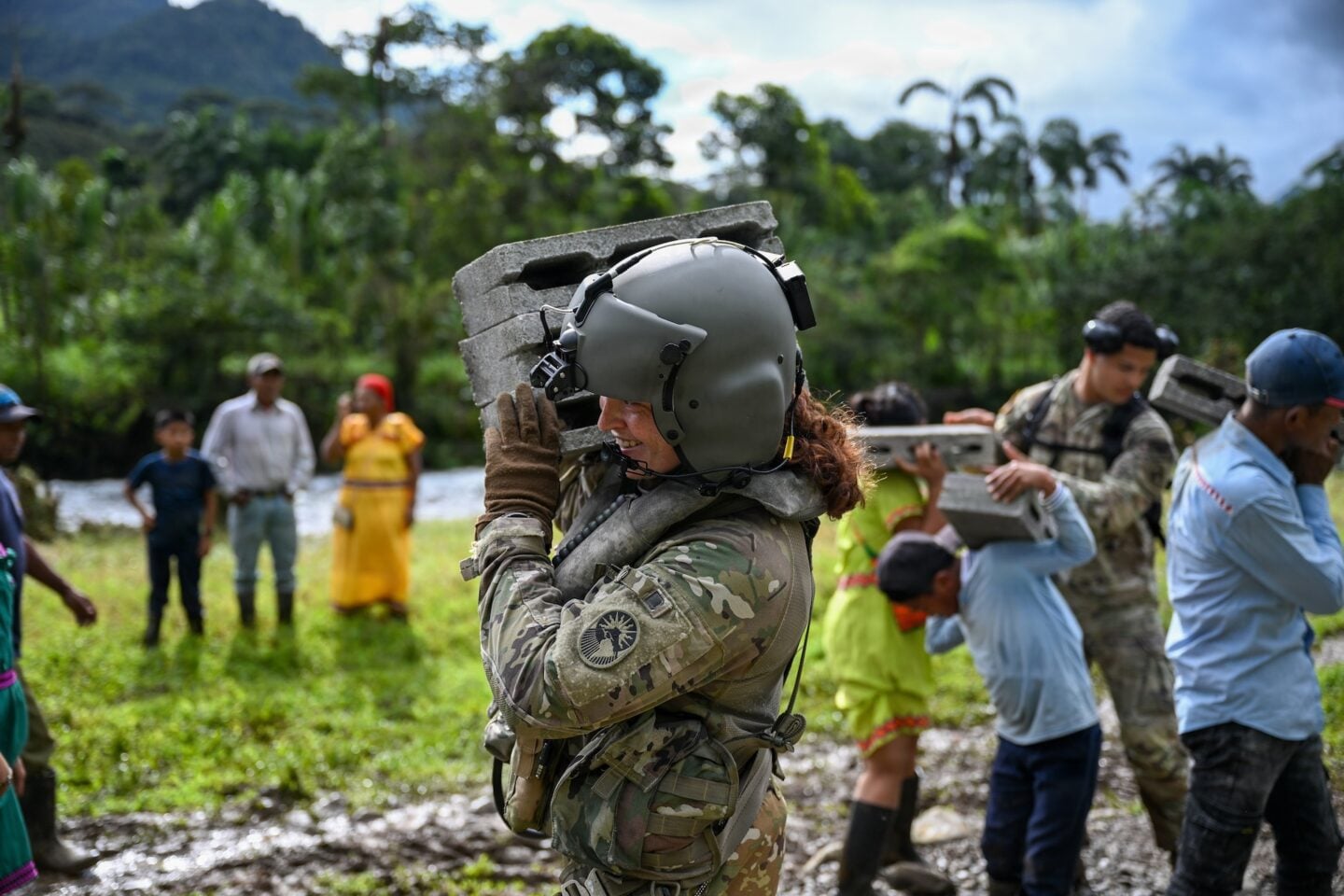
During three sling-load operations in July, U.S. Army aviation units and SENAN transported approximately 66,000 pounds of bridge construction materials to the community of Mayo in the Ngäbe-Buglé Comarca. The cargo—including steel cable spools, cement, and hollow blocks—will support construction of a bridge over the Cricamola River, improving safe access to school and essential services for local residents.
The exercise also supported Panama’s efforts to improve access to clean water. U.S. and Panamanian personnel transported six water tanks provided by Panama’s Ministry of Health to remote communities in Donoso Province, where they will benefit more than 4,000 residents.
“Delivering this vital support alongside our Panamanian partners proves our ability to unite and project strength in times of need,” stated Major Patrick Short, JTF-Bravo’s Civil Military Operations commander. “The success of every single delivery speaks to like-minded partners working together to protect our communities through humanitarian cooperation, enabling regional peace through stability.”
Beyond humanitarian operations, the exercise emphasized professional exchanges between U.S. and Panamanian personnel. SENAN members trained alongside U.S. Army soldiers on sling-load safety procedures, rigging techniques, and helicopter operations before conducting a full mission rehearsal that included Panamanian ground crews and pilots.
“Exchanging best practices with our Panamanian partners during these sling-load familiarization sessions ensures both our teams are capable of executing rapid-response missions at a moment’s notice,” said Captain Alicia Handy, Army Forces Headquarters Support Company commander. “We are stronger, safer, and more capable when we train together.”
The exercise also included bilateral air assault training involving U.S. Army aviation assets, U.S. Navy SEALs, and Panamanian special operations forces. During the training, helicopters inserted and extracted combined teams to strengthen coordination between air and ground elements.
“From a planning perspective, synchronizing U.S. Navy SEALs, Panamanian ground forces, and JTF-Bravo aviation assets highlights the true value of our regional partnerships,” said U.S. Army Captain Cameron Whiteside, 1-228th Aviation exercise planner. “We designed this aviation support package to push the boundaries of our joint, bilateral capabilities. This training exercise is more than just moving personnel; we are integrating different operating procedures into a single, seamless mission.”
U.S. Amry Lieutenant Colonel Nicholas Kalitka, 1st Battalion, 228th Aviation Regiment commander, said the exercise demonstrated the value of sustained cooperation between partner nations.
“Regional stability is built on a foundation of trusted partnerships and shared commitment,” Lt. Col. Kalitka said. “PANAMAX Alpha has demonstrated that our enduring partnerships allow us to seamlessly coordinate humanitarian aid and protect vital infrastructure. This exercise improves the interoperability of participating nations, ensuring their collective readiness to respond to the challenges of the 21st century.”
The exercise concluded after several weeks of humanitarian assistance missions, technical exchanges, and combined training, reinforcing the longstanding security partnership between Panama and the United States while strengthening the interoperability needed to respond together to future regional challenges.