
The Dominican Republic plays a key role in Caribbean security and in regional efforts to combat transnational organized crime. Its strategic location, maritime interdiction capabilities, and close cooperation with the United States and other allies have positioned the country as an important security partner in confronting criminal organizations that increasingly operate across borders, maritime routes, and international networks.
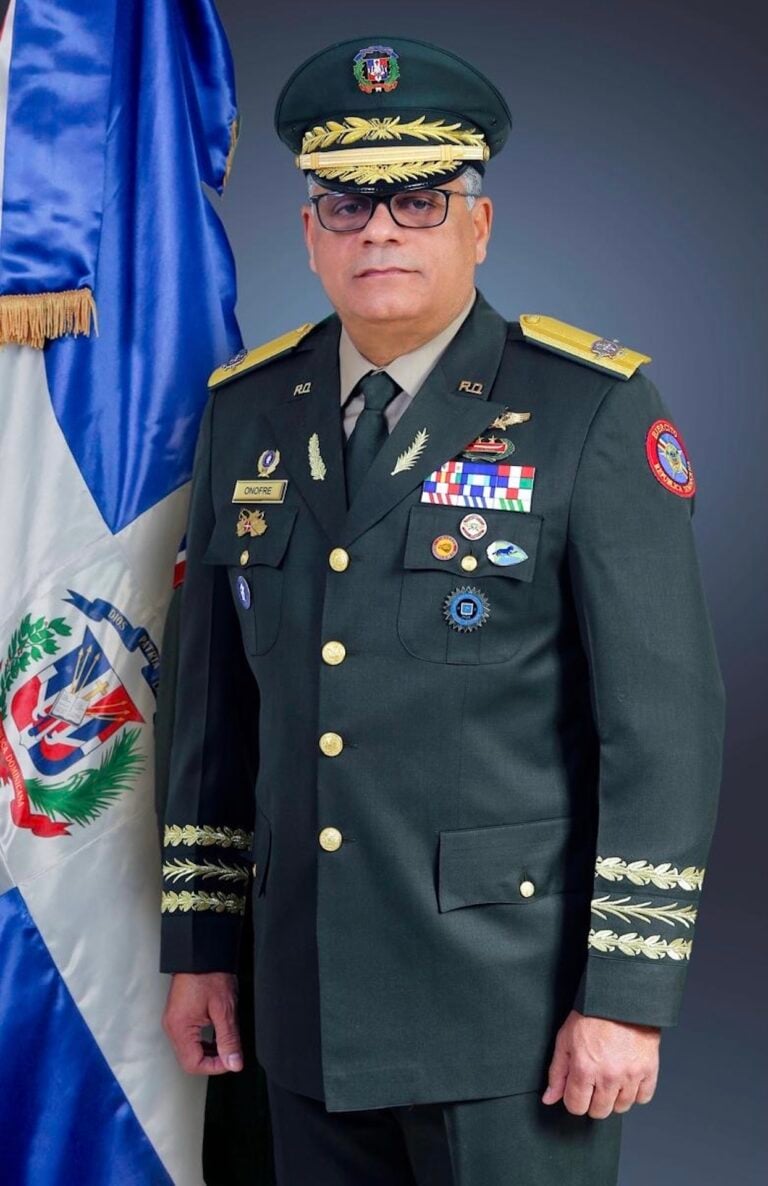
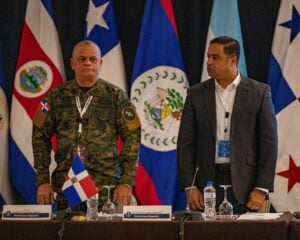
Against this backdrop, during the second Americas Counter Cartel Coalition forum, held August 11-12 in Panama, Diálogo had the opportunity to speak with Dominican Republic Minister of Defense Lieutenant General Carlos Antonio Fernández Onofre about his country’s role in the Coalition, regional counternarcotics cooperation, efforts to strengthen maritime security, and the strategic relationship with the United States.
Diálogo: Minister, the Dominican Republic plays an increasingly important role in Caribbean security and regional efforts to combat transnational organized crime. What does being part of the Americas Counter Cartel Coalition mean for your country?
Lieutenant General Carlos Antonio Fernández Onofre, minister of Defense of the Dominican Republic: For the Dominican Republic, being part of the Americas Counter Cartel Coalition represents, above all, a commitment to the collective security of the hemisphere and a reaffirmation of our determination to confront the threats posed by transnational organized crime in a coordinated manner.
Cartels and transnational criminal organizations have demonstrated an extraordinary ability to adapt. They recognize no borders, exploit new technologies, use different modes of transportation, and seek to establish connections across countries and regions. That is why no nation can confront this phenomenon alone.
For the Dominican Republic, this Coalition provides a platform to strengthen cooperation, share information, build capabilities, and coordinate efforts against common threats. Our country stands ready to continue contributing its experience, capabilities, and strategic position in the Caribbean to regional security.
The Dominican Republic is deeply committed to peace, stability, and security in the Caribbean. Our participation reflects our understanding that security is a shared responsibility and that we are prepared to work alongside our hemispheric partners with determination, professionalism, and respect for the sovereignty of each nation.
The message is clear: When criminal organizations operate transnationally, our response must also be transnational, coordinated, and sustained.
Diálogo: The Dominican Republic continues to achieve significant results in the fight against drug trafficking, particularly through maritime interdiction operations conducted by the National Drug Control Directorate (DNCD), the Armed Forces, the United States, and other partner nations. What lessons have these joint efforts provided for strengthening regional cooperation against transnational organized crime?
Lt. Gen. Onofre: One of the main lessons is that cooperation works when there is trust, timely information sharing, common objectives, and the ability to turn that information into concrete action.
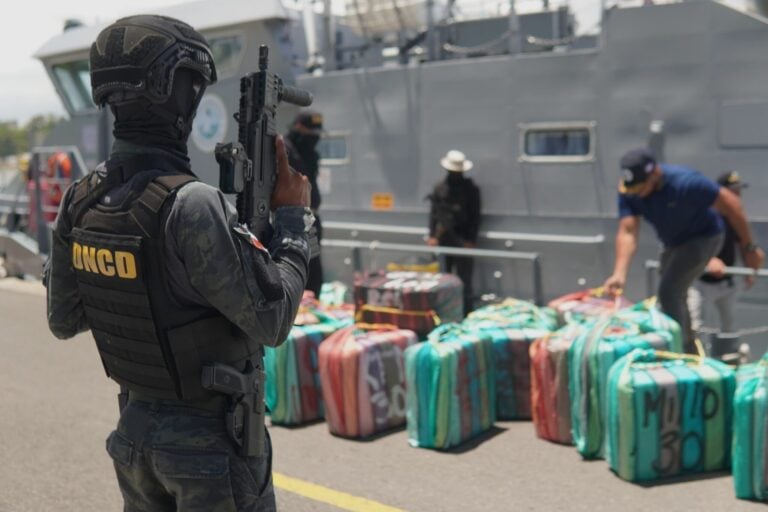
The results achieved by the Dominican Republic are the product of coordinated efforts among our institutions, particularly the National Drug Control Directorate, the Armed Forces, and the Public Prosecutor’s Office, together with the support and cooperation of our partner nations.
In the maritime domain, we have learned that timely information sharing can make the difference between detecting a threat and allowing a criminal organization to complete its operation. That is why we must continue strengthening mechanisms for intelligence sharing, surveillance, and operational coordination.
We have also learned that cooperation must be sustained. Criminal organizations constantly change their routes, methods, and means of communication. Our response must therefore be equally dynamic.
The Dominican Republic has embraced its responsibility as a regional partner and will continue working to make the Caribbean an increasingly secure region. The fight against drug trafficking requires shared responsibilities, capabilities, and knowledge.
Our experience demonstrates that when national institutions and partner nations work as a true security network, we significantly increase our ability to detect, intercept, and dismantle criminal organizations.
Recent developments in our counternarcotics operations confirm the value of this model of cooperation. In 2026, major joint maritime operations have demonstrated the level of coordination achieved between our institutions and international partners.
Diálogo: Transnational criminal organizations increasingly exploit Caribbean maritime routes to move drugs, weapons, and other illicit cargo. What capabilities do you consider essential to strengthening maritime security and maintaining pressure on these criminal networks?
Lt. Gen. Onofre: Maritime security requires a combination of human, technological, operational, and institutional capabilities.
First, we must continuously strengthen surveillance and maritime domain awareness. This means having better systems for detection, monitoring, information analysis, and coordination among the institutions responsible for national security.
Second, it is essential to continue developing our interdiction capabilities. Surveillance alone is not enough; we must be able to respond rapidly to a threat and integrate the necessary naval, air, and land assets.
Third, we must strengthen intelligence and information sharing with our partners. Criminal organizations do not operate in isolation, and neither can we.
Technology plays a fundamental role, but it must always be accompanied by the human element. We need highly trained military personnel and officials who are prepared to operate modern systems, analyze information, and make timely decisions.
Finally, we must strengthen international cooperation. The Caribbean is a shared space, and its security requires a regional vision. Coordination with neighboring countries, the United States, and other strategic partners allows us to expand our surveillance and response capabilities.
The Dominican Republic will continue investing in its capabilities and strengthening its institutions to prevent criminal organizations from using our territory, territorial waters, and trade routes.
Our goal is to maintain constant pressure on these networks, anticipate their movements, and make it increasingly difficult for them to operate.
Diálogo: In recent months, the Dominican Armed Forces have participated in multinational exercises such as DUNAS, CENTAM Guardian, and other training with allied forces. How do these exercises help improve interoperability and readiness to confront shared threats?
Lt. Gen. Onofre: Multinational exercises are a fundamental tool for strengthening the readiness of our Armed Forces because they allow us to train alongside our allies using procedures, standards, and scenarios that reflect today’s security challenges.
Interoperability is not achieved simply by acquiring equipment. It is built through joint training, mutual understanding, trust among institutions, and the ability to communicate and operate in a coordinated manner.
Exercises such as DUNAS, CENTAM Guardian, and other multinational training allow our soldiers, pilots, sailors, and specialists to learn the procedures used by other forces, identify opportunities for improvement, and strengthen their ability to operate as part of a multinational response.
These exercises also prepare us for a broad range of threats and challenges, from transnational organized crime to emergencies and natural disasters.
The Dominican Republic’s participation in these activities also demonstrates our Armed Forces’ commitment to continued professionalization and modernization.
One particularly important aspect is that the knowledge gained during these exercises remains within our institutions. Our service members return home with new experiences that can be incorporated into our training, planning, and force employment.
Ultimately, every multinational exercise strengthens our ability to act in a coordinated manner when our countries must confront a common threat. The interoperability we build during training becomes a real-world capability when the time comes to respond.
Diálogo: In June 2026, you met with U.S. Air Force Lieutenant General Evan Pettus, deputy commander of U.S. Southern Command (SOUTHCOM), and discussed issues including capability development, interoperability, and bilateral cooperation. What areas do you consider priorities for continuing to strengthen the relationship between the Dominican Republic and the United States?
Lt. Gen. Onofre: The defense relationship between the Dominican Republic and the United States is strategic, built on trust, mutual respect, and shared interests in regional security.
We consider five areas to be priorities for continued strengthening: information and intelligence sharing; maritime and air security; capability development; interoperability between our forces; and the education and training of our personnel.
We must also continue working together in emerging areas such as cybersecurity, new technologies, and critical infrastructure protection.
Cooperation with the United States gives us access to experience, expertise, and capabilities that contribute significantly to the modernization of our Armed Forces. At the same time, the Dominican Republic has demonstrated that it is a responsible and committed partner, willing to shoulder its share of the responsibility for regional security.
Our geographic location makes the country a strategic point in the Caribbean. Strengthening our capabilities therefore provides benefits not only at the national level but also contributes to the security of our neighbors and the entire region.
We deeply value U.S. support and, in particular, the relationship we have built with SOUTHCOM. We want to continue advancing toward increasingly effective cooperation based on shared objectives and stronger national capabilities.
Hemispheric security requires capable, reliable, and interoperable partners. The Dominican Republic is committed to remaining one of them.
Diálogo: Minister, looking ahead and considering the challenges facing the hemisphere, what message would you share with defense ministers and security leaders across the region about the commitment and cooperation needed to strengthen the fight against cartels and transnational criminal organizations?
Lt. Gen. Onofre: My message to the hemisphere’s defense ministers and security leaders is that we must remain united, share information, and embrace regional security as a collective responsibility.
Transnational criminal organizations are constantly evolving. They exploit borders, new technologies, differences in legal frameworks, and any opening they can find to expand their operations. We must be able to evolve faster than they do.
The response must begin with strong, professional, and committed institutions. We must invest in our men and women, technology, intelligence, training, and operational capabilities. Above all, however, we must strengthen trust among our countries.
The Dominican Republic firmly believes that regional cooperation is not an option but a necessity. The challenges we face are shared and require coordinated responses.
We must continue building mechanisms that allow us to share information in a timely manner, conduct coordinated operations, strengthen our borders and maritime and airspace security, and close off the spaces criminal organizations exploit to operate.
We must also recognize that the fight against organized crime goes beyond drug seizures. We must target financial structures, logistics networks, arms trafficking, money laundering, and all the mechanisms that allow these organizations to sustain and expand their operations.
The Dominican Republic will continue doing its part. Our nation is committed to defending its sovereignty, protecting its people, and safeguarding Caribbean security.
To our hemispheric partners, I say: The challenges know no borders; neither should our response. United, coordinated, and determined, we can make the Caribbean and our hemisphere safer, more stable, and more resilient.
That is the Dominican Republic’s commitment.