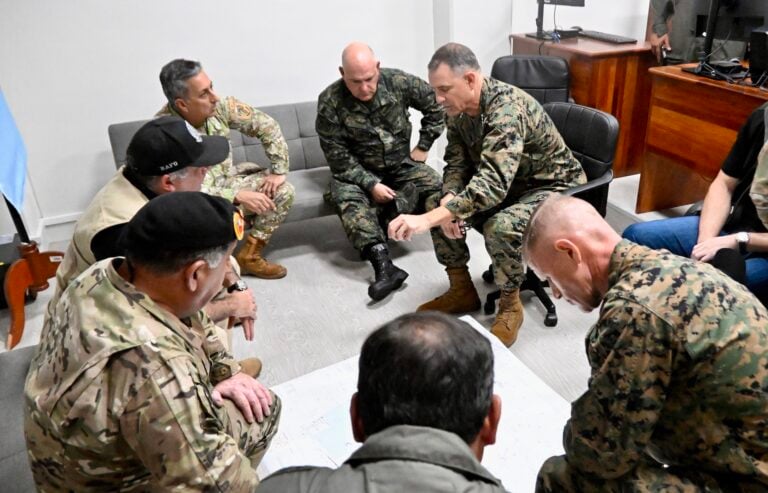
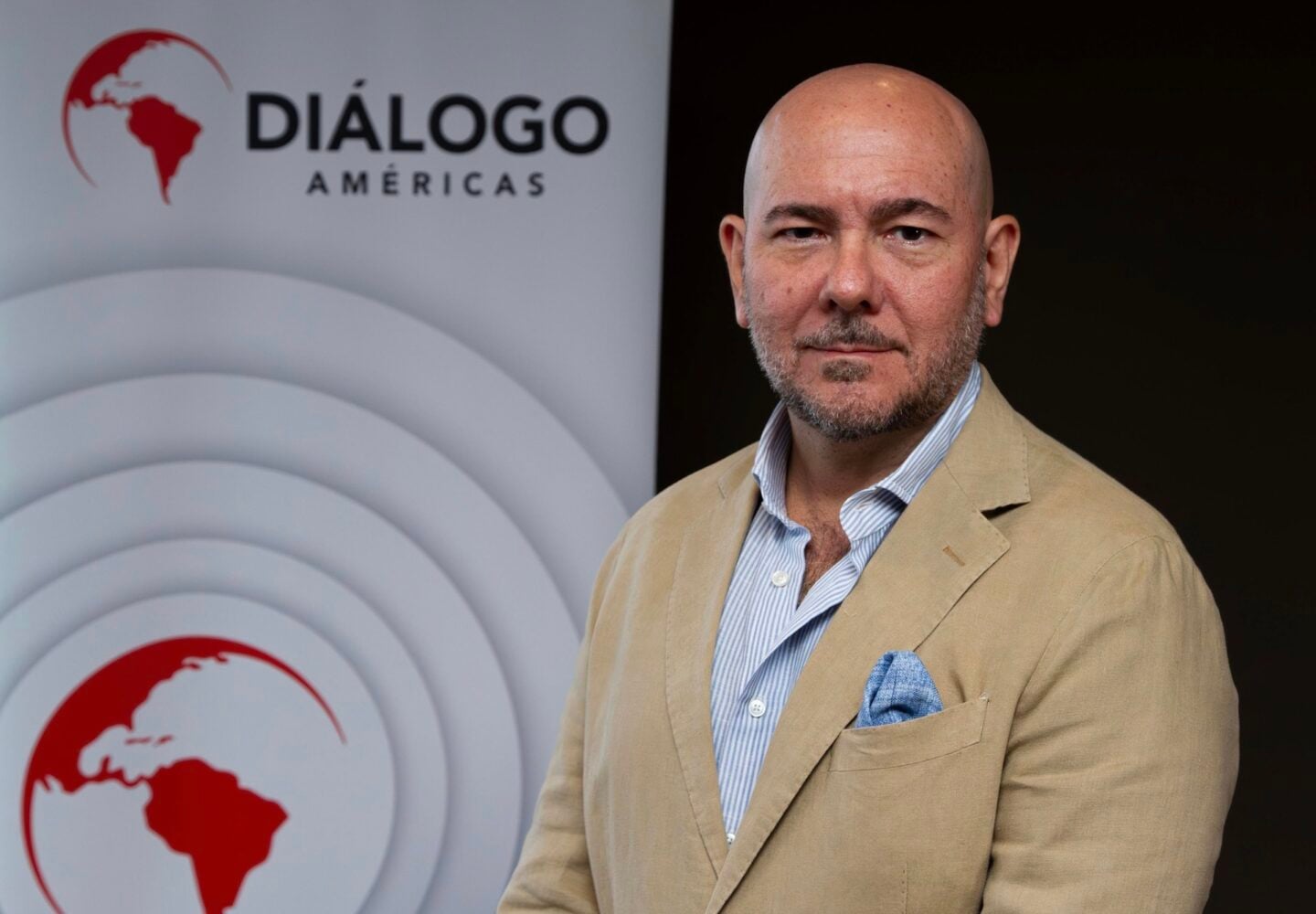

The Americas Counter-Cartel Coalition is moving from planning to action. At its second meeting, held August 11-12 in Panama, defense and security officials from across the hemisphere analyzed transnational criminal threats, trafficking routes, and logistical networks and began identifying areas for joint action.
Against this backdrop, Diálogo spoke with Ecuador’s Minister of National Defense Gian Carlo Loffredo about his country’s role in this new phase of the coalition, cooperation with the United States, efforts to strengthen security along the border with Colombia, and the capabilities Ecuador is developing to combat organized crime.
Diálogo: Minister, thank you very much for your time. What is your assessment of this second meeting of the Americas Counter-Cartel Coalition?
Ecuador’s Minister of National Defense Gian Carlo Loffredo: Good morning and thank you very much for the invitation.
I am definitely very pleased with the meeting we held yesterday [August 11] and very optimistic about everything that has been accomplished. Our first meeting in March was about establishing the framework and signing the agreements. This was already a working meeting in which we identified the threats we are confronting as a region, the actors behind those threats, the routes and logistics they use, and their modus operandi.
We also identified the critical nodes where we will target each of these structures throughout their drug trafficking supply chains — and not only drug trafficking but also related crimes such as illegal mining and fuel trafficking.
Diálogo: Ecuador has become a strategic partner of the United States and a regional leader in the fight against organized crime. What are your expectations from this new phase of the coalition, and what should the priorities be?
Minister Loffredo: Ecuador is leading these efforts. We have been firmly confronting narcoterrorism for quite some time. We are seen in the region as a country that takes the initiative and is leading the way. The United States sees us as a country capable of being an effective and efficient ally in this war against narcoterrorism.
As for the priorities, we are going to form the first working groups, and if everything goes according to plan, the first joint operations as the Americas Counter-Cartel Coalition will begin in November. We have already been carrying out joint operations with the United States, but now we will be doing so as a regional team confronting the threat.
Diálogo: Cooperation with the United States has intensified through initiatives such as Secure Border (Frontera Segura) and an increasingly close relationship with U.S. Southern Command (SOUTHCOM). What concrete results is this strengthened cooperation producing?
Minister Loffredo: We have an agreement that the U.S. Department of State’s Bureau of International Narcotics and Law Enforcement Affairs (INL) is also working on. We are working with the National Police and Ecuador’s National Customs Service (SENAE) on the Secure Border initiative. But beyond that, we are already seeing stronger border control, with investment from Ecuador as well as cooperation from the United States.
The United States definitely wants an ally that is also committed to strengthening its own capabilities. Within this framework, U.S. cooperation is becoming increasingly effective, and cooperation with SOUTHCOM is increasingly rapid. We are moving toward a more fluid, real-time exchange of information that will give us the intelligence we need to conduct timely operations. We are also talking about resources and capabilities that continue to increase through our cooperation with SOUTHCOM.
Diálogo: With Colombia joining the coalition — a key partner for Ecuador — what opportunities does this create to strengthen security along the shared border?
Minister Loffredo: In Panama, I had a bilateral meeting with my Colombian counterpart, and there is a great deal of optimism. There has already been a rapprochement between the presidents, and we are discussing holding our first binational cabinet meetings as soon as possible.
During that bilateral meeting, we agreed to work continuously along the border and with much greater, much more fluid interoperability. This Counter-Cartel Coalition gives us precisely the framework we need for information sharing and for mirror operations or hammer-and-anvil operations. The idea is to maintain control along this border corridor.
Diálogo: What was your impression following that first bilateral meeting with your new Colombian counterpart?
Minister Loffredo: One of complete openness — of trying to make things as unbureaucratic as possible and moving immediately to action.
Diálogo: In addition to military operations, Ecuador has sought to engage the public through initiatives such as the 131 hotline. What results has the hotline produced, and what role are citizens playing in the fight against organized crime?
Minister Loffredo: It is a very important hotline, supported by the United States. It allows people to provide information confidentially and can lead to a financial reward if the information results in the capture of a mid- or high-value target. It has been extremely useful.
We conduct campaigns in Ecuador to encourage people to use the hotline. We have run advertising campaigns and also promote it in our day-to-day activities. We have printed dollar bills with the number 131 to encourage people to use it. The public has responded very positively, people use the hotline, and it has helped us carry out effective operations. It is an initiative that I strongly support and that we work to strengthen every day.
Diálogo: What do you think has changed in Ecuadorians’ perception of security?
Minister Loffredo: Little by little, the perception is that fear is shifting from citizens to criminals, because the streets belong to the citizens and prison is for criminals. That is what we are achieving.
With the new Encuentro prison, our maximum-security prison, criminals are so afraid of it that they ask to be extradited to the United States because they do not want to be there. They are completely cut off from communication, they lose the ability to lead their organizations, and once they enter, they are cast aside by the organization itself.
We are moving toward a second maximum-security prison with even greater capacity, which will probably instill the same fear among criminals. So there is a sense of optimism, of improvement, not only in security indicators but also in the economy. Without security, there can be no economic growth.
This shows that Ecuador is moving forward through a sustained effort led by President Daniel Noboa, who is definitely a very courageous president in the decisions he makes to confront organized crime.
Diálogo: Ecuador continues to strengthen the capabilities of its Armed Forces. How does this effort translate into greater security for its citizens?
Minister Loffredo: The capabilities of the Armed Forces are extremely important. We had governments in the past that deliberately sought to diminish the capabilities of the Armed Forces. Why? So that there would not be effective border control and this would benefit narcoterrorist groups.
Our mission is to strengthen these capabilities with a focus on the conflict we are confronting. These are modern conflicts; these are the modern threats affecting the entire region of the Americas. That is the objective: to strengthen our capabilities to address these threats, and President Noboa has demonstrated his commitment to that effort.
Diálogo: Looking ahead, what would you say to defense ministers and security leaders across the hemisphere about the cooperation needed to make these working groups more effective in combating transnational organized crime?
Minister Loffredo: My message is that we are facing a historic opportunity that we cannot afford to miss. Organized crime has been organized for a long time, and it is time for the good guys to organize and confront evil.
We cannot waste this opportunity. There are countries that still see this as something somewhat distant from them, but they should have no doubt that if they do not look at the countries that are already suffering from this scourge and learn from our experience, their time will come to confront it, and they will not be prepared.
So this is the time to put an end to this evil once and for all.