
Transnational criminal organizations increasingly operate across multiple countries, linking drug trafficking to logistics networks, ports, financial facilitators, and money laundering mechanisms. A single organization may manage cocaine production in one country, transit through another, shipment through a South American port, and the laundering of proceeds in a fourth jurisdiction.
To counter these networks, regional authorities are increasingly seeking to strengthen cooperation and information sharing, as demonstrated by the Letter of Intent signed in August by the prosecutor’s offices of Brazil, Chile, and Colombia.
“Today there is a consensus on the need for countries to sign agreements like this one for information sharing. Underlying this logic is the idea that crime is increasingly transnational,” Leonardo Paz, a researcher at the Center for International Intelligence and Foresight at Brazil’s Fundação Getúlio Vargas (FGV NPII), told Diálogo.
According to Paz, “if in the mid-20th century criminal groups tended to remain primarily within their own countries and, at most, move into border regions, today we have armed criminal groups, such as the First Capital Command [PCC] […] that are not only present in our region but are already engaged in transregional activity, with operations in North America and Europe.”
The Letter of Intent, which leaves open the possibility for new participants to join as operational initiatives advance, provides for continuous information sharing, the development of criminal analysis tools and investigative technology, the creation of a shared database, and consideration of a joint investigative body. For Colombian Attorney General Luz Adriana Camargo Garzón, “it is a guide for how to coordinate our actions so that we can carry out joint action against organized crime, properly exchange information, and communicate quickly.”
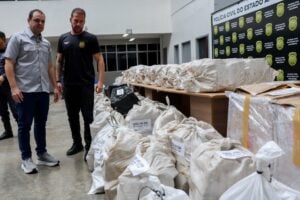
The goal is to go beyond drug seizures and use an investigation to identify the entire criminal structure. A container can lead investigators to a logistics network; that network to front companies, bank accounts, and real estate investments; and the financial flows, ultimately, to individuals at the highest levels of the organization.
From geographic borders to criminal networks
This approach is strengthening cooperation among national investigations by combining information, specialized expertise, and operational capabilities from different countries. For investigators, this means being able to draw on their partners’ expertise to follow a criminal structure beyond their own territory and act at the points where it is most vulnerable.
One example is the February arrest in Colombia of Gustavo Durán Bautista, who was wanted by Brazil and accused of leading a transnational drug trafficking and money laundering network. Colombian authorities carried out the operation in coordination with their Brazilian counterparts. According to investigators, the network allegedly shipped cocaine from Colombia to Uruguay, Brazil, Chile, Bolivia, and Argentina, using some of those countries as platforms for onward shipments to Europe, particularly Spain and the Netherlands. Colombian authorities also linked Bautista to a 496-kilogram cocaine shipment seized in Uruguay.
The case illustrates the importance of integrating information from different jurisdictions. Identities, communications, routes, companies, accounts, and seizures that may appear to be isolated events can, once connected, help reconstruct an organization’s structure and determine where to focus operations.
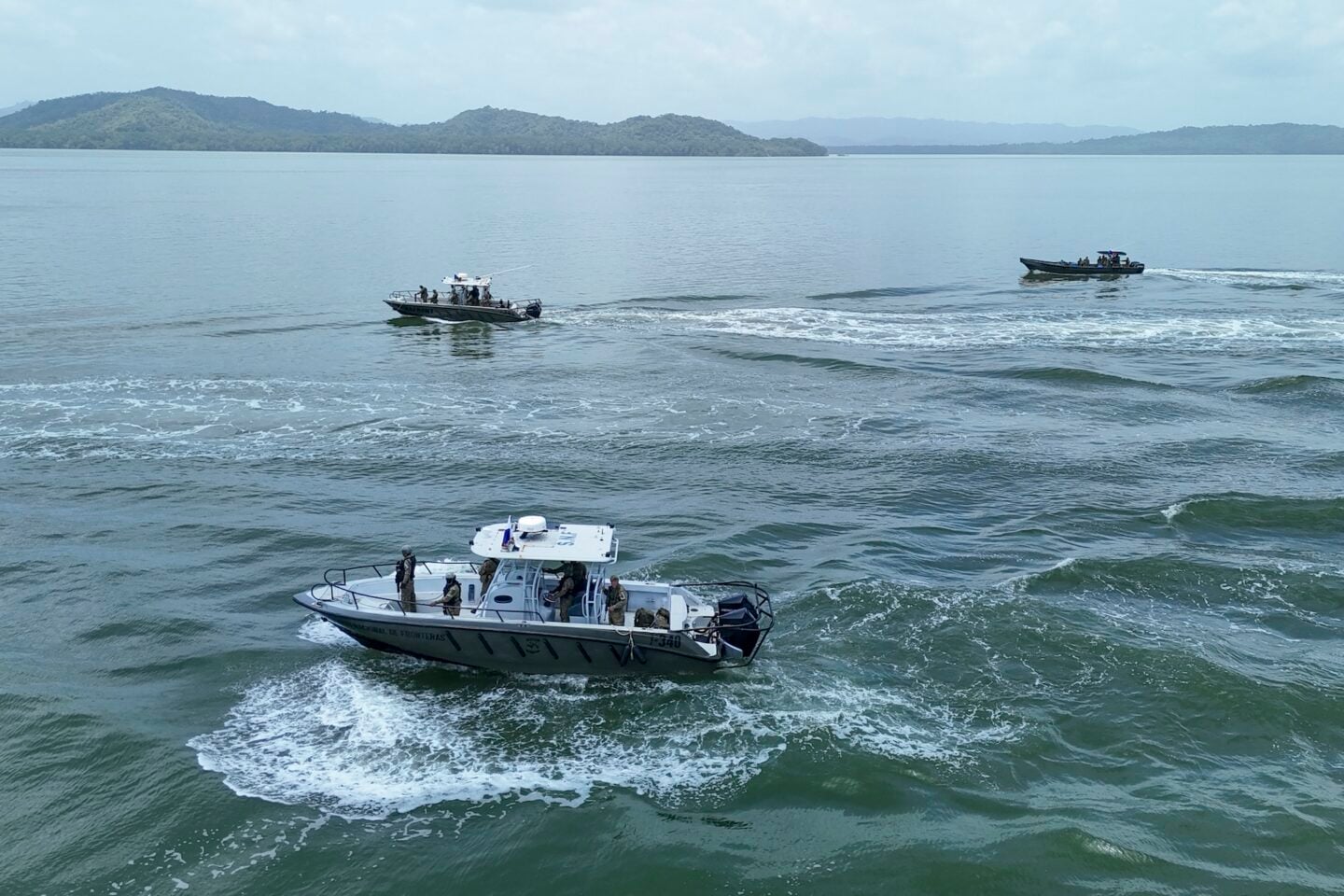
The exchange of specialized expertise is particularly important in complex environments such as the Amazon. In January, Brazil and Colombia signed a protocol for intelligence sharing between Brazil’s Federal Police and the Colombian Navy, with support from the United Nations Office on Drugs and Crime (UNODC), to strengthen cooperation against organized crime along transboundary rivers. The expertise of investigators familiar with Amazonian rivers, routes, local communities, and criminal organizations’ movement patterns can complement partner nations’ capabilities, allowing them to more quickly identify movements, vessels, and operators.
Following the money to strike at the structure
The financial dimension is another area where cooperation can have a significant impact. Seizing assets reduces an organization’s ability to rebuild its structure, even after its members are arrested.
One example is the Brazilian Federal Police’s Operation Commodity, launched in July against a transnational network accused of international drug trafficking and money laundering involving hundreds of millions of dollars. According to investigators, the group had branches in South America, Europe, and Asia and allegedly shipped about 6.5 metric tons of cocaine to Europe since 2021, concealing it in containers, including in sacks of coffee, cement, and mortar. At the same time, it allegedly used front companies, cripto-doleiros — illegal money changers who use cryptocurrencies to transfer, exchange, and launder money outside the traditional financial system — as well as luxury goods and real estate to conceal assets. Brazilian authorities ordered the seizure and freezing of approximately $196 million in assets.
The case shows how a financial investigation can broaden a criminal investigation. A seemingly legitimate company in one country may be linked to an account in another and to a property or cryptocurrency wallet in a third. Without the rapid exchange of such information, money can continue moving while authorities await the procedures necessary to obtain information from abroad.
Technology is making this dimension increasingly relevant. In August, Chile’s Investigative Police brought together officers from Brazil, the United States, Australia, Spain, Estonia, and South Korea to discuss new analytical tools and forensic software for tracing and seizing cryptoassets used by criminal organizations.
“The use of cryptoassets has been incorporated by countless organizations to move resources and make them more difficult to trace,” Johnny Fica, head of the Chilean Investigative Police’s Central Organized Crime Prefecture, told EFE.
Operation Capitales Ocultos 2026, coordinated by Chile’s Investigative Police in August within the framework of AMERIPOL, with the participation of agencies from different countries as well as financial and customs institutions, also demonstrated the effectiveness of joint financial investigations, contributing to the dismantling of 50 criminal structures and the seizure of millions of dollars in cash.
The emergence of a regional cooperation network
These mechanisms allow investigators to examine criminal organizations across different jurisdictions without necessarily having to wait for the conclusion of a national investigation before sharing relevant information with a neighboring country. A regional database, for example, can connect a name to an alias, a telephone number to a company, or a transaction to a property, providing connections that would be difficult to identify when each case is examined in isolation.
This trend was particularly evident in May, when Argentina, Bolivia, Chile, Ecuador, and Peru signed the Santiago Regional Commitment Against Transnational Organized Crime, which Paraguay and Uruguay subsequently joined. The countries agreed to create a technical-operational working group tasked with developing a common action plan with concrete measures and measurable, verifiable results. The areas identified include security, financial and tax intelligence, traceability, and migration and border controls. The Santiago Commitment also calls for presenting the initiative to the Organization of American States (OAS) to involve other countries across the hemisphere.
The initiative is part of a broader hemispheric framework. Several countries in the region also participate in the Americas Counter Cartel Coalition, a regional mechanism to strengthen cooperation against drug trafficking and criminal organizations in Latin America.
“Partnership among countries is essential given the current context, in which criminal groups are cross-border and transnational and operate in border regions. It is not possible to effectively combat a group of this kind without close and sophisticated coordination with neighboring countries,” Paz concluded.