

As PANAMAX 2026 unfolds in Panama, the exercise’s significance extends far beyond the number of participating countries or personnel. Its lasting value lies in what it leaves behind: command procedures, joint protocols, and interagency coordination mechanisms that continue to strengthen Panama’s ability to protect the Canal and other strategic infrastructure and respond to complex security challenges.
The multinational hemispheric security exercise, sponsored by U.S. Southern Command (SOUTHCOM) and conducted under Panama’s leadership and coordination, is designed to strengthen the protection of the Canal against a range of security scenarios. This year’s edition brings together more than 12 partner nations and approximately 1,500 members of security and police institutions in activities aimed at enhancing coordination, interoperability, and preparedness. Operations are being conducted with full respect for Panamanian sovereignty and the Canal’s permanent neutrality, Panama’s Ministry of Public Security (MINSEG) said.
The scenarios have evolved alongside the threats. Today’s exercise incorporates operational continuity, crisis management, critical infrastructure protection, cybersecurity, and interagency coordination activities intended to evaluate procedures and identify areas for improvement in the event of disruptions affecting strategic services linked to the Canal, MINSEG stated.
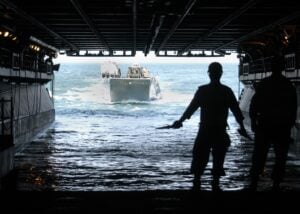
As part of the deployment, naval units and aircraft from participating countries are operating until the conclusion of the exercise. These activities are being carried out under the coordination and authorization of the Panamanian government in support of the security of one of the world’s most important maritime trade routes, the ministry noted.
Lessons turned into capabilities
Over more than two decades, PANAMAX has transformed security concepts into operational capabilities. Security analyst Armando Rodríguez Luna, of the Mexican consulting firm Nzaya, which specializes in security, law, and international governance, says the exercise has played an important role in strengthening Panama’s preparedness and institutional coordination.
“For more than 23 years, the impact of these types of exercises on Panama has been evident. They have contributed to the refinement of national defense plans and the development of joint action protocols, which have led to operational mechanisms for protecting the Canal in the maritime, land, and air domains, and, more recently, in cybersecurity,” he said.
The evolution of the exercise itself reflects how lessons learned have been incorporated over time. According to long-time participants, earlier editions focused primarily on traditional security threats against the Canal and did not include dedicated cyber elements. Recent iterations, however, incorporate cyber operations and planning activities alongside maritime, land, and air components, underscoring the growing importance of protecting critical infrastructure and command-and-control systems from digital threats.
The multinational command structure has also expanded. During PANAMAX 2024, multiple partner nations led functional component commands within the exercise, demonstrating a growing regional capacity to plan, coordinate, and direct combined operations. The shift advances one of PANAMAX’s core objectives: enabling partner nations to assume greater operational responsibilities while strengthening interoperability across the hemisphere.
That accumulated experience, Rodríguez Luna added, is reflected in contingency preparedness. “In the face of a threat against the Canal, there are procedures to establish command and execute containment or response measures. Mechanisms for multinational coordination and communication are also practiced, depending on the type of threat,” he noted.
Rodríguez Luna said that the exercise helps transform planning into operational capability. “First, threats are identified, and then effective action plans are developed. There are lessons that range from the theoretical to the practical, accompanied by the use of infrastructure, communication systems, and technologies that are part of the exercises,” he said.
Interagency integration
PANAMAX began in 2003 with a primary focus on protecting the Panama Canal from conventional security threats. Over time, it expanded to incorporate scenarios involving transnational organized crime, hybrid threats, cybersecurity, maritime defense, and disaster response.
The 2026 scenarios were developed by security specialists and coordinated with the National Crisis Coordination Council based on current potential threats affecting the Canal. They include conventional attacks, drone threats, cyber incidents, and simulations that escalate progressively into a coordinated multinational response.
This evolution illustrates a broader shift from a traditional security exercise toward a whole-of-government approach to crisis management. The inclusion of civilian authorities and national-level coordination bodies allows institutions to rehearse decision-making processes and response procedures that could be required during emergencies affecting Canal operations or other critical services.
For Rodríguez Luna, the ability to coordinate institutions based on the nature of a threat remains one of PANAMAX’s most important contributions. “It is clear that these other actors are becoming increasingly involved, not just from other countries, but also across agencies, depending on the type of threat” he said, referring to the selective participation of land, air, and maritime forces, as well as civilian institutions.
Sustained cooperation and interoperability
During a May 21 conference announcing PANAMAX 2026, Deputy Minister of Public Security Luis Felipe Icaza said that the current geopolitical environment requires Panama and its allies to continue strengthening their response and cooperation capabilities. Panamanian authorities emphasized that the Canal remains a national priority and a shared responsibility.
Rodríguez Luna agreed that the challenge now lies in building on what has already been achieved.
“For Panama, it is not only essential to maintain this type of exercise but also to deepen the cooperation and interoperability it helps develop. Maritime corridors already hold strategic importance for security and defense, and Panama is one of the most important globally,” he concluded.
Beyond Panama, PANAMAX offers a replicable model of how sustained training can be translated into doctrine, interoperability, and command capabilities in the face of quickly evolving threats. Protecting a strategic hub as the Panama Canal — through which approximately 5 percent of global trade passes — is not solely a national concern; any disruption would affect logistics chains and economies throughout the region.
The lessons generated through PANAMAX — from multinational command structures and cyber planning to interagency coordination and crisis-response procedures — are directly applicable to the protection of ports, maritime chokepoints, and critical infrastructure elsewhere in the hemisphere. In an environment where organized crime, hybrid threats, and cyber risks increasingly overlap, the decisive advantage lies not in accumulating more resources, but in integrating existing capabilities quickly and effectively.