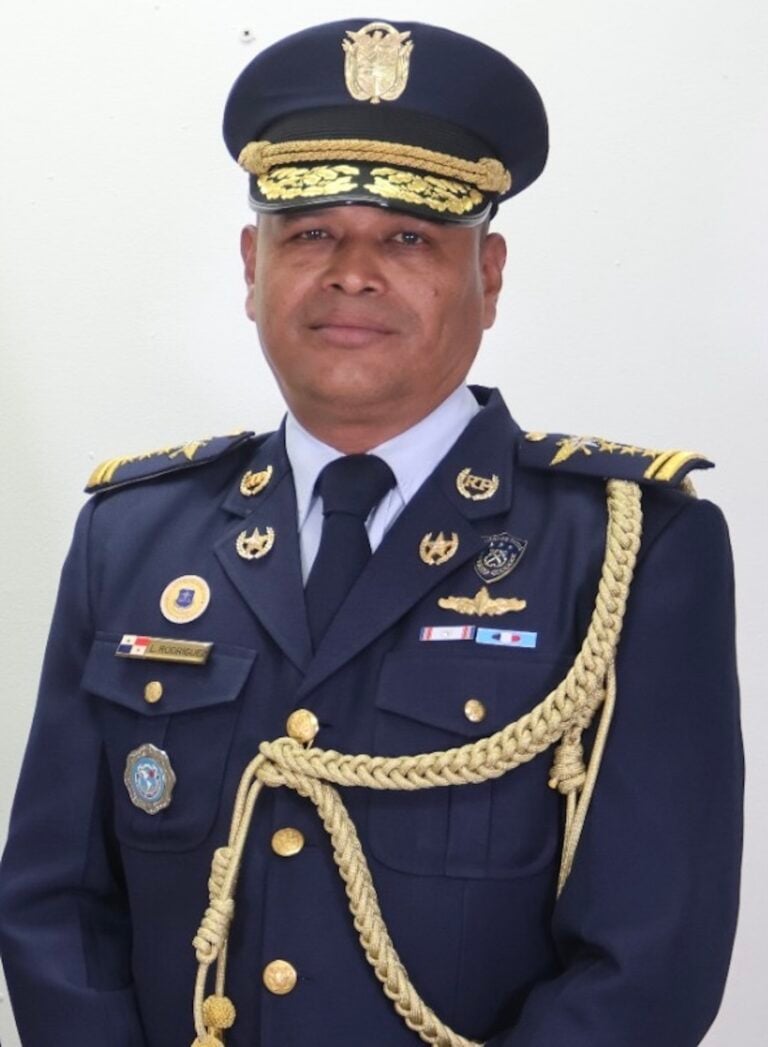

As the officer responsible for the planning and execution of PANAMAX 2026, Panama’s National Air and Naval Service (SENAN) Commissioner Luis Rodríguez plays a key role in coordinating the exercise with Panamanian institutions and participating partner nations. Drawing on extensive experience in operational leadership and security coordination, Commissioner Rodríguez oversees efforts to integrate national and international capabilities in one of the hemisphere’s most important multinational exercises.
In this interview with Diálogo, Commissioner Rodríguez explains how Panama establishes the exercise’s priorities, develops realistic training scenarios, and strengthens interagency coordination to protect the Panama Canal and other critical infrastructure.
Diálogo: From a planning perspective, what are the main objectives guiding PANAMAX 2026?
Panama’s National Air and Naval Service (SENAN) Commissioner Luis Rodríguez, lead planner and director of PANAMAX 2026: The PANAMAX multinational exercises have become a strategic tool for strengthening the security of the Panama Canal and enhancing international cooperation. Panama’s active participation has contributed to developing interagency capabilities, improving interoperability, and reinforcing response mechanisms to address threats that could affect regional security and global trade.
The exercise’s main objectives include protecting and defending the Panama Canal; strengthening international cooperation; improving interoperability among multinational forces; safeguarding global maritime commerce; simulating threats to critical infrastructure; coordinating responses to regional crises; integrating civilian and military agencies; and enhancing maritime and air security.
Diálogo: PANAMAX is often viewed from an operational standpoint, but the planning process behind the exercise receives far less attention. What is the primary goal of coordinating an exercise of this magnitude?
Commissioner Rodríguez: The primary objective is to achieve interoperability among the forces responsible for responding to any threat against the Panama Canal.
Diálogo: How does Panama determine PANAMAX’s operational priorities based on its own security needs and regional cooperation objectives?
Commissioner Rodríguez: As the host nation, Panama establishes the exercise’s operational priorities in accordance with its national security requirements and regional cooperation objectives. It also defines the training goals needed to strengthen the capabilities of participating institutions. The exercise is designed to improve coordination, interoperability, and response to potential threats or emergencies. In addition, Panama oversees planning, establishes the rules governing participation, manages the execution of exercise activities, and evaluates the results to ensure that the established objectives are achieved.
Diálogo: How does the planning team develop PANAMAX scenarios, and how do you ensure they reflect the real-world challenges Panama faces?
Commissioner Rodríguez: For multinational exercise PANAMAX, scenarios are selected and developed by a planning team composed of security personnel with expertise in exercise planning and design. The team operates under the supervision of the National Crisis Coordination Center (CNCC), ensuring that all activities align with the strategic objectives of protecting and securing the Panama Canal.
The scenarios are based on real-world threats, including asymmetric threats — such as actions carried out by extremist violent organizations — as well as sabotage, vessel boardings, human trafficking, illicit transit, weapons and explosives, and hostage situations that could disrupt Canal operations. As such, the exercise strengthens coordination, interoperability, and joint response capabilities of participating national and international institutions.
Diálogo: What are some of the biggest challenges in coordinating multinational forces and institutions within a Panama-led exercise?
Commissioner Rodríguez: From a planning perspective, one of the greatest challenges is coordinating the doctrines, procedures, and capabilities of different institutions. It’s also challenging to integrate communications, interoperability, and decision-making among military forces, security agencies, and civilian organizations. As the host nation, Panama works to ensure that all participating entities operate under shared objectives and maintain effective coordination.
Diálogo: The Panama Canal remains one of the country’s most strategic assets and a critical artery for global commerce. How does PANAMAX help Panama strengthen preparedness and coordination to protect the Canal and other critical infrastructure?
Commissioner Rodríguez: PANAMAX strengthens preparedness and coordination for protecting the Panama Canal by using scenarios that simulate real-world threats, including terrorism, sabotage, cyberattacks, and emergencies that could affect critical infrastructure. The exercise enhances joint response capabilities, interoperability, and coordination among the national and international institutions responsible for safeguarding the Canal and global commerce.
Diálogo: PANAMAX involves not only security forces but also civilian agencies and national institutions responsible for critical infrastructure and emergency coordination. Why is this interagency approach so important for Panama?
Commissioner Rodríguez: The interagency approach is essential because protecting critical infrastructure and responding to emergencies require the coordinated participation of multiple government institutions. The exercise brings together security forces, civilian agencies, and emergency response organizations to strengthen communication, cooperation, and the ability to respond comprehensively to complex situations that could affect national security and the operation of the Panama Canal.
Diálogo: How does PANAMAX strengthen coordination and trust between Panama and its regional and international partners?
Commissioner Rodríguez: Beyond the exercise, PANAMAX strengthens coordination, trust, and cooperation between Panama and its regional and international partners. It provides an opportunity to share experiences, improve joint procedures, and build strategic relationships among participating nations. This enhances the collective ability to respond to common threats while reinforcing regional security and the protection of critical infrastructure.