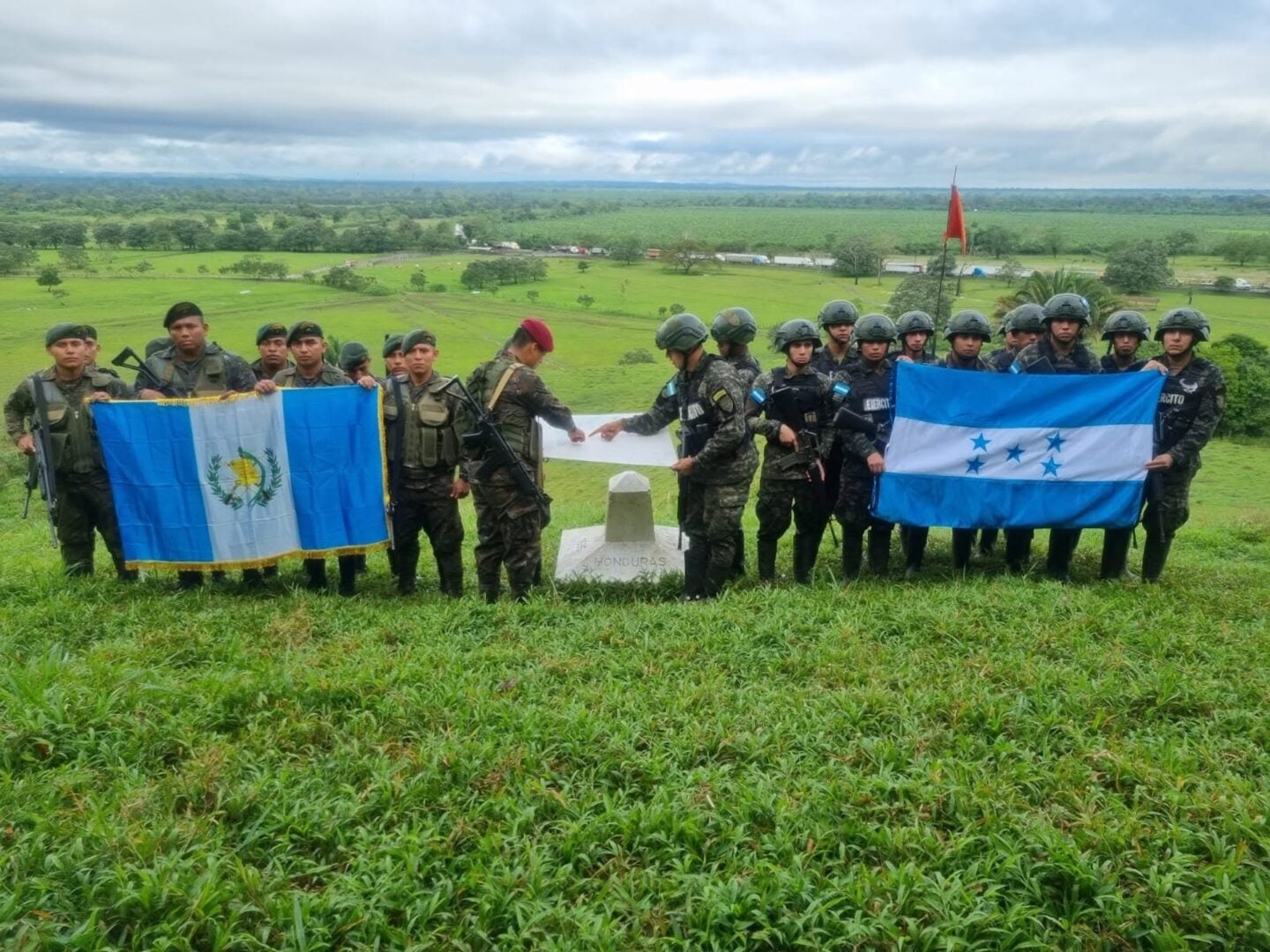

Recent armed incidents along the Honduras-Guatemala border have reinforced the need for closer coordination between the two countries as transnational criminal organizations increasingly exploit borders to move drugs, weapons, and other illicit goods throughout Central America. Strengthened military coordination, expanded information sharing, reinforced border surveillance, and continued cooperation with the United States aim to improve both countries’ ability to detect and disrupt criminal networks before they can expand their operations.
“Countries that share a geostrategic relationship, such as Guatemala and Honduras, can no longer address security in isolation; it requires a joint vision,” Mario Mérida, Guatemala’s former deputy minister of the Interior and founder of the National Institute for Strategic Security Studies, told Diálogo.
Criminal networks exploit shared borders
The Guatemala-Honduras border forms part of a broader corridor used by transnational criminal organizations to move narcotics and other illicit goods toward North America. Criminal groups increasingly combine maritime and overland routes, adapting their logistics to reduce risk and increase operational flexibility.
According to an analysis by the Colombian Navy’s International Center for Research and Analysis Against Maritime Drug Trafficking (CIMCON), the detection of coca crops and clandestine laboratories in both Guatemala and Honduras reflects an evolution in regional drug trafficking dynamics. Although production remains far below that of the major Andean producers, establishing cultivation and processing sites closer to trafficking routes allow criminal organizations to diversify their operations and reduce transportation costs and supply-chain vulnerabilities.
The adaptation of these trafficking networks is also evident in the Pacific. According to El País, authorities have documented increased maritime cocaine trafficking between Ecuador, Guatemala, and southern Mexico, illustrating how criminal organizations integrate maritime and land routes across Central America to sustain the flow of drugs toward international markets.
These operational challenges are compounded by broader structural vulnerabilities. In its 2026 Illicit Trade Index for Central America, the Transnational Alliance to Combat Illicit Trade (TRACIT) identifies challenging border controls, corruption, regulatory gaps, and illicit economies as factors that continue to facilitate transnational criminal activity throughout the region.
Violence reinforces military coordination
The need for closer coordination became particularly evident in May. On May 21, two separate attacks in northern Honduras left at least 24 people dead. Five police officers were killed during an operation against an alleged drug trafficking network near the Guatemalan border, while 19 people were killed in Trujillo, Colón department, in an area affected by violence linked to criminal organizations and disputes over strategic territory.
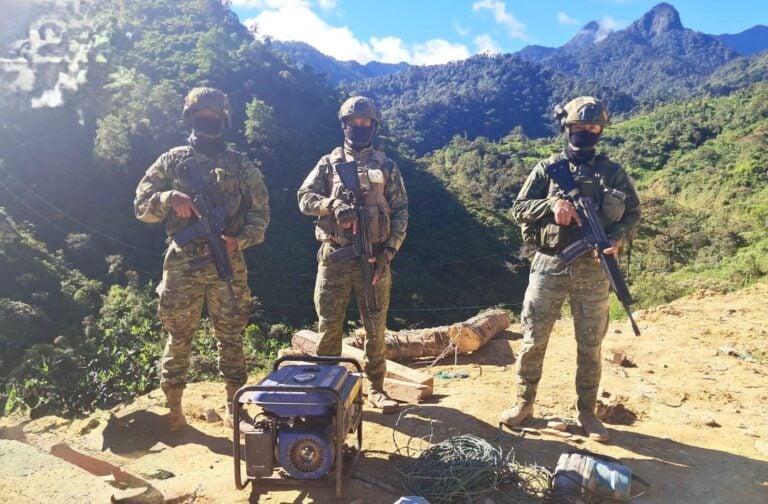
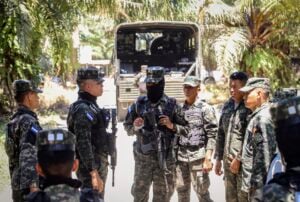
Days later, Guatemalan military personnel repelled an incursion by heavily armed individuals who entered the country through an unauthorized crossing from Honduras near Esquipulas, highlighting how criminal activity can rapidly affect both sides of the border.
Following the incidents, Honduran Armed Forces Chief of the Joint Staff Major General Héctor Benjamín Valerio Ardón met with Guatemalan military chief Major General José Giovani Martínez Millián to strengthen bilateral coordination. The commanders reviewed mechanisms for information sharing, coordinated actions against drug trafficking, weapons trafficking, and smuggling, and discussed reinforcing surveillance at official and unauthorized crossing points while improving interoperability between their forces.
“There is a common problem between Guatemala and Honduras,” Mérida said. “This is not a conflict between the two states, but rather involves a third party: the criminal organizations affecting both countries. The immediate response by security forces was important, but the next step is to turn that coordination into a permanent binational agenda.”
The effort advanced on July 9, during the Third Meeting of the Binational Commission, when Guatemala and Honduras agreed to reactivate the High-Level Security and Justice Group (GANSEJ), a bilateral mechanism designed to strengthen political, technical, and operational coordination on security and justice issues.
For Mérida, the reactivation “is a positive step, but it is only valuable if it translates into concrete actions.” Real change, he added, “occurs when countries move beyond merely exchanging information and begin to generate actionable intelligence together. Without that level of trust, cooperation can hardly translate into a strategic advantage against criminal organizations.”
US cooperation strengthens national capabilities
The United States continues to support both countries through separate bilateral partnerships that strengthen their capacity to confront transnational organized crime.
In June, Guatemalan President Bernardo Arévalo and Minister of National Defense Henry Sáenz met with U.S. Marine Corps General Francis L. Donovan, commander of U.S. Southern Command (SOUTHCOM), to expand cooperation against transnational criminal organizations and reinforce implementation of commitments under the Americas Counter Cartel Coalition. Guatemalan authorities emphasized that cooperation with SOUTHCOM strengthens national capabilities and improves coordination against threats that transcend national borders.
In Honduras, Attorney General Pablo Emilio Reyes Theodore met in July with Terrance Cole, DEA administrator, and officials from the U.S. Department of Justice’s Criminal Division to strengthen cooperation against drug trafficking and transnational organized crime. According to Honduran authorities, the discussions focused on expanding information exchange, enhancing investigative capabilities, and building on ongoing cooperation that has included joint investigations, technical assistance, and specialized training for prosecutors and investigators.
Mérida underscored the importance of these partnerships. “Guatemala and Honduras’s good relationship with the United States facilitates a greater exchange of strategic information,” he said. “The objective should be to develop preventive capabilities that send a clear message to transnational criminal organizations that there is a capacity for response, deterrence, and containment.”
Building a lasting security framework
For Mérida, increasingly sophisticated criminal networks require cooperation that extends beyond responding to isolated incidents.
“What is needed is permanent strategic intelligence, complemented by joint exercises that prepare security forces to confront threats that are no longer conventional but transnational,” he said.
The recent violence along the Honduras-Guatemala border demonstrated how quickly criminal organizations can exploit jurisdictional boundaries, but it also showed the value of rapid communication and coordinated action between neighboring countries. By strengthening military coordination, reactivating GANSEJ, and building on cooperation with the United States, Guatemala and Honduras are better positioned to improve border security, exchange timely information, and disrupt transnational criminal networks before they can expand their operations. Sustaining that momentum can help turn isolated responses into a more permanent and effective model of regional security cooperation.