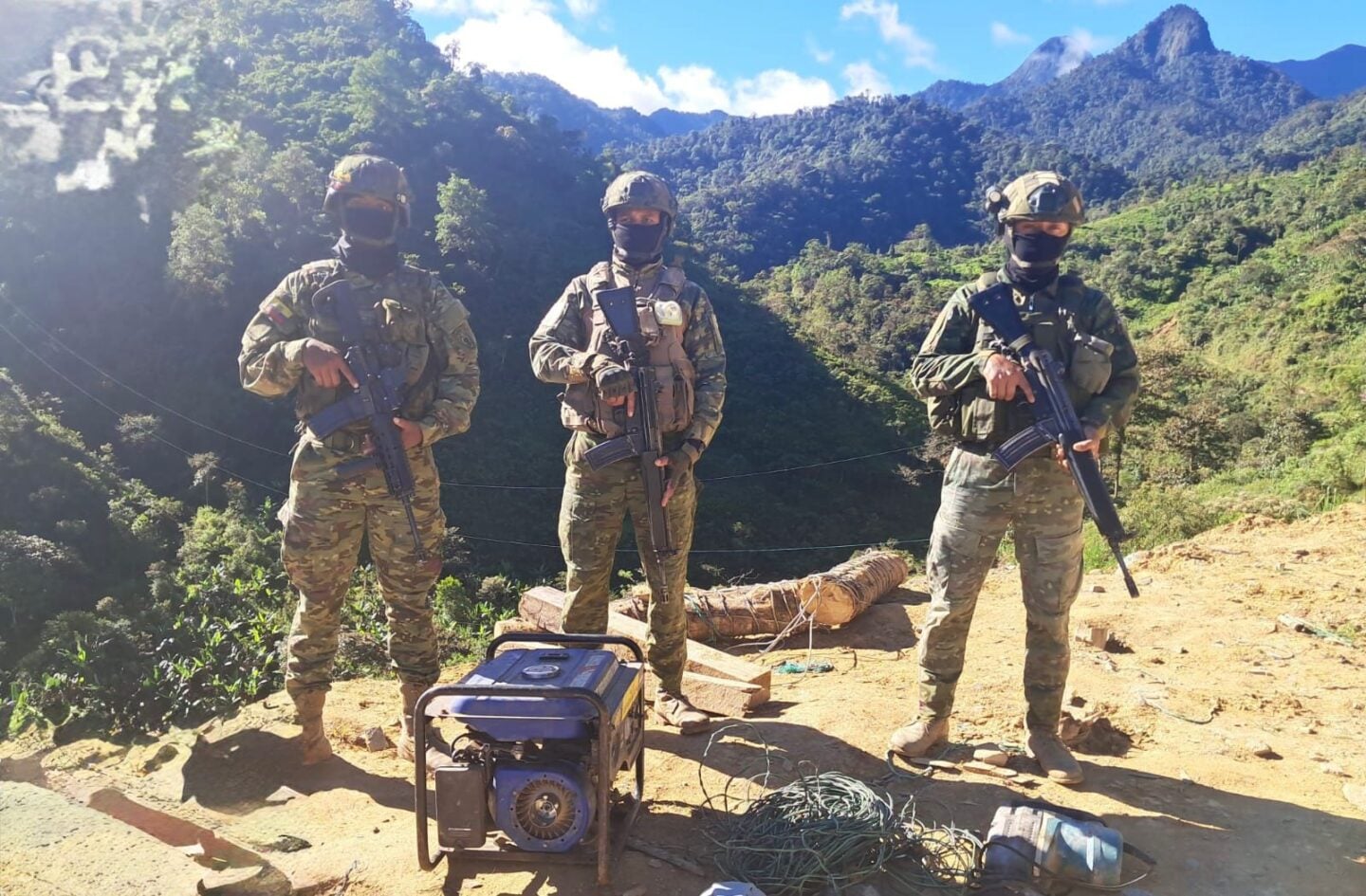

For transnational criminal organizations, Ecuador’s northern border remains a strategic corridor for drug trafficking, illicit arms trafficking, illegal mining, and other illicit economies. The Secure Border strategy, developed by Ecuador and the United States, seeks to reduce those opportunities by integrating intelligence, risk analysis, interagency coordination, and operational capabilities while supporting legitimate trade and strengthening security for border communities.
Ecuador and the United States formalized the initiative through an Implementation Letter signed on June 22. The agreement brings together the U.S. Bureau of International Narcotics and Law Enforcement Affairs (INL) and, on the Ecuadorian side, the Ministries of the Interior and National Defense, as well as the National Customs Service (SENAE).
“Through this action, Ecuador and the United States reaffirm their commitment to working together to confront transnational threats, strengthen border security, and build more effective institutions for the benefit of citizens,” Ecuador’s Ministry of Defense said. “The U.S. government will provide technical assistance, equipment, and the exchange of best practices, strengthening national capabilities to prevent, detect, and respond to threats along land, maritime, and air corridors.”
A border under criminal pressure
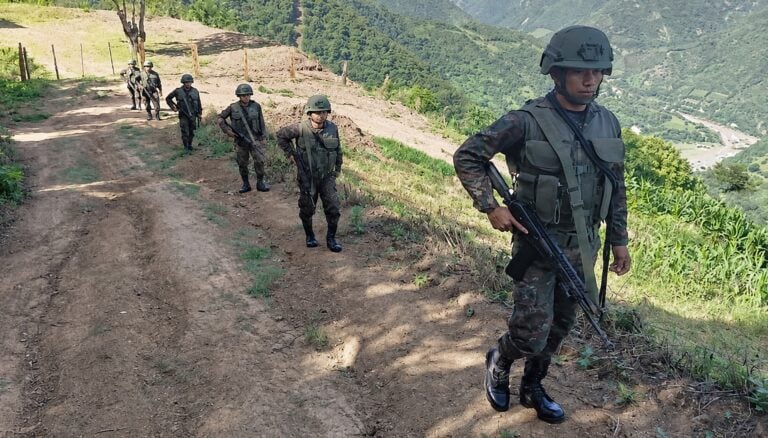
The strategy is being implemented amid mounting pressure from organized crime along Ecuador’s border regions. Ecuador’s 730-kilometer border with Colombia cuts across mountainous, jungle, and riverine terrain where more than 90 unauthorized crossing points exist. Those conditions make continuous surveillance difficult and allow criminal networks to quickly adapt their trafficking routes.
During the launch of the strategy, Ecuadorian Defense Minister Gian Carlo Loffredo said the country seized 252 metric tons of narcotics in 2024, a figure he described as a national record. While the unprecedented seizures underscore the scale of illicit flows moving through Ecuador, they also highlight the need to complement interdiction efforts with intelligence, territorial control, and interagency cooperation.
“Ecuador’s northern border has been exploited for far too long. Between 70 and 80 percent of the cocaine produced in southern Colombia enters our country through that area,” Loffredo said during the ceremony, according to EFE. “Secure Border is much more than a cooperation instrument; it is recognition that no transnational threat can be defeated alone.”
Illicit flows move in more than one direction. While cocaine produced in Colombia passes through Ecuador before reaching international maritime trafficking routes, weapons, ammunition, and other resources used by criminal organizations also cross the border.
“Ecuador’s northern border is highly porous, with rivers and numerous illegal roads and trails where one serious problem stands out: arms trafficking. As drug trafficking increases, more and more weapons are entering the country to equip a growing number of criminal groups,” Ecuadorian security expert Jean Paul Pinto told Diálogo. “In several border areas, the country is experiencing a form of criminal governance or shared sovereignty, where criminal organizations impose their own rules and exercise control.”
Such an environment requires a response capable of linking the movements of people, vehicles, goods, weapons, and drugs that, when viewed in isolation, may not trigger an alert. Integrating information from police, military, and customs authorities makes it possible to identify patterns, concentrate inspections at the highest-risk locations, and respond more quickly as criminal routes evolve.
Shared intelligence and risk analysis
The first phase of Secure Border is focused on Carchi province, which borders Colombia and includes the Rumichaca corridor, one of the principal land and commercial crossings between the two countries. There, Ecuadorian institutions aim to establish an operational, intelligence-driven, interagency methodology that can be sustained over time and replicated in other strategic areas.
The strategy includes risk analysis, information sharing, the generation of operational alerts, and stronger verification and inspection mechanisms at key locations. It also calls for coordinated patrols and inspections based on intelligence products and shared risk assessments.
This approach shifts operations from broad, reactive controls to intelligence-driven interventions. Alerts can help authorities identify suspicious cargo, vehicles, or movements and deploy limited resources where they are likely to have the greatest impact.
SENAE’s participation also broadens the strategy’s scope. Securing border corridors is not simply about blocking illicit routes; it also requires distinguishing more effectively between criminal activity and the legitimate movement of people and goods. More selective, risk-based inspections can strengthen security without unnecessarily disrupting lawful trade.
“This is a strategic commitment to confront threats that recognize no borders and directly affect the security of our citizens, our communities, and our region,” said SENAE Director General Sandro Castillo. “We will continue working together to combat organized crime, protect our citizens, and contribute to a safer region.”
The strategy also provides for coordination mechanisms with Colombia whenever operational conditions require them. That cross-border dimension is essential when confronting organizations that exploit jurisdictional differences, cross borders to evade law enforcement, and shift their activities among land, river, and maritime routes.
Carchi as a replicable model
The initial phase in Carchi will be evaluated over a two-year period. According to Ecuadorian authorities, the goal is to develop a comprehensive model that can serve as a reference for other strategic areas of the country.
The extended evaluation will measure not only the number of operations or seizures, but also the institutions’ ability to share information, generate timely alerts, coordinate inspections, and respond jointly. It will also help determine which procedures, tools, and coordination structures can be adapted to other corridors with different geographic and criminal dynamics.
Although Carchi is the starting point, the model has broader ambitions. During the launch, SENAE’s director general said the agency will integrate its capabilities with the National Police and the Armed Forces to protect strategic commercial corridors, including Rumichaca on the Colombian border and Huaquillas on Ecuador’s southern border with Peru.
The ability to adapt the methodology to other parts of the country is one of the principal differences between Secure Border and a temporary operation. Rather than focusing exclusively on a specific deployment, the strategy seeks to establish procedures that integrate intelligence, risk analysis, inspections, and the response capabilities of multiple institutions.
Cooperation to strengthen national capabilities
Secure Border is part of a broader security cooperation effort between Ecuador and the United States. That cooperation includes technical assistance, information sharing, training, and the transfer of equipment designed to strengthen Ecuadorian capabilities across the land, maritime, and air domains.
In May 2026, the United States delivered the first three of 12 interceptor boats scheduled for transfer to the Ecuadorian Navy that year. The vessels are intended to strengthen maritime surveillance and interdiction operations against transnational organized crime.
“This delivery, together with other initiatives such as tactical training and equipment transfers, reflects the strength of the bilateral relationship between the United States and Ecuador and our shared commitment to strengthening maritime security and confronting transnational threats,” the U.S. Embassy said. “In the near future, this contribution will also include long-range drones that will enhance capabilities to combat drug trafficking and illegal fishing.”
The maritime dimension complements efforts along the northern border. Criminal organizations move drugs from production areas to storage sites, ports, and departure points on the Pacific coast. Integrating information from land and maritime operations can help authorities identify entire logistical networks rather than isolated shipments.
In July 2025, the two countries also signed an agreement to facilitate the exchange of liaison officers. The mechanism provides for the deployment of a U.S. officer to Ecuador and an Ecuadorian National Police officer to the United States to improve the timely exchange of information and coordination against transnational crime.
Taken together, these mechanisms are designed to strengthen Ecuadorian institutions’ ability to detect threats before they reach ports, cities, or international trafficking routes. The U.S. contribution focuses on assistance, technology, training, and information sharing, while Ecuador retains responsibility for leading operations and coordinating among its institutions.
Secure Border therefore represents an effort to move beyond isolated responses toward a model based on intelligence, interagency coordination, and regional cooperation. Its initial phase in Carchi will demonstrate how those capabilities can strengthen control over a challenging border environment.
If the methodology proves sustainable and adaptable, Ecuador will have a framework that can strengthen security along other land, maritime, and air corridors. Beyond the transfer of equipment or the number of operations conducted, the strategy’s long-term value will lie in its ability to generate actionable intelligence, coordinate faster responses, protect legitimate trade, and reduce the operating space available to transnational criminal organizations.