Caribbean Trafficking Routes to Europe Drive New Security ChallengesTransnational Crime

Caribbean Trafficking Routes to Europe Drive New Security Challenges

The Caribbean has ceased to be merely a secondary route for drug trafficking to Europe and has become a strategic hub for transnational criminal networks, which increasingly exploit institutional weaknesses, security gaps, and the region’s geographic advantages to move cocaine across the Atlantic. As interdiction pressure intensifies, criminal organizations are adapting their operations through more flexible routes that connect South…

Pressure, Diversification, and Fragmentation Shape Ecuador’s Criminal LandscapeTransnational Crime

Pressure, Diversification, and Fragmentation Shape Ecuador’s Criminal Landscape

Ecuador’s criminal landscape continues to rapidly evolve, as a response to the Daniel Noboa administration’s military pressure campaign. This evolution is marked by an ongoing diversification and fragmentation of major criminal organizations and the proliferation of smaller armed groups and local gangs. The government response and criminal groups’ adaptation are increasing instability and driving a surge in violence across a…

Chinese Cyber Espionage Puts Latin America’s Critical Infrastructure at RiskEmerging Threats

Chinese Cyber Espionage Puts Latin America’s Critical Infrastructure at Risk

Nearly a decade had passed since they began operating in the shadows. The Gallium group — tracked by Google under the designation UNC2814 — moved silently through government and corporate networks in dozens of countries, gaining access, extracting information, and refining its methods without triggering visible alarms. In February, Reuters reported that UNC2814 had compromised at least 53 organizations in…

Guatemala Strengthens Fentanyl Detection Through K-9 CapabilitiesTransnational Crime

Guatemala Strengthens Fentanyl Detection Through K-9 Capabilities

As synthetic drug trafficking expands across the hemisphere, Guatemala is strengthening its ability to detect fentanyl through specialized K-9 training — part of a broader effort to address emerging supply chains that increasingly involve precursor flows through Central America. The initiative reflects a growing regional emphasis on early detection and interdiction, as security forces adapt to a drug that has…

Nothing Happens Until Something Moves: Designing a Multinational Movement and Transportation Manual to Enable Military Humanitarian Assistance and Disaster ReliefSecurity & Cooperation

Nothing Happens Until Something Moves: Designing a Multinational Movement and Transportation Manual to Enable Military Humanitarian Assistance and Disaster Relief

Hurricanes devastate Caribbean islands, earthquakes destroy infrastructure across multiple countries, and volcanoes spew lava, isolating mountain towns from the rest of the country. These disasters often exceed a nation’s capacity to rescue and care for its affected citizens. When that happens, nations typically turn to national and international civilian organizations, such as the United Nations. However, when those organizations cannot…

CENTAM SMOKE, Building Lifesaving PartnershipsSecurity & Cooperation

CENTAM SMOKE, Building Lifesaving Partnerships

Joint Task Force-Bravo (JTF-B), in coordination with the 612th Air Base Squadron (ABS), successfully concluded yet another iteration of Central America Sharing Mutual Operation Knowledge and Experiences (CENTAM SMOKE), a multinational firefighting exercise that brought together U.S. forces and partner nation firefighters and military members from across Central America and the Caribbean to Soto Cano Air Base, Honduras, in early…

A New Chapter: Venezuela and Regional Cooperation Against Transnational CrimeTransnational Crime

A New Chapter: Venezuela and Regional Cooperation Against Transnational Crime

After years of frozen relations, the restoration of diplomatic ties between the United States and Venezuela marks a significant turning point for regional security dynamics. The reopening of dialogue comes after the arrest of Nicolás Maduro in January 2026 and the installation of an interim government. This new context has opened opportunities for more structured cooperation in the fight against…

China’s Aggressive Media Influence Operation in the CaribbeanStrategic Influence

China’s Aggressive Media Influence Operation in the Caribbean

China is intensifying its influence strategy in the Caribbean through a combination of diplomacy, investments, media cooperation, and information campaigns aimed at expanding its strategic presence in the region. According to experts, Beijing is using journalism training programs, content-sharing agreements, ties with local media outlets, and in some cases even coercive practices to promote narratives favorable to its geopolitical interests,…

Ecuador Strengthens Strategy and Mobilizes Citizens Against Transnational ThreatTransnational Crime

Ecuador Strengthens Strategy and Mobilizes Citizens Against Transnational Threat

Recent actions by Ecuadorian authorities involving foreign nationals identified as potential security concerns reflect a more preventive and proactive approach by the country toward increasingly complex transnational threats. Authorities have intensified efforts to counter risks related to organized crime, illicit financing, and international networks operating across the region. On March 25, 2026, Ecuadorian authorities arrested a Syrian citizen identified as…

How China’s Demand Is Fueling Illicit Sand Extraction in Latin AmericaStrategic Influence

How China’s Demand Is Fueling Illicit Sand Extraction in Latin America

With global consumption of river and marine sand hovering around 50 billion tons per year, international organizations such as the United Nations Environment Programme (UNEP) have long warned of the risk of depletion and the serious environmental consequences tied to its growing scarcity. In this context, China stands as the world’s leading consumer, whose vast and sustained demand has already…

Lessons from Maritime Interdictions: What Recent Cases Revealed About Illicit Shipping NetworksTransnational Crime

Lessons from Maritime Interdictions: What Recent Cases Revealed About Illicit Shipping Networks

Recent maritime interdictions in the Caribbean and Atlantic are providing new insight into how illicit shipping networks operate across the hemisphere. Beyond the vessels themselves, recent cases have revealed complex systems of intermediaries, shell companies, changing registries, deceptive routing practices, and covert logistics structures designed to conceal responsibility and complicate enforcement efforts. The findings are reshaping how maritime authorities understand…

Building Trust in Uniform: Restoring Security and State Presence in HaitiSecurity & Cooperation

Building Trust in Uniform: Restoring Security and State Presence in Haiti

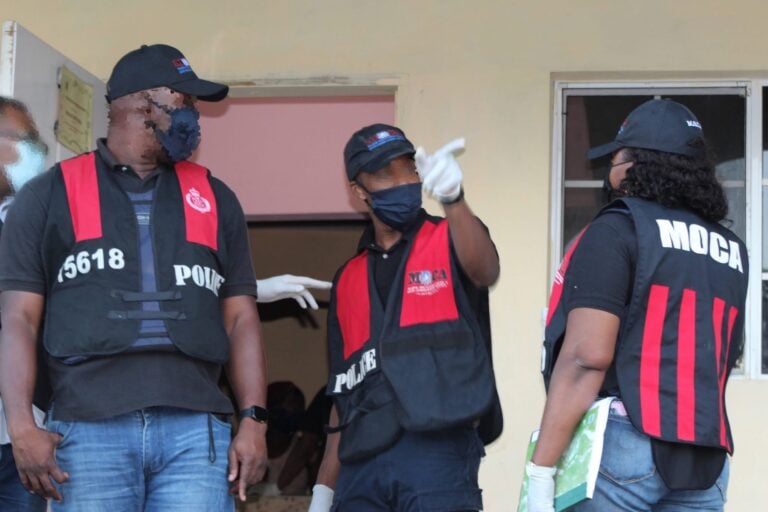
As Haiti’s security and humanitarian challenges continue, the country faces the difficult task of reducing violence while rebuilding public trust in state institutions. Armed groups have expanded presence in large portions of the capital, Port-au-Prince, contributing to large-scale displacement and disruptions to daily life, supply routes, and access to food, healthcare, and other essential services. In this environment, efforts to…